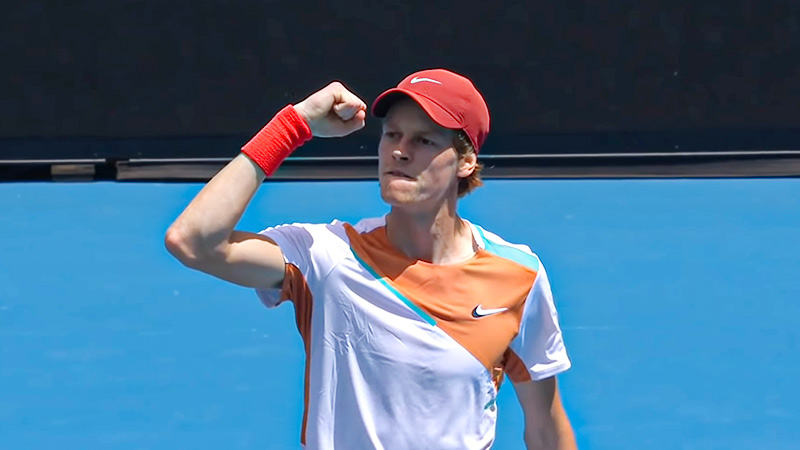
The ascent of Jannik Sinner to the pinnacle of professional tennis has been characterized by a clinical, high-velocity style of play that has redefined modern baseline aggression.
However, in the 2025 and 2026 seasons, a troubling counter-narrative emerged alongside his dominance: a series of mid-match retirements and late-stage tournament withdrawals that have raised significant questions regarding the physical sustainability of his current trajectory.
For a player who held a 26-match winning streak on hard courts and maintained the world number one ranking, these interruptions represent more than just physical setbacks; they are symptoms of a broader systemic challenge within the sport.
To understand why Jannik Sinner retired across multiple high-stakes events, one must look beyond a single medical diagnosis.
His departures from the court in Cincinnati, Shanghai, and eventually New York are linked by three distinct physical triggers: sudden acute illness, extreme environmental fatigue leading to cramping, and a persistent, structural knee issue that required a prioritization of career longevity over immediate title defense.
1. The Cincinnati Collapse: A Battle with Acute Illness
The most visually striking of Sinner’s recent retirements occurred during the 2025 Cincinnati Open final against his primary rival, Carlos Alcaraz.
Entering the match, Sinner was the defending champion and the heavy favorite, having not dropped a set throughout the week.
Yet, from the opening point, it was evident that the Italian’s trademark movement and intensity were absent.
Within just 23 minutes, Sinner trailed 5-0, having won only eight points compared to Alcaraz’s 21. The physical distress was immediate; Sinner was observed sitting with ice on his head during the first changeover, an attempt to combat what was later described as a sudden, severe illness. After a brief consultation with a trainer, the match was called.
The emotional toll of this retirement was palpable. Sinner was seen hiding his head in a towel, visibly tearful as he apologized to the umpire and the crowd.
He later explained that he had felt unwell since the previous evening, and while he hoped his condition would improve, it worsened significantly under the heat of the match.
He reached a point where he felt he might collapse on the court, making continued play impossible.
While the loss was a blow to his momentum, analysts noted a silver lining: the retirement was due to a temporary illness rather than a structural injury, which at the time suggested a quicker path to recovery.
2. The Shanghai Masters: Humidity and the “Brutal” Physical Wall
If Cincinnati was a battle with internal illness, the 2025 Shanghai Masters was a confrontation with external environmental extremes. During a round-of-32 encounter with Tallon Griekspoor, Sinner was forced to retire in the third set.
The conditions in Shanghai were described by players and commentators as “brutal,” featuring humidity levels exceeding 80%.
The match was a grueling physical contest from the outset. Sinner took the first set in a tiebreak, but as the match progressed into a third hour, the toll of the humidity became undeniable.
Sinner began suffering from acute, severe leg cramps that essentially paralyzed his movement. By the time he suffered a break of serve in the deciding set, he was scarcely able to stand or walk, eventually hobbling to the net to shake hands with Griekspoor.
This incident was not isolated. Even veterans like Novak Djokovic, who won his match in the same session, reported appearing to vomit during a changeover and characterized the conditions as biologically challenging to weather.
For Sinner, the Shanghai retirement highlighted a vulnerability to high-humidity environments when combined with the fatigue of a long season.
It became clear that his right thigh was the primary area of distress, and despite medical intervention on court, the physiological “red line” had been crossed.
3. The 2026 US Open Withdrawal: The Pivot Toward Longevity
Perhaps the most significant blow to Sinner’s schedule was his withdrawal from the 2026 US Open. Unlike his mid-match retirements, this was a calculated decision made prior to the commencement of the tournament.
Despite intensive preparation in Monte Carlo, Sinner and his team determined that his right knee had not recovered sufficiently from a lingering issue.
The decision-making process behind this withdrawal reflects a shift in Sinner’s camp toward a “longevity first” philosophy.
Commentators have drawn parallels to the “Rafa Model,” where medical advisors often warn elite athletes that playing through certain injuries could jeopardize their entire careers.
In Sinner’s case, the risk of competing in a best-of-five-set Grand Slam on hard courts with a compromised knee was deemed too great.
This withdrawal was particularly poignant given Sinner’s “desperate sadness” over missing the event in New York, a city where he was expected to be a central figure in the title race.
It marked a recurring theme where his body has “let him down” just as he reached the peak of the Grand Slam calendar.
4. The Systemic Pressures of the Modern ATP Tour
To analyze why a player of Sinner’s caliber is facing these frequent physical breakdowns, one must examine the demands of the modern ATP circuit. There are three primary factors contributing to this trend:
1. The Intensity of the Marquee Player Schedule
As one of the “nucleus” players carrying the tour’s popularity, Sinner faces immense pressure to compete in mandatory events. In the first eight months of the year, a player at Sinner’s level often plays between 50 and 70 matches.
Because he consistently reaches the final stages of every tournament he enters—winning five back-to-back Masters 1000 events in early 2025—he does not receive the recovery windows that lower-ranked players might experience after early-round exits.
This “relentless” pace often leaves him with “nothing left in the tank” by the time he reaches the French Open or the US Open.
2. Structural Changes in Court Mechanics
The physicality of the sport has evolved due to changes in court speed and ball dynamics. Courts have been slowed down significantly over the last two decades, leading to longer rallies and fewer “free points” from aces or short serves.
This requires players to be built more like endurance athletes, spending significant time lifting weights and building muscle to survive these prolonged exchanges.
The increased physical load on the joints and muscles, particularly for a player with Sinner’s explosive movement, creates a higher probability of fatigue-related injuries like the knee issues he faced in 2026.
3. The Weight of the Rivalry
The current era is defined by the burgeoning rivalry between Sinner and Carlos Alcaraz. These two athletes are viewed as the primary draws for the sport, yet they have not appeared in the same draw consistently since Monte Carlo due to their respective physical struggles.
The competitive drive to keep pace with Alcaraz—who has similarly suffered from issues like the ankle injury that forced him to skip Shanghai—creates a cycle where the top players push their bodies to the absolute limit to maintain their ranking and legacy.
Conclusion
Jannik Sinner’s medical history over the past two seasons serves as a case study for the modern elite athlete. His retirements are not merely a matter of bad luck; they are the result of a collision between a world-class competitive drive and the biological limits of the human body under extreme stress.
For Sinner to achieve the career longevity of the “Big Three” who preceded him, the focus must move toward more strategic schedule management and a possible recalibration of his physical training to handle the slower, more grueling court conditions of the modern era.
While he “always comes back stronger,” as Carlos Alcaraz noted, the frequency of these “body letting him down” moments suggests that the next phase of Sinner’s career will be defined as much by his medical team’s strategy as by his own formidable forehand.
The current “transitional period” in tennis provides an opportunity for other players to shine, but the sport undoubtedly loses its “nucleus” when Sinner is sidelined.
The hope for fans and officials alike is that these recent withdrawals are the growing pains of a champion learning to balance the “brutal” demands of the tour with the necessity of rest.