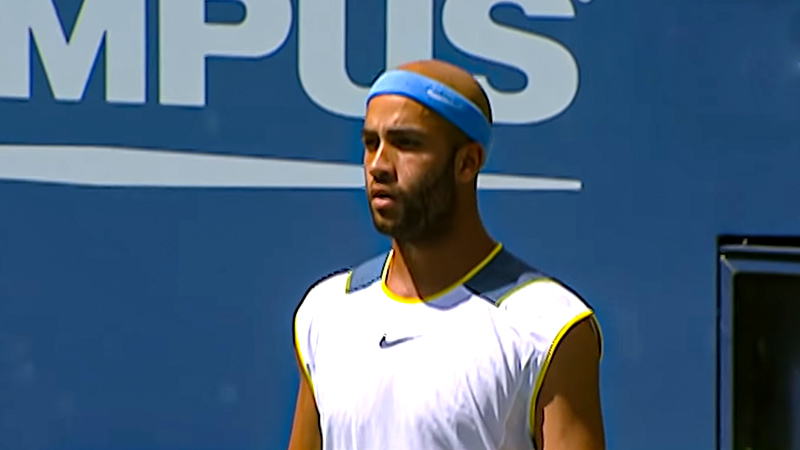
James Blake shaved his signature dreadlocks primarily to escape racial categorization by the media, reclaim his identity after a traumatic 2004, and manage hereditary male pattern baldness.
While his flowing locks were a multi-million-dollar trademark, Blake felt the press focused more on his appearance than his tennis prowess. Following a broken neck, his father’s passing, and a debilitating shingles diagnosis, he opted for a clean slate.
This transformation cost him approximately $1 million in lost sponsorships but allowed him to emerge as a more mature, serious contender on the global stage, forever altering his professional legacy.
Why Did James Blake Decide to Cut His Signature Dreadlocks?
The transition from a highly marketable “bad boy” image to a professional aesthetic was a calculated move driven by several internal and external pressures.
Blake recognized that his physical appearance was beginning to overshadow his on-court achievements, creating a narrative he no longer wished to support.
Escaping the Media’s Racial Categorization
Early in his career, Blake was defined by his long, flowing dreadlocks and athletic headbands, which made him one of the most recognizable figures in the sport.
However, as his global profile grew, he felt deeply constrained by how the press focused heavily on his race and background rather than his athletic capability. He eventually grew tired of being boxed into specific categories by journalists who prioritized his “look” over his skill.
Blake later noted in interviews that he reached a breaking point where he was simply tired of being categorized as just “the African-American guy,” leading him to shave his head as a way to reset the conversation.
Seeking a Serious Contender Image
Beyond racial optics, Blake wanted to reinvent his public image to be taken more seriously as a pure tennis player.
In his own writings, he expressed a desire to be viewed as a true contender on the court rather than the “obvious sex symbol” he had become with his signature locks.
This shift was also tied to his dating life and personal growth; he noted that while he used “crazy hair” like braids and dreadlocks in college to attract certain people, his more mature self preferred a “clean-cut” look that reflected his evolved values.
By adopting the bald look, he effectively signaled to the world that his focus had shifted entirely to professional excellence and personal integrity.
The 2004 Trauma and the Symbolic Clean Slate
The year 2004 stands as the most difficult period of Blake’s life, serving as the ultimate catalyst for a physical and emotional reset. The decision to shave his head during this time was not merely stylistic but was a physical manifestation of his need for a fresh start.
Overcoming a Broken Neck and Personal Loss
In 2004, Blake suffered a series of devastating setbacks that would have ended the careers of many athletes.
During a practice session in Rome, he collided with a net post and broke his neck. Shortly after this life-threatening injury, his father passed away from stomach cancer.
These events left Blake in a state of immense emotional and physical distress, prompting him to seek a visual change that matched his internal state of upheaval.
Shaving his head served as a “hard visual reset,” allowing him to move forward from these hardships with a sense of clarity.
Dealing with Shingles and Zoster
The intense physical and emotional stress of 2004 also triggered a severe case of shingles, specifically zoster, which temporarily paralyzed half of Blake’s face.
This condition was a stark reminder of his vulnerability and the toll his career and personal losses had taken on his health.
Some reports suggest that the medical requirements for treating his head injury or the shingles outbreak may have necessitated a shave, though Blake largely emphasized the psychological benefit of the “clean slate”.
This transformation became the foundation for his “Comeback Kid” narrative, as he climbed back up the rankings with his new, streamlined appearance.
Was Male Pattern Baldness a Factor in the Bald Look?
While the symbolic and personal reasons for the haircut were significant, biology played an undeniable role in Blake’s long-term decision to maintain a shorn head. For many professional athletes, managing hair loss becomes a matter of practicality and aesthetic control.
The Reality of Hereditary Hair Loss
Beyond his philosophical choices, Blake was dealing with hereditary hair loss that ran in his family. He eventually acknowledged that male pattern baldness was a genetic reality for him, making the transition to a bald look a practical management strategy.
Observers and fans noted that even before the full shave, his hairline appeared to be thinning or receding at the front.
This realization made the decision to stay bald much easier, as it avoided the “prematurely balding” look that many men in their 20s struggle to manage.
Comparing the Agassi Transition
Many in the tennis community compared Blake’s transformation to that of Andre Agassi, who famously ditched his long hair to embrace a bald look as he aged.
Like Agassi, Blake realized that holding onto a fading head of hair was less effective than choosing a bold, cleanly shaven aesthetic.
Some experts also pointed out that heavy dreadlocks can sometimes accelerate hair loss in individuals who are already genetically predisposed to it, as the weight and tension on the scalp can cause further damage.
By choosing the “Agassi route,” Blake maintained a look that was both athletic and timeless.
The Financial Consequences of the $1 Million Dollar Haircut
Shaving his head was not just a personal choice; it was a high-stakes business decision that significantly impacted his marketability. At the time, his specific look was a core part of his brand identity.
| Feature | Impact of the Dreadlock Look | Impact of the Bald Look |
|---|---|---|
| Endorsement Value | Estimated $1 million higher due to unique branding. | Loss of specific sponsorships tied to the “locks” image. |
| Marketable Persona | Viewed as a “bad boy” or “sex symbol”. | Viewed as a “clean-cut,” mature professional. |
| Brand Identity | Heavily tied to the dreadlocks-and-headband aesthetic. | Focused on the athlete’s story of resilience and comeback. |
| Philanthropy | Standard athlete branding. | Some funds related to his haircut were donated to cancer research. |
The dramatic change in style carried a steep financial consequence for the athlete. Because his dreadlocks were so closely associated with his endorsements, his agent estimated the shave cost him roughly $1 million in lost sponsorships.
Despite this massive hit to his earnings, Blake maintained that the sense of independence and maturity he gained was entirely worth the price. He prioritized his internal sense of self over the external financial rewards of a manufactured image.
Debunking Performance Myths and Fan Theories
In the absence of an immediate official explanation, fans and analysts developed several creative theories regarding Blake’s sudden change in appearance. While some had a basis in reality, others were dismissed as mere speculation.
The Myth of Streamlined Aerodynamics
A popular “traditional insight” among some coaches and fans was that Blake shaved his head to improve his performance through streamlined aerodynamics.
The theory suggested that reducing hair resistance could add a fraction of a second to a player’s first step or lunge toward the ball. While this concept applies to high-level swimming or sprinting, most experts and Blake himself treated the idea as a joke.
In tennis, the effects of such minor aerodynamic changes are negligible compared to the physical and mental factors that actually drive a match.
Practicality and the Bald Headband Look
One of the more enduring questions about Blake’s bald look was why he continued to wear a headband on a head with no hair. Fans often joked about the aesthetics, but the decision was rooted in pure function.
Bald athletes often deal with significant sweat runoff that can impair their vision during play. While bandannas and caps are alternatives, the traditional headband is often the most comfortable tool for stopping sweat from reaching the eyes.
Although some found the look “terrible” from a fashion standpoint, Blake prioritized the functional necessity of keeping his vision clear during intense rallies.
Essential FAQs About James Blake’s Hair Transformation
Did James Blake shave his head for charity?
While the primary reasons were personal and professional, there were reports that money related to his haircut or his book was donated to cancer research in memory of his father.
Is James Blake’s baldness permanent?
Yes, Blake confirmed that male pattern baldness runs in his family. Maintaining a bald head became a permanent way for him to manage his natural hereditary hair loss.
Did the shingles virus cause his hair to fall out?
While the zoster virus (shingles) caused temporary facial paralysis and significant stress, Blake’s long-term baldness was attributed more to genetics and his personal choice to shave for a clean slate.
How did the media react to his new look?
The media eventually shifted its focus to his “Comeback Kid” story. By removing the visual distraction of his dreadlocks, Blake successfully forced journalists to focus more on his resilience and tennis skill.
Conclusion: A Legacy of Authenticity
James Blake’s journey from a branded “sex symbol” with iconic dreadlocks to a bald, mature professional is a testament to the power of reclaiming one’s identity.
By choosing to shave his head during his most vulnerable year, he turned a period of trauma into a powerful narrative of resilience.
While the move cost him a significant amount in endorsements, the gain in personal independence and professional respect was immeasurable.
His story serves as a reminder that true marketability comes from authenticity and the courage to start over with a clean slate.