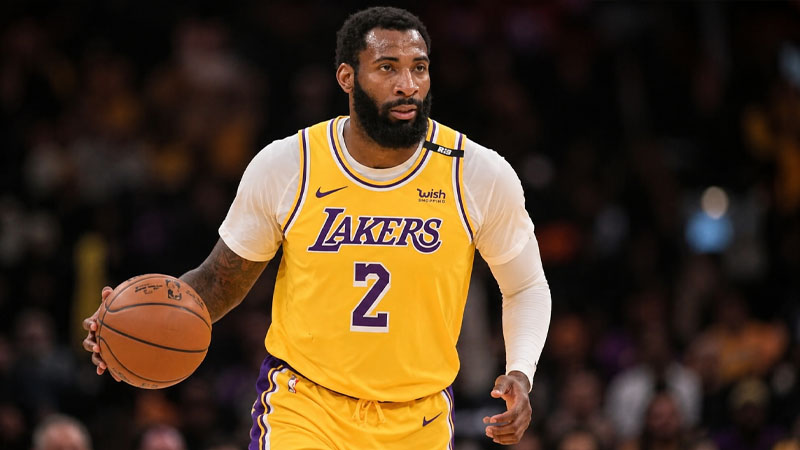
Andre Drummond left the Los Angeles Lakers in August 2021 primarily due to a tactical misalignment following the blockbuster trade for Russell Westbrook.
The acquisition of Westbrook necessitated maximum floor spacing, making Drummond’s traditional, paint-bound style a liability.
Additionally, on-court friction—specifically the displacement of Marc Gasol and a benching in the 2021 playoffs—soured the relationship. Ultimately, the Lakers pivoted to more versatile big men like Dwight Howard, while Drummond sought a clearer role elsewhere.
This mutual separation was cemented by financial constraints and a strategic shift in roster construction that rendered a reunion illogical for both parties.
Why Did Andre Drummond Leave the Lakers in 2021?
The departure of Andre Drummond from the purple and gold was not a singular event but rather a culmination of tactical shifts and roster reconstruction that made his presence redundant.
While he arrived with the intent of being a foundational piece for a championship repeat, the reality of the NBA’s evolving playstyle and the specific needs of the Lakers’ superstars led to a swift exit.
To understand why this partnership dissolved so quickly, one must look at the specific organizational decisions that occurred during the 2021 offseason.
The Impact of the Russell Westbrook Trade
The primary catalyst for Drummond’s exit was the team’s decision to trade for superstar guard Russell Westbrook. Westbrook is a player who thrives on attacking the rim, a skill set that requires a high degree of floor spacing to be effective.
Drummond, as a traditional center who occupies the paint, posed a significant “spacing nightmare”.
If the organization had retained Drummond, the lane would have been excessively crowded with Westbrook, LeBron James, and Anthony Davis all trying to operate in the same interior space.
Consequently, the front office recognized that keeping a non-shooting center was a “disastrous tactical fit” for the new roster structure.
The Strategic Pivot to Dwight Howard and Salary Constraints
Once the team committed to the Westbrook era, they needed a different profile of center who could coexist with high-usage stars on a budget. Instead of offering Drummond a competitive contract, the organization pivoted back to a familiar face in Dwight Howard.
Howard provided a similar rebounding presence but was more acclimated to a rotational role that didn’t demand the same offensive touches or guaranteed minutes.
Furthermore, the Lakers lacked the Bird rights or cap exceptions necessary to offer Drummond a lucrative multi-year deal.
Facing the prospect of a reduced role and limited financial upside, Drummond chose to sign a veteran minimum deal with the Philadelphia 76ers to serve as a backup to Joel Embiid.
How Did On-Court Friction Lead to Drummond’s Departure?
Beyond the front-office maneuvers, the day-to-day operations on the court during the 2020-21 season created significant tension.
Drummond’s arrival was heralded as a major victory in the buyout market, but the promises made to secure his signature eventually became a point of contention.
The friction between individual expectations and team chemistry reached a breaking point during the postseason, leaving both the player and the coaching staff feeling that the partnership was no longer viable.
The Displacement of Marc Gasol and Lineup Instability
When Drummond signed his prorated veteran minimum deal in March 2021, he did so under the condition that he would be the starting center. This promise was made to satisfy the recruitment efforts of LeBron James and Anthony Davis.
However, fulfilling this promise meant sidelining Marc Gasol, who had been a key component of a highly efficient defensive unit earlier in the season.
The sudden shift in the starting lineup disrupted the established chemistry and rhythm of the team, leading to a period of inconsistent play as the roster tried to integrate Drummond’s paint-heavy style.
The Playoff Benching and “Didn’t Make Sense” Comments
The tension culminated during the 2021 first-round playoff series against the Phoenix Suns. Despite starting the first five games of the series, Drummond’s lack of mobility and floor spacing became a glaring liability as the series progressed.
In a desperate attempt to maximize spacing for an elimination Game 6, coach Frank Vogel opted to bench Drummond entirely, resulting in a “Did Not Play – Coach’s Decision” (DNP-CD).
Drummond was vocal about this shift later, stating that the organization’s decision to change his role so dramatically mid-series “didn’t make sense” to him.
This perceived lack of consistency from the coaching staff effectively ended any chance of a long-term future in Los Angeles.
Andre Drummond’s Career Journey and Statistical Impact
To put his time in Southern California into context, one must look at the broader arc of his career. Drummond has been one of the most prolific rebounders of his generation, but his journey highlights the difficulty of fitting a traditional big man into modern offensive systems.
Below is a comprehensive look at the franchises he has represented and the production he provided during his brief tenure with the Lakers.
| Category | Performance Details |
|---|---|
| Lakers Tenure | March 2021 – August 2021 |
| Regular Season Stats | 11.9 PPG, 10.2 RPG, 1.4 APG |
| Minutes Per Game | 24.8 Minutes |
| Playoff Role | Started 5 games; DNP in Game 6 |
| Acquisition Method | Buyout signing from Cleveland Cavaliers |
| Financial Terms | 1-year, $794,536 veteran minimum deal |
A Chronological History of Teams
Drummond’s career spans 14 years and seven different franchises, showcasing his longevity as a rebounding specialist.
After starting his career as a cornerstone in Detroit, where he was a two-time All-Star and four-time rebounding champion, he transitioned into a high-end rotational piece for several contenders.
- 2012–2020: Detroit Pistons (Drafted 9th overall)
- 2020–2021: Cleveland Cavaliers (Acquired via trade)
- 2021: Los Angeles Lakers (Mid-season buyout)
- 2021–2022: Philadelphia 76ers (Primary backup to Joel Embiid)
- 2022: Brooklyn Nets (Traded in James Harden blockbuster)
- 2022–2024: Chicago Bulls (Free-agent contract)
- 2024–2026: Philadelphia 76ers (Second stint)
- 2026–Present: New York Knicks (Signed July 2026)
Why Did Andre Drummond Reject a Lakers Reunion in 2026?
In a surprising turn of events, the organization recently attempted to reconcile with Drummond during the 2026 free agency period.
Following a trade that sent Deandre Ayton to the Washington Wizards for salary relief, the team found themselves with an open spot in their center rotation.
They were aggressively searching for a dependable veteran to serve as a backup to the rising star center, Walker Kessler. Despite the clear need and a potentially improved role, the history between the two parties proved too significant to overcome.
The Memory of the Tumultuous First Stint
Drummond’s decision to turn down the offer was heavily influenced by the negative experience of 2021. He remembered the unfulfilled promises regarding his role and the sudden benching during the most critical game of the season.
The “tumultuous” nature of his first stint left him wary of the organization’s stability and how they might utilize him if tactical needs shifted again.
For Drummond, the opportunity to return was overshadowed by the lack of trust established during his previous four-month stay.
Choosing the New York Knicks for a Championship Role
Instead of returning to Los Angeles, Drummond opted to sign a one-year, $3.9 million contract with the New York Knicks in July 2026. This move allows him to chase a championship in a clear depth role behind Karl-Anthony Towns.
The decision reflects Drummond’s preference for a stable environment where his role is clearly defined from the outset, rather than returning to a franchise where he previously felt marginalized.
By signing with the Knicks, he effectively closed the door on the Lakers chapter of his career for a second time.
Frequently Asked Questions About Andre Drummond’s Exit
Did LeBron James want Andre Drummond to leave?
While there are no reports of personal animosity, the roster strategy shifts that LeBron James supported—specifically the trade for Russell Westbrook—directly led to Drummond’s departure.
The need for spacing around James and Davis made Drummond a poor fit for the team’s long-term vision.
How much did the Lakers pay Andre Drummond?
During his 2021 stint, Drummond signed a prorated one-year veteran minimum contract worth $794,536. Because they did not have his Bird rights, they were financially limited in what they could offer him during the subsequent free agency period.
Why was Drummond benched in Game 6 against the Suns?
Coach Frank Vogel decided to bench Drummond to prioritize “maximum floor spacing”. As the Lakers faced elimination, the coaching staff believed that playing a traditional, non-shooting center would further clog the driving lanes for an already struggling offense.
Who replaced Andre Drummond on the Lakers roster?
The Lakers replaced Drummond by signing veteran center Dwight Howard for the 2021-22 season. They also leaned more heavily into lineups featuring Anthony Davis at the center position to accommodate the spacing needs of Russell Westbrook.
Navigating the Complexities of NBA Roster Building
The story of why Andre Drummond left the Lakers is a masterclass in the delicate balance of ego, tactics, and timing in professional basketball. It serves as a reminder that even elite talent can be rendered ineffective if the surrounding system does not complement their specific strengths.
As the league continues to trend toward versatile, shooting big men, the traditional role of the “paint-beast” remains a difficult puzzle for front offices to solve.
If you are interested in more deep dives into professional basketball strategy and player movements, consider subscribing to our newsletter for weekly updates.
You can also download our comprehensive guide on “Modern NBA Spacing and Roster Construction” to see how teams are adapting to the three-point revolution. Understanding these nuances is key to following the ever-changing landscape of the sport.