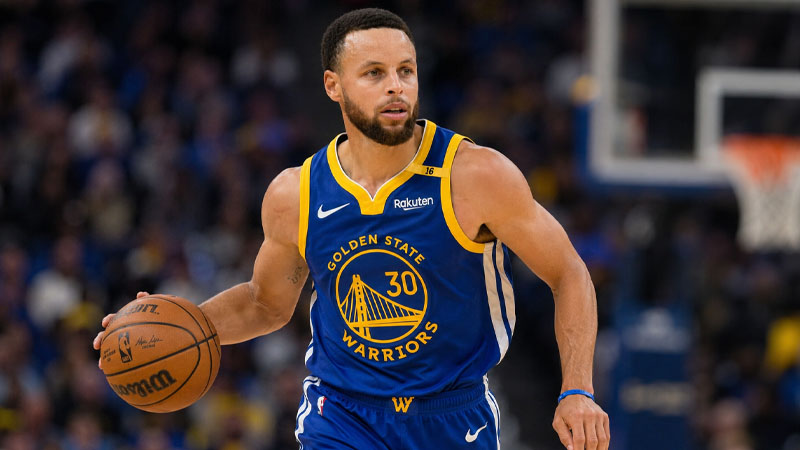
Stephen Curry currently leads the league as the highest-paid athlete for the 2026–27 season, earning a record-breaking $62,587,158. This milestone represents a staggering shift from the league’s inception, where top earners brought home just $8,000 annually.
Today, compensation is measured through multiple lenses: single-season base pay, total contract value, and off-court business revenue. While Curry dominates seasonal pay, Jayson Tatum holds the largest total contract at $313.9 million.
Understanding this financial landscape requires analyzing how salary cap exceptions and television revenue have transformed the professional sports market into a multi-billion-dollar global enterprise.
Who Are the Highest Earners for the 2026–27 Season?
The current landscape of professional basketball compensation is dominated by “Supermax” extensions and a rapidly rising salary cap.
Stephen Curry of the Golden State Warriors continues his unprecedented run at the top of the financial leaderboard, becoming the first player in history to officially cross the $60 million threshold for a single season of play.
This is not a new position for Curry; he has held the top salary spot for every consecutive year since the 2017–18 campaign.
Following Curry is a group of elite players whose salaries reflect the massive value of modern veteran extensions. Players like Nikola Jokić and Jayson Tatum are seeing their yearly compensation approach the $60 million mark as the league enters a new era of wealth.
The following table details the top ten base salaries for the 2026–27 season, reflecting the absolute cap hits managed by their respective franchises.
| Rank | Player | Team | 2026–27 Base Salary |
|---|---|---|---|
| 1 | Stephen Curry | Golden State Warriors | $62,587,158 |
| 2 | Nikola Jokić | Denver Nuggets | $59,033,114 |
| 3 | Jayson Tatum | Boston Celtics | $58,456,566 |
| 4 | Anthony Davis | Washington Wizards | $58,456,566 |
| 5 | Giannis Antetokounmpo | Miami Heat | $58,456,566 |
| 6 | Joel Embiid | Philadelphia 76ers | $57,985,752 |
| 7 | Jaylen Brown | Boston Celtics | $57,078,728 |
| 8 | Devin Booker | Phoenix Suns | $57,078,728 |
| 9 | Karl-Anthony Towns | New York Knicks | $57,078,728 |
| 10 | Jimmy Butler | Golden State Warriors | $56,832,773 |
Analyzing the History of Top Seasonal Pay Milestones
To appreciate the $62 million milestone, one must look back at the incremental steps taken over eight decades of professional play.
The financial growth of the league has mirrored its expansion into a global media powerhouse, moving from local gymnasiums to billion-dollar television deals.
Each era has been defined by a specific pioneer who broke a psychological and financial barrier, whether it was the first $100,000 contract or the first multi-million dollar seasonal payout.
The Journey from Thousands to the First Million
In the inaugural 1946–47 season, Joe Fulks was the highest-paid player in the Basketball Association of America, earning a modest $8,000.
By the late 1940s, George Mikan became the first player to reach the $15,000 mark. It took nearly two more decades for the sport to see its first six-figure earner; Wilt Chamberlain and Bill Russell both eclipsed the $100,000 threshold during the 1965–66 season.
The progression accelerated through the 1970s as competition for talent between leagues drove prices higher.
The $1 million milestone was finally reached in the 1979–80 season, shared by Moses Malone and Bill Walton. This era marked the beginning of modern sports agency, where players began to realize their massive market value as television interest grew.
By the early 1990s, Larry Bird pushed the envelope further, becoming the first player to earn over $5 million in a single season during his 1991–92 campaign with the Boston Celtics.
The Michael Jordan and Patrick Ewing Era Anomaly
The late 1990s presented a unique financial period due to the lack of individual maximum salary constraints before the 1999 Collective Bargaining Agreement.
This allowed superstars to negotiate deals that often exceeded the total salary cap of their entire team. Michael Jordan famously set a record that stood for over twenty years when he signed a one-year deal worth $33,140,000 for the 1997–98 season.
Patrick Ewing also benefited from this “loophole” era, becoming the first player to earn $15 million and $18 million in the mid-90s.
Following the 1999 agreement, individual salaries were capped at a percentage of the team’s total cap, which temporarily slowed the growth of individual payouts.
During this “Max-Era,” legends like Kevin Garnett, Kobe Bryant, and Shaquille O’Neal dominated the leaderboard. Kobe Bryant eventually became the second player to eclipse the $30 million mark when the 2013–14 season began, followed shortly by LeBron James in 2016–17.
Total Career Earnings and the $600 Million Threshold
While single-season records capture headlines, the true measure of a player’s financial legacy is their cumulative career earnings.
Today’s stars are projected to reach career totals that were previously unimaginable, with several active players on track to exceed $600 million in total basketball wages alone.
This is a direct result of both longevity and the timing of their careers coinciding with the most lucrative television deals in history.
The current leaderboard for career earnings is a testament to the “New Era,” as every single player in the top ten is currently active in the league.
Older legends, such as Kevin Garnett ($334.3 million) and Kobe Bryant ($323.3 million), have been pushed completely out of the top ten list because of the rapid inflation of the salary cap. The following table outlines the current leaders in total career playing salary.
| Rank | Player | Total Career On-Court Earnings | Status |
|---|---|---|---|
| 1 | Kevin Durant | $598.2 Million | Active |
| 2 | LeBron James | $581.3 Million | Active |
| 3 | Stephen Curry | $532.7 Million | Active |
| 4 | Devin Booker | $520.2 Million | Active |
| 5 | Paul George | $516.9 Million | Active |
| 6 | Anthony Davis | $511.2 Million | Active |
| 7 | Joel Embiid | $509.3 Million | Active |
| 8 | Damian Lillard | $482.9 Million | Active |
| 9 | Russell Westbrook | $469.5 Million | Active |
| 10 | Jayson Tatum | $469.4 Million | Active |
Understanding the Different Metrics of Player Compensation
The term “highest paid” is often used loosely, but in the world of professional sports finance, it can refer to four distinct categories. A player might have the highest cap hit for a single year but not the largest total contract value or the highest average annual income.
Strategic decision-makers and agents look at these metrics differently to gauge a player’s true market standing and long-term security.
Total Contract Value Versus Average Annual Value
Jayson Tatum currently holds the record for the largest total contract value ever signed in the history of the league. His five-year supermax extension with the Boston Celtics is worth an unprecedented $313.9 million over its duration.
While this deal provides the highest total guaranteed money, it does not necessarily mean Tatum has the highest average yearly payout.
That distinction belongs to Shai Gilgeous-Alexander of the Oklahoma City Thunder. He holds the record for the highest Average Annual Value (AAV) for a contract extension, which breaks down to a historic $71.3 million per year.
Because these extensions often do not kick in until future years, his current seasonal cap hit remains lower than Curry’s, even though his average yearly earnings over the life of the deal are higher.
The Significant Impact of Off-Court Income
When business empires, shoe deals, and global sponsorships are factored into the equation, the rankings of the wealthiest players change dramatically. LeBron James remains the gold standard for total annual income, bringing in approximately $137.8 million every year.
Despite having a lower team salary hit than Curry, James is the only active player whose off-court sponsorship returns—amounting to roughly $85 million from brands like Nike—surpass his on-court base salary annually.
Stephen Curry follows closely in total income at $109.6 million, with roughly $50 million coming from endorsements and his equity stake in Under Armour.
These off-court earnings are essential for long-term wealth building, as they are not subject to the same salary cap restrictions as team-paid wages. This external revenue is what allowed LeBron James to become the first active billionaire player in the history of the sport.
The Regulatory Infrastructure Driving These Valuations
The exponential growth in player salaries is not accidental; it is the result of a complex financial system designed to balance team competition with player earning potential.
The league utilizes a “soft” salary cap, which sets a limit on what teams can spend but allows for numerous exceptions that enable franchises to keep their core stars.
This system, combined with massive increases in basketball-related income (BRI), creates the environment where $60 million salaries can exist.
The Mechanics of the Soft Cap and Bird Rights
A “soft” salary cap is the maximum dollar amount a team can spend on its roster, but it is liable to change every offseason based on league revenue. To allow teams to retain their own talent, the league uses the “Larry Bird Exception,” commonly known as Bird Rights.
This rule allows a franchise to re-sign their own player to a contract that exceeds the cap threshold, provided the player has been with the team for at least three years.
Other mechanisms, such as the Mid-Level Exception and the Rookie Player Exception, provide teams with additional flexibility to fill out their rosters even when they are over the cap.
These rules are the reason why teams like the Boston Celtics can manage to pay both Jayson Tatum and Jaylen Brown record-breaking salaries while still remaining competitive.
Without these exceptions, the current era of “Supermax” contracts would be functionally impossible under a hard cap system.
Future Projections and the $75 Million Threshold
As the league prepares for its next major television and media rights deals, projections suggest that current records will be eclipsed within the next few years.
By the 2030–31 season, Shai Gilgeous-Alexander is expected to become the first player to earn over $75 million in a single season.
Other stars like Joel Embiid and Jayson Tatum are already on contracts that will pay them over $67 million and $71 million respectively by the late 2020s.
The following table projects the anticipated top earners for the upcoming seasons based on current contract trajectories and player options.
| Season | Player | Team | Projected Salary |
|---|---|---|---|
| 2027–28 | Nikola Jokić | Denver Nuggets | $62,841,702 |
| 2028–29 | Joel Embiid | Philadelphia 76ers | $67,396,000 |
| 2029–30 | Jayson Tatum | Boston Celtics | $71,446,914 |
| 2030–31 | Shai Gilgeous-Alexander | Oklahoma City Thunder | $75,646,200 |
Frequently Asked Questions About NBA Financial Records
Who is the highest-paid NBA player of all time?
In terms of total on-court career earnings, Kevin Durant currently leads with $598.2 million, narrowly edging out LeBron James ($581.3 million).
However, if off-court endorsements are included, LeBron James is the wealthiest, having surpassed the $1 billion net worth milestone.
What is the largest contract ever signed in the NBA?
Jayson Tatum of the Boston Celtics signed the largest total contract in league history, a five-year supermax extension worth $313.9 million.
Which player has the highest average annual salary?
Shai Gilgeous-Alexander holds the record for the highest average annual value (AAV) at $71.3 million per year.
Who was the first player to earn $1 million in a single season?
Moses Malone and Bill Walton were the first to reach the $1 million mark during the 1979–80 season.
What was Michael Jordan’s highest single-season salary?
Michael Jordan earned $33.1 million during the 1997–98 season, a record that stood for over twenty years before being broken by Stephen Curry.
The Future of Professional Sports Finance
The trajectory of basketball salaries reflects the broader explosion of the sports entertainment industry. As global audiences grow and digital distribution models evolve, the value generated by elite athletes continues to reach new heights.
While $60 million seasons may seem “insane” to the casual observer, they are a logical byproduct of a system where the top performers drive billions of dollars in enterprise value for their franchises.
For fans and analysts alike, tracking these numbers provides insight into the health of the league and the shifting power dynamics between players and owners.
As we move toward the first $80 million or even $100 million seasonal payout, the focus will remain on how these financial giants balance individual wealth with the ultimate goal of team success on the court.