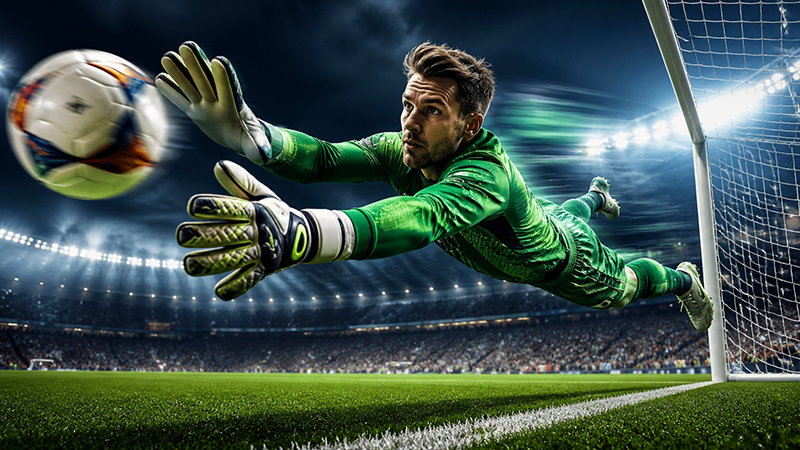
The modern goalkeeper is no longer a static figure confined to the six-yard box. In the contemporary era of high defensive lines and rapid transitions, the “fastest” goalkeeper is a title that carries multiple meanings.
From physical sprint velocity and lightning-quick reflexes to the speed at which they achieve legendary milestones, the metrics of a world-class guardian have evolved.
To understand who truly holds the crown, we must look at the data across three distinct categories: on-pitch sprint speeds, statistical efficiency, and instantaneous impact.
The Sprinters: Who Is the Physically Fastest Goalkeeper?
When fans ask who the fastest goalkeeper in the world is, they are usually referring to top-end sprint speed. Traditionally, this was a metric reserved for wingers and strikers, but the rise of the “sweeper-keeper” has made mobility a requirement.
Robert Sánchez: The 35 km/h Barrier
Currently, the title of the physically fastest goalkeeper in professional football belongs to Robert Sánchez. Playing for Chelsea, Sánchez has recorded a staggering top speed of 35.11 km/h.
To put this in perspective, this speed rivals that of many elite outfield players and allows him to cover the space behind a high defensive line with incredible efficiency.
The Premier League Speed Leaderboard
While Sánchez leads the pack, other Premier League keepers are also demonstrating elite-level athleticism. The data shows a significant gap between the top tier and the rest of the league:
- Robert Sánchez (Chelsea): 35.11 km/h.
- David Raya (Arsenal): 32.7 km/h.
- James Trafford (Burnley): 31.84 km/h.
- Jordan Pickford (Everton): 29.85 km/h.
These numbers highlight that while James Trafford and Jordan Pickford are highly mobile, they operate at a different physical gear than Sánchez or Raya.
Speed of Achievement: The Fastest to Reach Career Milestones
In football, “speed” also refers to the rate of success. How quickly can a goalkeeper adapt to a top-tier club and start producing record-breaking results?
David Raya’s Historic Efficiency at Arsenal
David Raya has proven to be “fast” in a statistical sense. He currently holds the record for being the fastest goalkeeper in Arsenal’s history to reach 50 clean sheets.
What makes this feat truly remarkable is the timeline: he achieved this milestone in just 110 starts, shattering a record that had stood for 122 years.
This demonstrates a speed of adaptation and defensive organization that few in the history of the sport can match.
Jan Oblak and the La Liga Legacy
Looking outside the Premier League, Jan Oblak of Atlético Madrid is historically recognized for his rapid ascent in Spanish football.
Oblak holds the record for being the fastest to reach 100 clean sheets in La Liga history. His ability to reach this century mark ahead of other legendary keepers cements his place as one of the most efficient “fast” achievers in the game’s history.
Instant Impact: The Fastest Goals Ever Scored by Goalkeepers
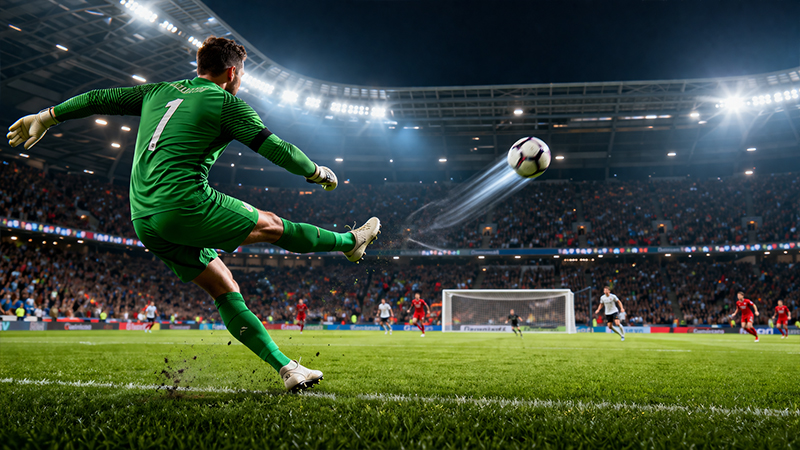
One of the rarest sights in football is a goalkeeper scoring a goal. Even rarer is a goalkeeper scoring with lightning speed.
Vireak Dara: The 9-Second World Record
On November 19, 2025, Vireak Dara, playing for Preah Khan Reach Svay Rieng in the Cambodian Premier League, set an astonishing new world record. He managed to score just 9 seconds into a match, making it the fastest goal ever recorded by a goalkeeper in professional history.
The Previous Record-Holder: Asmir Begović
Before Dara’s incredible feat, the record was held by Asmir Begović. In 2013, while playing for Stoke City, Begović scored a goal just 13 seconds after kickoff.
While 13 seconds was considered an untouchable record for over a decade, Dara’s 9-second strike has redefined what is possible for a goalkeeper in the opening moments of a game.
The Ultimate Limit: Human Speed vs. The RoboKeeper
While Robert Sánchez and David Raya represent the peak of human physical performance, they are still bound by the limits of human biology. This is where technology takes over.
The RoboKeeper: 360 Milliseconds of Precision
The RoboKeeper, a machine developed by the Fraunhofer Institute, is widely considered the fastest goalkeeper in existence. Unlike humans, who rely on anticipation and muscular reaction, the RoboKeeper utilizes high-speed cameras to track a ball’s trajectory.
- Reaction Time: It can react to shots in approximately 360 milliseconds.
- Velocity Capacity: It is designed to stop balls traveling at speeds up to 100 km/h.
- The Messi/Neymar Challenge: The machine is so fast that even world-class legends like Lionel Messi and Neymar find it nearly impossible to beat the RoboKeeper consistently.
This machine serves as a benchmark for the absolute limit of reaction speed, showing how far human keepers like Sánchez and Raya have to push themselves to close the gap between biology and technology.
Conclusion: Who Truly Is the Fastest?
The answer to “Who is the fastest goalkeeper in the world?” depends entirely on your metric.
- If you value raw physical speed, Robert Sánchez is the undisputed champion at 35.11 km/h.
- If you value efficiency and milestones, David Raya is the fastest to reach defensive legendary status at Arsenal.
- If you value instant impact, Vireak Dara holds the world record for the fastest goal at 9 seconds.
As football continues to evolve, these records will likely be challenged. Whether it is through improved athletic training or tactical shifts that require keepers to cover even more ground, the definition of the “fastest” goalkeeper will continue to reach new heights.
Would you like me to find the highest-rated goalkeepers in the latest football games, like EA FC 26, to see how their digital speed compares to these real-world stats?