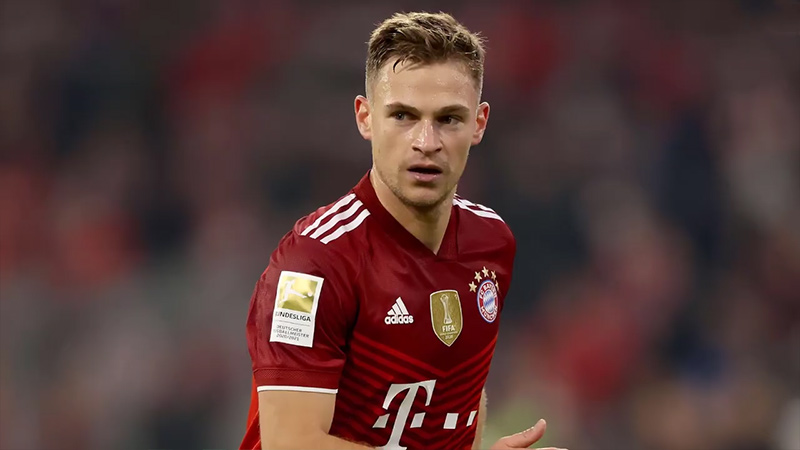
In the modern era of tactical fluidity, few players spark as much debate regarding their “natural” position as Joshua Kimmich.
As a cornerstone of both European club football and the international stage, his role on the pitch is often a topic of intense scrutiny by fans and analysts alike.
To answer the pressing question: Is Joshua Kimmich a center back?—we must look at the factual data regarding his professional career and current standing in the game.
Based on official records and his current deployment, Joshua Kimmich is not primarily a center back; rather, he is a professional footballer who specializes as a defensive midfielder or a right-back.
The Tactical Identity of Joshua Kimmich
To understand why some might mistake Kimmich for a center back—or wonder if he could play there—one must first understand his actual roles for Bayern Munich and the Germany national team.
1. The Defensive Midfield General
For the majority of his recent career, Kimmich has been defined by his role as a defensive midfielder. In this position, he acts as the “metronome” of the team.
- Dictating Play: From the center of the park, he uses his vision to distribute the ball and transition the team from defense to attack.
- Defensive Shield: While he is not a center back, his role requires a high level of defensive intelligence to intercept passes and break up opposition play before it reaches the back line.
2. The Elite Right-Back
Kimmich’s versatility is most evident in his ability to play as a right-back at a world-class level.
- Modern Fullback Play: In this role, he combines defensive duties with the offensive necessity of overlapping runs and precision crossing.
- Tactical Flexibility: His comfort in both the midfield and the defensive line (as a fullback) is a major reason why he is considered one of the most adaptable players in the Bundesliga.
Why the “Center Back” Question Arises
As a midfielder or right-back, why do fans often ask if he is a center back? There are several tactical reasons for this confusion:
- Ball-Playing Ability: In the modern game, center backs are often expected to be “playmakers from deep.” Because Kimmich is an elite passer, his skill set overlaps with what managers look for in a modern ball-playing center back.
- Positional Discipline: His high level of tactical awareness means he is often found covering the spaces vacated by center backs during a match.
- Emergency Cover: In football, highly versatile players are sometimes moved into the heart of the defense during injury crises. However, as of his current professional status, this is not his designated or preferred role.
Leadership and the Captain’s Armband
Regardless of where he is stationed on the pitch, Kimmich’s most defining “position” in recent years has been that of a leader.
He currently captains the Germany national team, a role that requires him to be the vocal and tactical heart of the squad.
Being the captain of a powerhouse like Germany suggests that his value isn’t just in his physical position, but in his ability to organize the team.
Whether he is dropping deep into the midfield or tracking back as a right-back, his influence is foundational to the team’s structure.
Comparing Kimmich to Traditional Center Backs
To further clarify why he is classified as a midfielder/fullback, we can look at the traditional requirements of a center back compared to Kimmich’s profile:
| Requirement | Traditional Center Back | Joshua Kimmich |
|---|---|---|
| Primary Focus | Goal-line clearances & Aerial duels | Ball progression & Tactical transition |
| Positioning | Fixed at the heart of defense | Fluid between midfield and flank |
| Playmaking | Secondary (usually) | Primary Engine |
Conclusion: A Master of Two Roles
While Joshua Kimmich possesses the defensive mind required to stabilize a backline, he is not a center back. He is a defensive midfielder and right-back whose career is defined by world-class versatility and leadership.
Born in 1995, he has already established himself as a legendary figure for Bayern Munich and a vital captain for Germany, proving that you don’t need to fit into a single box to be the most important player on the pitch.