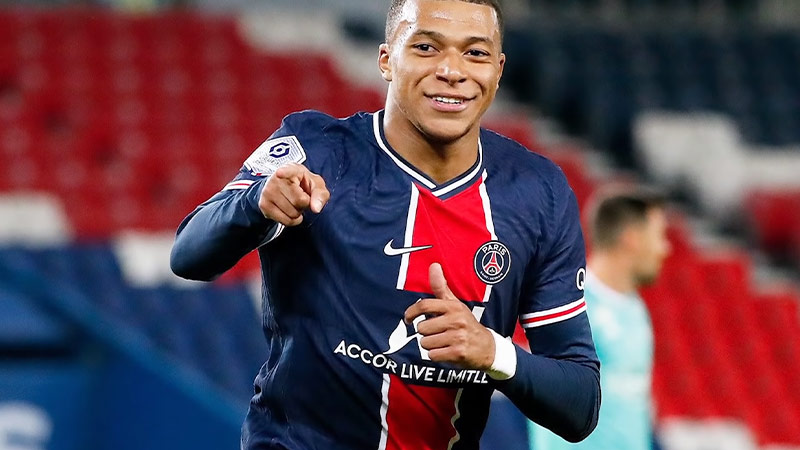
The landscape of professional football has reached a physical zenith in the 2025/26 season, where speed is no longer just an asset but a core tactical requirement.
Modern scouting and data analytics have shifted the focus toward players who can maintain elite velocity under pressure. As elite clubs implement high-intensity pressing and rapid transitions, the question of who leads the pack has a new, definitive answer.
While legendary names still haunt the record books, a new generation of sprinters is redefining the limits of human performance on the pitch, combining raw athletic power with sophisticated tactical execution to break defensive lines.
The Evolution of Velocity in Modern Tactics
The 2025/26 season has demonstrated that the ability to transition from defense to attack in under five seconds is the hallmark of a world-class team. This reliance on rapid movement has forced players to train more like Olympic sprinters than traditional footballers.
The Tactical Shift to High-Press Transition
In the current European tactical meta, managers are increasingly utilizing “verticality” to bypass compact midfields. By employing players with top-tier acceleration, teams like Newcastle United and Arsenal can exploit even the slightest positional errors from opponents.
This strategy demands that attackers not only possess high top speeds but also the stamina to repeat these sprints throughout a 90-minute match.
Physical Dominance as a Strategic Requirement
The physical benchmarks for elite wingers and full-backs have moved significantly. Ten years ago, a top speed of 35 km/h was considered exceptional; today, that figure is merely the baseline for entry into top-flight European football.
Athletic departments now prioritize explosive power training and biomechanical optimization to ensure players can reach their peak velocity during the crucial final third of a match.
The New King of Speed: Anthony Gordon
As of May 2026, the global football community has identified a new leader in the race for physical supremacy. Anthony Gordon of Newcastle United has officially claimed the title of the fastest soccer player in the world.
Breaking the 38 km/h Barrier
During the 2025/26 campaign, Gordon reached a staggering top speed of 38.2 km/h (23.7 mph), setting a new benchmark for active players.
This performance was not an isolated incident but part of a consistent trend of high-velocity output in both domestic and continental fixtures.
His ability to hit these speeds while maintaining ball control has made him the most dangerous transition threat in the Premier League.
Consistent Performance in High-Stakes Matches
What separates Gordon from previous speedsters is his efficiency in major competitions. He has recorded a 37.92 km/h sprint in the Champions League, proving that his athleticism translates to the highest level of the game.
This consistency has allowed Newcastle United to build a tactical system centered around his ability to outrun entire defensive units.
The 2025/26 Speed Leaderboard
Tracking the elite performers across Europe requires looking at data from various top-flight leagues. The following table highlights the definitive leaders in top speed for the current season.
| Player | Team | Top Speed | Primary Competition |
|---|---|---|---|
| Anthony Gordon | Newcastle United | 38.2 km/h | Premier League / UCL |
| Kylian Mbappé | Real Madrid | 38.0 km/h | La Liga |
| Jackson Tchatchoua | Wolves | 37.3 km/h | Premier League |
| Gabriel Martinelli | Arsenal | 36.74 km/h | Premier League |
| Anthony Elanga | Newcastle United | 36.65 km/h | UCL |
Analyzing the Top Five
While Anthony Gordon holds the top spot, the gap between the leaders is remarkably narrow. Kylian Mbappé remains a perennial threat, consistently reaching the 38.0 km/h mark for Real Madrid.
The list also features emerging talents like Jackson Tchatchoua, whose domestic performances have caught the attention of global scouts.
The inclusion of two Newcastle United players—Gordon and Anthony Elanga—highlights a specific recruitment strategy focused on overwhelming opponents with sheer pace.
Domestic vs. Continental Dominance
The environment in which a player competes often dictates their physical output. The Premier League continues to be the primary stage for record-breaking sprints due to its end-to-end nature and physical intensity.
Premier League’s Physical Intensity
Jackson Tchatchoua of Wolves has emerged as a standout performer in England this season. He currently holds the domestic record for the 2025/26 season with a top speed of 37.30 km/h.
This achievement is particularly noteworthy as it ranks as the third-fastest sprint in the history of the Premier League. His ability to track back and support the attack with such high velocity provides Wolves with a unique tactical advantage in the English top flight.
European Competition Speed Benchmarks
When moving to the European stage, the data shows that the Champions League (UCL) fosters an environment for peak speed during counter-attacking scenarios.
Anthony Gordon’s 37.92 km/h UCL sprint narrowly leads over his teammate Anthony Elanga, who recorded a 36.65 km/h top speed in the same competition.
These figures suggest that the open spaces often found in continental football allow elite sprinters to reach their absolute maximum velocity more frequently than in congested domestic league play.
Real-World Performance vs. Digital Ratings
A common point of contention among fans is the discrepancy between real-world match data and the attributes assigned to players in popular simulations like EA SPORTS FC 26.
The Logic Behind Video Game Statistics
In the digital realm, Kylian Mbappé continues to hold the crown. In EA SPORTS FC 26, he remains the fastest-rated player with a 97 Pace stat. This rating reflects his career-long reputation for explosive movement and his ability to maintain high speeds over long distances.
While he may currently sit slightly behind Anthony Gordon in recorded match telemetry for the 2025/26 season, his digital avatar still represents the gold standard of speed for gamers.
Bridging the Reality Gap for Fans
The gap between a 97 Pace rating and a 38.2 km/h real-world sprint is narrowing as developers utilize more advanced data integration. Fans now look for “PlayStyles” and “Accelerate” archetypes in-game that mirror the real-life biomechanics of players like Gordon and Martinelli.
As tracking technology improves, we can expect future iterations of football simulations to more accurately reflect the mid-season surges in speed seen in the Premier League and La Liga.
Chasing the Ghost of Thierry Henry
Despite the incredible advancements in modern sports science, some historical records remain incredibly difficult to surpass. Every modern sprinter is measured against the titans of the past who set the initial boundaries of the sport.
The Technology Behind Historical Speed Measurements
Thierry Henry still holds the all-time record for the highest speed ever measured in a professional match, clocking in at 39.2 km/h (24.3 mph).
While modern players have the benefit of advanced recovery protocols and lighter footwear, Henry’s record was set using earlier tracking methods.
This has led to ongoing debates regarding the comparability of data across different eras of the sport. However, the 39.2 km/h figure remains the ultimate “white whale” for today’s elite athletes.
Will the 39 km/h Barrier Ever Fall?
With Anthony Gordon reaching 38.2 km/h, the football world is wondering if the 39 km/h barrier will finally be broken by a modern player. The current trajectory of athletic development suggests that it is possible.
If a player with the frame of a sprinter, like Gordon or Mbappé, catches a perfect transition opportunity with sufficient space, we may see Henry’s legendary record finally eclipsed by the end of the decade.
The Tactical Impact of Elite Speedsters
Having the fastest player on the pitch changes the mathematical equations of a football match. It forces the opposition to drop their defensive line deeper, which in turn creates more space in the midfield for creative playmakers to operate.
Creating Space Through Gravity
Elite speed creates a form of “gravity” on the pitch. When Anthony Gordon or Kylian Mbappé stands on the shoulder of the last defender, the entire defensive structure must react.
This often results in “double-teaming,” where a winger is marked by both a full-back and a covering midfielder. This defensive over-commitment is exactly what modern managers want to exploit, as it frees up other attackers in central areas.
The Psychological Edge of Velocity
Beyond the tactical benefits, there is a significant psychological component to facing the world’s fastest players. Defenders who know they cannot win a foot race often hesitate to engage in high-press situations, leading to a more passive defensive style.
This hesitation is often enough for a player of Gordon’s caliber to find the half-yard of space needed to deliver a cross or take a shot on goal.
Frequently Asked Questions
Who is the fastest player in the Premier League history?
While Anthony Gordon is the fastest this season at 38.2 km/h, Jackson Tchatchoua’s 37.30 km/h ranks as the third-fastest in the league’s recorded history.
Does Kylian Mbappé still hold any speed records?
Mbappé remains incredibly consistent, reaching a peak of 38.0 km/h this season, and he retains the highest Pace rating (97) in EA SPORTS FC 26.
How is soccer speed measured?
Modern speed is measured using GPS tracking vests and high-frame-rate optical cameras that calculate a player’s position multiple times per second to determine their peak velocity during a sprint.
Conclusion: A New Era of Acceleration
The 2025/26 season has solidified a shift in the hierarchy of speed. Anthony Gordon’s rise to the top of the rankings with a 38.2 km/h sprint signals that a new generation has arrived to challenge the established order.
While Kylian Mbappé remains an elite force and Thierry Henry’s historical record stands as the ultimate goal, the depth of speed talent in the Premier League—highlighted by Jackson Tchatchoua and Gabriel Martinelli—shows that the game is faster than it has ever been.
For fans and analysts alike, the hunt for the fastest player is more than just a statistical curiosity; it is a window into the future of how football will be played at the highest level.