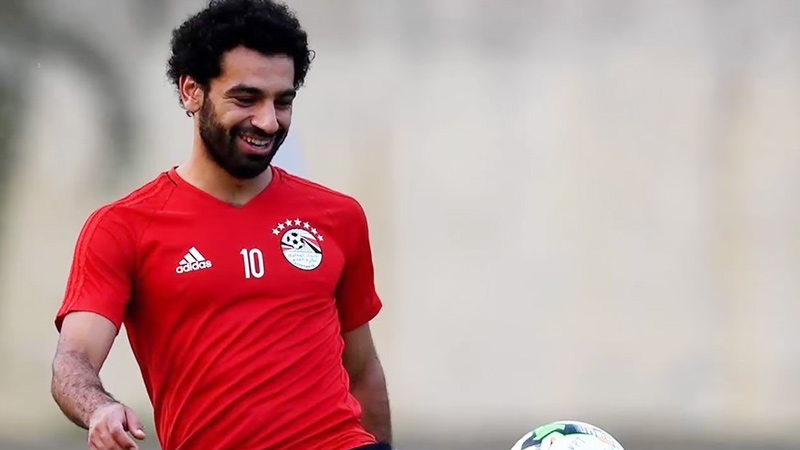
Mohamed Salah’s rise from the village of Nagrig to the heights of the Premier League is often viewed as a singular feat of will, yet his greatness was architected by a specific constellation of influences.
To understand the “Egyptian King,” one must look beyond his goal tally at Liverpool and examine the legends he meticulously modeled his game after.
From the explosive power of Brazilian icons to the tactical elegance of European masters, Salah curated a blueprint for success.
This analysis explores the technical, professional, and personal figures who served as the foundation for his global stardom.
The Global Icons: Shaping a World-Class Technique
The technical proficiency Salah displays on the wing is not accidental; it is the result of years spent studying the “exceptional” styles of football’s most transformative players.
By identifying primary idols early in his development, Salah was able to blend diverse skill sets into a unique playing style that dominates modern European football.
Ronaldo Nazário: The Technical Benchmark
Salah has repeatedly cited Ronaldo Nazário, famously known as “El Fenomeno,” as his number one childhood idol. Ronaldo’s influence is visible in Salah’s explosive bursts of speed and his clinical nature in one-on-one situations.
While Ronaldo operated primarily as a central striker, Salah adopted the Brazilian’s “exceptional” ability to manipulate defenders at high speeds.
For Salah, Ronaldo represented the pinnacle of what a forward could achieve, providing a technical standard that pushed the young Egyptian to refine his dribbling and finishing.
Zinedine Zidane: Mastering Game Control
While Ronaldo provided the template for finishing, Zinedine Zidane offered the blueprint for game intelligence. Salah greatly admired Zidane’s unique technique and his uncanny ability to dictate the tempo of a match.
This inspiration is evident in Salah’s evolution at Liverpool, where he transitioned from a pure speedster to a playmaker who can control the final third.
Zidane’s influence taught Salah that elite football requires more than physical gifts; it requires the vision to see spaces before they open.
Francesco Totti: From Idol to Teammate
One of the most profound chapters in Salah’s development occurred at AS Roma, where he transitioned from idolizing Francesco Totti to playing alongside him.
Totti, a symbol of loyalty and creative genius in Italian football, provided Salah with a firsthand look at the “Il Capitano” mindset.
Observing Totti’s professionalism and longevity in a demanding league like Serie A helped Salah understand the mental fortitude required to sustain a career at the highest level of the sport.
The Professional Blueprint: Longevity and Discipline
In the modern era, talent alone is insufficient to maintain a spot among the world’s elite. Salah recognized early on that physical maintenance and professional discipline were the keys to surviving the rigors of the Premier League.
Cristiano Ronaldo and the Science of Elite Performance
While many players admire Cristiano Ronaldo for his trophies, Salah focused on the Portuguese star as a model for professional longevity.
Salah observed how Ronaldo utilized strict discipline and comprehensive self-care to remain at the top of the game well into his late thirties.
This inspiration led Salah to adopt a rigorous lifestyle that includes meticulous nutrition, recovery sessions, and extra gym work.
Table: Professional Pillars Adopted by Salah
| Pillar | Inspiration Source | Implementation in Salah’s Career |
|---|---|---|
| Elite Longevity | Cristiano Ronaldo | Focus on physical recovery and strict dietary habits. |
| Technical Control | Zinedine Zidane | Developing playmaking skills and game intelligence. |
| Loyalty & Leadership | Francesco Totti | Professionalism in high-pressure dressing rooms. |
| Explosive Finishing | Ronaldo Nazário | Refining close-range finishing and speed-dribbling. |
By treating his body as an elite machine, Salah has managed to avoid major injuries and maintain a consistent scoring record that rivals the very icons he once watched on television.
This commitment to the “Ronaldo model” of discipline has made him one of the most reliable assets in world football.
The Local Hero: Creating the Path from Egypt to Europe
For a young player in Egypt, the dream of playing for a club like Liverpool can often feel unattainable. The “gap” between domestic Egyptian football and the European elite is vast, and bridging it requires a psychological breakthrough.
Mohamed Aboutrika: The Proof of Concept
Domestically, the legendary Mohamed Aboutrika served as the “local hero” who made the dream feel tangible.
Aboutrika was not just a player of immense talent; he was a cultural icon who demonstrated that an Egyptian player could command respect on the international stage.
His success with the Egyptian national team and Al Ahly provided Salah with the confidence to believe that he, too, could achieve greatness. Aboutrika’s influence acted as a bridge, allowing Salah to transition from local aspirations to a global mindset.
This domestic inspiration was crucial because it provided Salah with a relatable figure of success. While he could admire Ronaldo or Zidane from afar, Aboutrika was a hero who shared his language, culture, and background.
This connection made the path to stardom feel like a realistic objective rather than a distant fantasy.
The Personal Architects: Faith, Family, and Hard Work
Beyond the pitch, Salah’s journey was constructed by internal drivers and personal sacrifices that are rarely discussed in tactical breakdowns.
These “personal architects” provided the emotional and spiritual resilience needed to navigate the challenges of his early career.
Parental Influence and the Nine-Hour Commute
The work ethic that defines Salah’s pressing and defensive contributions was forged during his youth. His father played an instrumental role, encouraging Salah even when the obstacles seemed insurmountable.
In his early years, Salah was required to travel four to five hours each way—totaling nearly nine hours a day—just to attend training sessions in Cairo.
This period of extreme sacrifice taught Salah that greatness is not given; it is earned through grueling, repetitive effort.
His father’s unwavering support during these long commutes provided the foundational grit that allows Salah to thrive under pressure today.
Faith as a Pillar: The Meaning Behind the Sujood
Salah’s religious faith as a Muslim is a central pillar of his life and career mindset. His devotion provides a sense of humility and gratitude that balances the ego-driven world of professional sports.
This is most visible in his “Sujood” celebration—prostrating on the pitch after scoring a goal to express thanks.
This public display of faith has not only grounded Salah but has also made him a powerful ambassador for his religion, fostering a sense of connection with millions of fans worldwide who share his values.
The Legacy of Inspiration: Salah as the New Architect
Salah’s career has now come full circle. Having been inspired by the legends of the past, he has now become the primary architect for the next generation of athletes in the Middle East and Africa.
Breaking Barriers for Arab and Middle Eastern Youth
A primary motivation in Salah’s career is the desire to prove to Egyptian and Arab youth that they can reach the highest levels of global sport through hard work and sacrifice.
He is aware that his every move is watched by millions of young people who see him as their “Aboutrika”—the proof that their background is not a barrier to success.
By maintaining a clean public image and a world-class performance level, Salah is actively widening the path for future generations to follow in his footsteps.
Key Motivations for Success
- Proof of Concept: Showing that Egyptian players can thrive in the world’s most difficult leagues.
- Cultural Representation: Carrying the pride of the Arab world into global arenas like the Champions League.
- Legacy Building: Ensuring that his success serves as a blueprint for others to replicate his professional discipline.
Frequently Asked Questions (FAQ)
Who was Mohamed Salah’s biggest idol growing up?
Salah has consistently named Ronaldo Nazário (Brazil) as his number one idol, citing his exceptional style of play as a major influence on his own development.
Did Mohamed Salah ever play with any of his idols?
Yes, during his time at AS Roma, Salah had the unique opportunity to play alongside the legendary Francesco Totti, a player he had idolized since his youth.
How does Mohamed Salah’s faith influence his football?
Salah views his Islamic faith as a central pillar of his life. It provides him with a disciplined mindset and a sense of gratitude, which he famously expresses through his Sujood celebration after scoring goals.
What role did Salah’s family play in his success?
Salah’s father was a key motivator, especially during his youth when Salah had to endure nine-hour daily commutes to training in Cairo. This parental support was vital in developing his legendary work ethic.
Conclusion: The Blueprint of a Legend
The story of Mohamed Salah is a masterclass in how inspiration, when combined with relentless discipline, can transform a dreamer into a global icon.
He did not just inherit his talent; he built it by studying the technical brilliance of Ronaldo Nazário and Zidane, the professional longevity of Cristiano Ronaldo, and the local leadership of Mohamed Aboutrika.
For the modern football fan or aspiring athlete, Salah’s journey offers a clear lesson: success is a collaborative effort between the individual and the “architects” they choose to follow.
By aligning himself with the best in the world and staying true to his personal values of faith and family, Salah has secured a legacy that will inspire the world long after he hangs up his boots.