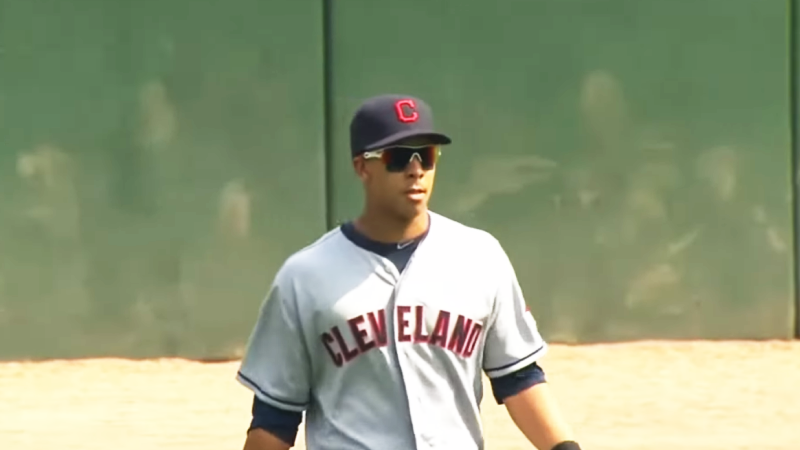
In the high-stakes world of Major League Baseball, some trades are remembered for the immediate fireworks they ignite, while others are defined by the slow-burning legacy of a “mystery player” who eventually changes the course of a franchise.
The Michael Brantley trade—which was actually the completion of the 2008 CC Sabathia blockbuster—stands as perhaps the most famous example of the latter.
To understand what the trade from Michael Brantley was, one must look back at a deal that began in the heat of a July pennant race and didn’t truly end until the leaves began to turn in October.
It is a story of postseason triggers, calculated risks, and a “Player to Be Named Later” (PTBNL) who evolved from a trade afterthought into a five-time All-Star icon.
The Blockbuster Genesis: July 7, 2008
The trade that eventually brought Michael Brantley to Cleveland didn’t actually feature his name at the start. On July 7, 2008, the baseball world was rocked by a massive mid-season transaction.
The Milwaukee Brewers, desperate to end a long postseason drought and sensing a window of opportunity, went “all-in” to acquire the reigning AL Cy Young winner, CC Sabathia, from the Cleveland Indians.
At the time, Sabathia was the most dominant force on the mound, and Cleveland, realizing they could not re-sign him, sought a package of high-upside prospects to fuel their future. The initial exchange was significant:
- The Brewers received: Left-handed ace CC Sabathia.
- The Indians received: Outfielder Matt LaPorta, pitcher Zach Jackson, pitcher Rob Bryson, and a Player to Be Named Later (PTBNL).
For months, that final piece of the puzzle—the PTBNL—remained a mystery.
Decoding the “Player to Be Named Later” (PTBNL)
To the casual fan, a “Player to Be Named Later” sounds like a minor detail, but in the Sabathia deal, it was a crucial strategic lever.
In MLB transactions, a PTBNL is often used when teams cannot agree on a final player immediately, or when the final selection depends on specific performance triggers or team success.
In this specific instance, Cleveland did not just pick a name out of a hat. They had a list of players to monitor within the Brewers’ farm system.
The final selection of Michael Brantley was not finalized until October 3, 2008, nearly three months after Sabathia had already begun throwing gems for Milwaukee.
The Postseason Trigger: Why Michael Brantley?
One of the most fascinating aspects of this trade was the conditional nature of the PTBNL selection. Michael Brantley was triggered by the Brewers making the 2008 postseason.
Had the Brewers failed to make the playoffs, the “menu” of players Cleveland could choose from might have been different. However, CC Sabathia put the Brewers on his back, pitching on short rest repeatedly to drag Milwaukee into the playoffs.
By succeeding in their goal of reaching the postseason, the Brewers inadvertently “activated” the clause that allowed Cleveland to secure Michael Brantley as the final piece of the package.
From “Mystery Man” to Cleveland Cornerstone
When the trade was completed on October 3, 2008, Michael Brantley was far from a household name. Most of the media attention was focused on Matt LaPorta, who was considered the “crown jewel” of the return for Cleveland.
Brantley was seen as a solid, contact-oriented prospect, but few predicted he would become the defining win for the Indians in the deal.
A Decade of Excellence in “The Land”
Brantley’s tenure in Cleveland (2009–2018) proved to be one of the most consistent and productive stretches for any outfielder in the franchise’s modern history. He transitioned from a trade “throw-in” to a five-time All-Star.
His impact in Cleveland was defined by:
- Elite Contact Hitting: Brantley earned the nickname “Dr. Smooth” for his effortless left-handed swing and his ability to avoid strikeouts.
- Leadership: He became the veteran heartbeat of a Cleveland team that eventually reached the 2016 World Series.
- Longevity: While the other players in the Sabathia trade (LaPorta, Jackson, and Bryson) had varied or limited success, Brantley provided a decade of service to the organization.
The Trade Balance: A Rare Win-Win
Rarely does a trade work out so perfectly for both sides. Usually, one team “wins” and the other “loses.” However, the Michael Brantley/CC Sabathia transaction is a rare outlier:
Milwaukee’s Perspective
They got exactly what they paid for. CC Sabathia delivered one of the greatest individual half-seasons in history, ending the Brewers’ 26-year playoff drought. To Milwaukee fans, the price of Michael Brantley was worth the magic of 2008.
Cleveland’s Perspective
While they lost an ace, they gained a franchise pillar. By waiting for the PTBNL trigger and identifying Brantley, Cleveland secured a player who would lead their lineup for the next ten years.
The Next Chapter: Houston and Beyond
After a stellar decade in Cleveland, Michael Brantley’s journey took him to the Houston Astros. In 2018, he signed with Houston as a free agent, where he continued his reputation as one of the most professional hitters in the game.
Even as he moved on to chase championships in Houston, his origin story remained tethered to that fateful October day in 2008 when he was officially named as the final piece of the Sabathia deal.
Conclusion: The Legacy of October 3, 2008
The trade from Michael Brantley serves as a masterclass in scouting and patience. It reminds us that the “Player to Be Named Later” is not just a footnote; sometimes, they are the most valuable asset in the entire deal.
Cleveland’s decision to wait for the postseason trigger and their keen eye for talent turned a mid-season salary dump into a decade of All-Star caliber play.
While CC Sabathia brought the thunder to Milwaukee in 2008, it was the arrival of Michael Brantley that provided the long-term lightning for Cleveland.
Michael Brantley Trade:
- Original Deal Date: July 7, 2008.
- Completion Date: October 3, 2008.
- The Exchange: CC Sabathia (to MIL) for Matt LaPorta, Zach Jackson, Rob Bryson, and Michael Brantley (to CLE).
- The Catalyst: The Brewers’ 2008 postseason appearance.
- The Result: A 5-time All-Star career for Brantley in Cleveland (2009–2018).