Understanding the physical durability and medical history of elite professional athletes offers critical insight into the rigorous demands of Major League Baseball.
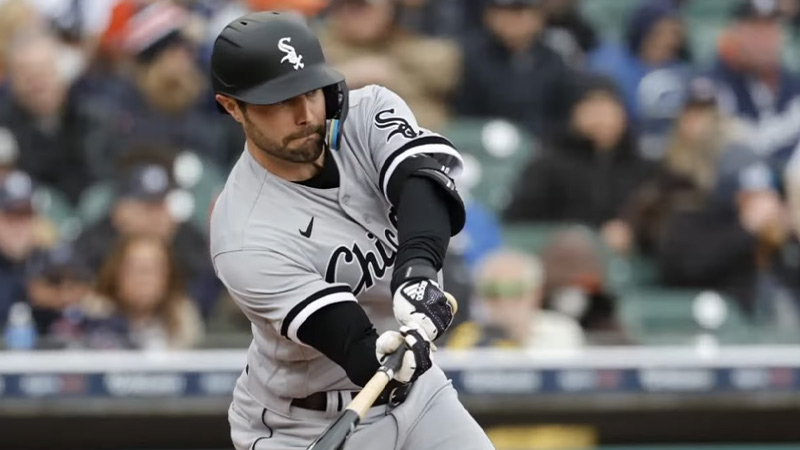
Outfielder A.J. Pollock has compiled a notable career marked by exceptional performance alongside a complex series of upper-extremity orthopedic procedures.
Over the span of nearly a decade, Pollock underwent four major surgical operations targeting his right elbow and right hand.
These interventions ranged from initial fracture repairs using metal plates and screws to complex secondary stabilization and hardware removal due to deep-tissue bacterial complications.
Summary of A.J. Pollock’s Surgical Timeline
Between 2010 and 2019, A.J. Pollock underwent four primary surgical operations on his throwing arm and hand:
- March/April 2010 (Right Elbow): Initial internal fixation featuring the insertion of a metal plate and screw following an exhibition game elbow fracture.
- May 2014 (Right Hand): Open reduction and internal fixation utilizing a surgical plate and screws to stabilize a fractured right hand.
- April 2016 (Right Elbow): Reinjury repair involving olecranon fracture fixation with plate placement.
- May 2019 (Right Elbow): Emergency surgical removal of metal hardware (plate and screw) following a bacterial infection in the bursa sac.
The March/April 2010 Right Elbow Surgery: Initial Fracture Fixation
The foundation of A.J. Pollock’s surgical history began early in his professional development. During an exhibition game in early 2010, Pollock suffered a severe traumatic fracture to his right elbow while diving for a ball in the outfield.
Surgical Procedure Details
In March or April 2010, orthopedic surgeons performed an initial open reduction internal fixation on Pollock’s right elbow. The procedure required opening the surgical site to realign the fractured osseous structures of the elbow joint.
To preserve joint alignment and facilitate complete bone healing, surgeons inserted a specialized metal plate secured by a surgical screw directly into the elbow bone.
Biomechanical Significance
For a major league outfielder, the right elbow is central to throwing velocity, trajectory, and repetitive acceleration stress. Constructing a rigid internal frame using a metal plate provided immediate structural stability.
However, inserting metal hardware into an active athletic joint creates localized rigid points that can alter stress distribution under high-velocity throwing forces.
This initial fixation laid the structural foundation for Pollock’s throwing mechanics throughout the early portion of his career.
The May 2014 Right Hand Surgery: Fracture Stabilization
Four years after his initial elbow operation, Pollock suffered a distinct upper-extremity injury affecting his right hand.
Injury Mechanism and Specialist Intervention
In May 2014, Pollock sustained a displaced fracture in his right hand during regular season competition.
Given the precision required for gripping a bat and throwing a baseball, immediate surgical stabilization was required. The operation was performed by renowned orthopedic specialist Dr. Don Sheridan.
Surgical Mechanics and Hardware
During the May 2014 procedure, Dr. Sheridan performed an internal fixation of the hand fracture. The surgical technique involved placing a dedicated metal plate stabilized by multiple screws across the fractured hand bones.
Hand surgeries in elite hitters require careful preservation of neurovascular structures, tendon gliding paths, and metacarpal alignment.
Dr. Sheridan’s application of plate and screw hardware restored anatomical rigidity, allowing Pollock to maintain grip strength and wrist stability upon his return to active play.
The April 2016 Right Elbow Surgery: Olecranon Reinjury Repair
In April 2016, Pollock suffered a major setback to his throwing arm, reinjuring his previously operated right elbow.
The Olecranon Fracture
The reinjury resulted in an olecranon fracture, which affects the prominent bony tip of the ulna at the back of the elbow.
The olecranon serves as the primary lever arm for the triceps muscle group, making it subject to significant tensile forces during throwing and high-impact extension.
Co-Surgeons and Operative Approach
Recognizing the complexity of operating on a previously repaired joint, the procedure was performed conjointly by Dr. Don Sheridan and Dr. Gary Waslewski in April 2016.
The co-surgeons executed a secondary elbow reconstruction. This involved realigning the fractured olecranon bone fragments and anchoring a specialized contour-fitted plate across the olecranon to ensure rigid compression and union.
Operating on a previously surgically altered site requires navigating existing scar tissue and modifying prior stress-bearing points.
The placement of the olecranon plate successfully reunited the bony structure, providing the necessary mechanical integrity for high-impact athletic movement.
The May 2019 Right Elbow Hardware Removal: Infection Management
While internal metal plates and screws provide crucial structural support for acute fractures, permanent hardware can occasionally present long-term biological complications.
In May 2019, Pollock experienced a severe medical issue originating from the hardware previously installed in his right elbow.
Infection of the Bursa Sac
Pollock developed a dangerous bacterial infection within the bursa sac of his right elbow. The olecranon bursa is a fluid-filled sac situated between the point of the elbow bone and the overlying skin, designed to reduce friction during movement.
When internal hardware is present beneath the bursa, bacteria can occasionally colonize the foreign metal surface, creating a localized biofilm that antibiotics alone cannot eradicate.
Surgical Extraction Procedure
To eliminate the infection and protect the joint from systemic complications, Pollock underwent emergency elbow surgery in May 2019. The operation was led by orthopedic specialist Dr. John Itamura.
Dr. Itamura performed a complete hardware extraction, surgically removing the metal plate and screw that had been stabilizing the right elbow.
In addition to removing the foreign metal objects, the surgical protocol involved thorough debridement (cleaning) of the infected bursa sac tissue to eradicate all residual bacteria.
Post-Extraction Recovery
Removing the metal hardware eliminated the physical medium hosting the bacterial infection, allowing the surrounding soft tissue and bursa to heal cleanly.
Because the underlying olecranon fracture from 2016 had fully consolidated into solid bone, removing the internal plate and screw did not compromise the underlying structural integrity of Pollock’s elbow.
Comprehensive Surgical Matrix: A.J. Pollock
The following table synthesizes the complete historical record of A.J. Pollock’s surgical procedures:
| Date | Affected Anatomy | Medical Condition / Injury | Surgical Procedure Performed | Attending Surgeon(s) |
|---|---|---|---|---|
| March/April 2010 | Right Elbow | Exhibition game fracture | Internal fixation with plate and screw insertion | Unspecified Surgical Team |
| May 2014 | Right Hand | Displaced hand fracture | Open reduction with plate and screws placement | Dr. Don Sheridan |
| April 2016 | Right Elbow | Olecranon fracture reinjury | Re-stabilization with olecranon plate installation | Dr. Don Sheridan & Dr. Gary Waslewski |
| May 2019 | Right Elbow | Olecranon bursa bacterial infection | Hardware removal (plate & screw) & bursa cleanup | Dr. John Itamura |
In-Depth Orthopedic Analysis: Challenges of Upper Extremity Surgeries in MLB Outfielders
A.J. Pollock’s surgical history illustrates several core challenges managed by elite sports medicine teams:
1. Hardware-Related Tissue Friction and Bursitis
Metal plates and screws placed over superficial bony prominences, such as the olecranon tip or metacarpals, are covered by thin layers of skin and soft tissue.
In high-impact throwing athletes, repeated friction over prominent screw heads or plate edges can cause inflammation in the olecranon bursa.
In Pollock’s case, this localized irritation eventually led to a bacterial infection in May 2019, necessitating complete removal of the metal plate.
2. Multi-Joint Load Distribution
Having undergone surgeries on both his right hand and right elbow, Pollock experienced altered biomechanical stress pathways across his throwing arm.
Surgeries involving plate fixations temporarily alter the natural flexibility of bone, shifting rotational force up or down the kinetic chain.
The joint stabilization provided by Dr. Sheridan, Dr. Waslewski, and Dr. Itamura ensured that bone density and anatomical alignment were fully restored following each procedure.
Conclusion
A.J. Pollock’s decade-long medical journey demonstrates remarkable perseverance in professional sports.
Navigating four distinct surgical procedures—ranging from initial fracture repair in 2010 to complex olecranon stabilization in 2016 and hardware removal in 2019—requires immense physical resilience and specialized medical care.
Through the expertise of Dr. Don Sheridan, Dr. Gary Waslewski, and Dr. John Itamura, Pollock consistently overcomes severe orthopedic setbacks to continue competing at the highest tier of Major League Baseball.