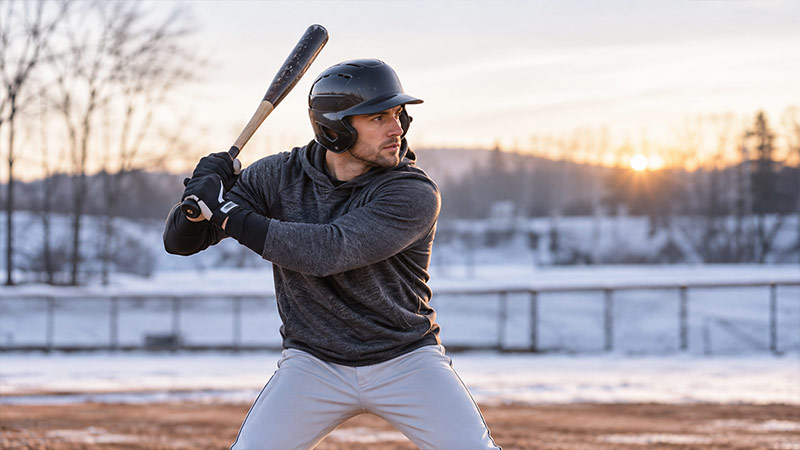
Cold weather can make a baseball game tough for players and fans alike. Early-season games often take place when temperatures range from 30°F to 40°F.
Add strong winds, cloudy skies, and long periods of sitting or standing, and the cold can become hard to handle.
Baseball is different from sports that involve constant movement. Players may stand in the field for several minutes before they need to run, throw, or catch.
Fans often sit in open stadiums for three hours or longer. Without the right clothing, staying warm can be a challenge.
Cold muscles may feel stiff, and numb fingers can make it harder to grip a bat or throw a ball. For spectators, cold feet, hands, and legs can make watching the game uncomfortable.
The best way to dress for a cold baseball game is to wear three layers: a moisture-wicking base layer, a warm middle layer, and a wind-resistant outer jacket.
Players should choose lightweight clothing that allows easy movement. Fans can wear thicker layers, insulated boots, and warm accessories.
This guide explains how to dress for cold baseball games, which materials work best, and how to stay comfortable throughout all nine innings.
1. Dress in Three Layers for Better Warmth
Layering is one of the easiest ways to stay warm during a cold baseball game. Instead of wearing one heavy piece of clothing, use several layers that work together.
Each layer has a different purpose.
| Clothing Layer | Main Purpose | Best Clothing Options |
|---|---|---|
| Base layer | Keeps sweat away from your skin | Thermal shirts, compression tops, thermal leggings |
| Middle layer | Helps hold body heat | Fleece hoodies, sweaters, baseball jerseys |
| Outer layer | Protects against wind and cold air | Insulated jackets, windbreakers, parkas |
Base Layer: Keep Your Skin Warm and Dry
The base layer is the clothing closest to your skin. It helps manage sweat and provides the first level of warmth. For baseball players, a fitted long-sleeve thermal shirt is a good choice. It fits under a uniform without making it hard to move your arms.
Thermal compression leggings can also be worn under baseball pants. They provide extra warmth for players who spend long periods standing in the field. Look for base layers made from polyester, elastane blends, or merino wool. These materials help move moisture away from the skin.
A thermal mock-neck shirt can provide extra coverage around the neck. This is helpful during windy games.
Middle Layer: Hold Body Heat
The middle layer adds warmth by trapping air between your clothing. Players often use their team jersey as part of this layer. Depending on team rules, they may also wear a thin fleece top or an approved warm pullover.
Fans have more freedom when choosing a middle layer. A fleece hoodie, knit sweater, or warm sweatshirt works well. These pieces provide insulation without making the outfit too heavy. For very cold games, a fleece hoodie over a thermal shirt is a practical combination.
Outer Layer: Block Wind and Cold Air
The outer layer protects you from wind, light rain, and cold temperatures. Wind can make a baseball game feel much colder than the thermometer suggests. A wind-resistant jacket helps reduce heat loss.
Players should wear heavy jackets during warmups and while sitting in the dugout, rather than during active play if the jacket limits movement.
Fans can choose thicker outerwear, including insulated parkas, padded jackets, and long winter coats. For temperatures near freezing, a windproof insulated jacket is often more comfortable than a thin fashion jacket.
2. Choose the Right Fabric for Cold Baseball Games
The material of your clothing is just as important as the number of layers you wear. Some fabrics help keep your body dry and warm. Others absorb sweat and become uncomfortable when temperatures drop.
Avoid Cotton as Your Main Base Layer
Cotton is comfortable in mild weather, but it is not the best choice for a cold-weather athletic base layer. Cotton absorbs sweat and takes longer to dry than many performance fabrics. When you stop moving, damp cotton can feel cold against your skin.
This is especially uncomfortable for baseball players who alternate between running and standing still. Instead of a cotton undershirt, choose a moisture-wicking thermal top.
Wear Synthetic Performance Fabrics
Synthetic fabrics are popular for cold-weather sports clothing. Polyester, nylon, and elastane blends are lightweight, flexible, and often quick-drying.
Many thermal sports garments also have a soft brushed lining that adds warmth without excessive bulk. Examples include Under Armour ColdGear and Nike thermal training apparel.
These types of clothing work well for players because they allow the shoulders, arms, and legs to move freely.
Consider Merino Wool for Extra Comfort
Merino wool is another good option for cold-weather clothing. It provides insulation, manages moisture, and helps reduce odor. Merino wool socks are especially useful for fans sitting in cold stadium seats.
A merino wool base layer can also work well for coaches, spectators, and players who prefer natural fibers. However, wool clothing can cost more than synthetic alternatives and may require special washing care.
3. What Baseball Players Should Wear in Cold Weather
Players need clothing that provides warmth without limiting their performance. A heavy coat may keep someone warm on the bench, but it can interfere with throwing, batting, and fielding.
The goal is to protect the body from cold temperatures while maintaining normal movement.
Wear Two Thin Thermal Shirts Instead of One Bulky Shirt
A thick undershirt can make it harder to rotate your shoulders or swing a bat comfortably. One alternative is to wear two thin thermal shirts. The extra layer helps trap warm air while keeping the clothing flexible.
For example, a player might wear a lightweight compression shirt under a thin thermal long-sleeve top. Make sure the layers are not too tight. Clothing that restricts circulation or movement can create more problems than it solves.
Wear Thermal Leggings Under Baseball Pants
Baseball pants are not always designed for cold weather. Their lightweight material may allow cold air to reach the legs, especially during windy games.
Thermal leggings provide extra coverage under uniform pants. Choose leggings that fit comfortably around the waist, knees, and ankles.
Players should be able to run, squat, slide, and change direction without feeling restricted.
Choose Thermal Clothing Based on Temperature
Different weather conditions require different levels of insulation.
| Temperature | Recommended Clothing |
|---|---|
| 45°F–60°F | Lightweight thermal shirt and optional compression leggings |
| 30°F–45°F | Brushed thermal top and full-length thermal leggings |
| 20°F–30°F | Warmer thermal layers, insulated dugout jacket, and cold-weather accessories |
| Below 20°F | Heavy cold-weather protection during breaks; assess whether playing conditions are safe |
These are general guidelines. Wind, rain, activity level, and personal comfort can change how much insulation is needed.
4. Keep Your Hands Warm During the Game
Cold hands can make baseball difficult. Players need good finger movement to grip the ball, catch throws, and hold a bat. When fingers become cold or numb, these tasks may feel harder.
Here are several ways to protect your hands.
Use Hand Warmers Between Plays
Small hand warmers are useful during cold games. Players can keep approved hand warmers in their pockets and use them during breaks.
They may help warm the fingers before batting or returning to the field. Follow the warmer’s safety instructions and avoid placing high-heat products directly against bare skin for long periods.
Wear Cold-Weather Batting Gloves
Regular batting gloves are usually thin. They improve grip, but they may not provide much warmth. Cold-weather batting gloves often have insulated backs and flexible palms.
Look for gloves that protect against cold air without making the bat difficult to hold. Players should test their grip before using new gloves in a game.
Consider a Batting Palm Guard
Hitting a baseball away from the sweet spot can cause an uncomfortable vibration through the hands. This may feel worse in cold weather.
A thin batting palm guard can help reduce some of the impact felt in the hands. Choose a guard that fits under the batting glove without changing the player’s grip too much.
Keep the Fielding Glove Flexible
Cold weather can make leather baseball gloves feel stiff. Players can gently squeeze and flex their gloves between innings to keep the leather moving. Regular glove care also helps maintain flexibility. Avoid using excessive heat to warm leather gloves, as it may damage the material.
5. Protect Your Head, Ears, and Neck
The head, ears, and neck are often exposed during baseball games. Cold wind can make these areas uncomfortable, especially during evening games. A few simple accessories can help.
For players: A thin thermal hood, fitted neck gaiter, or ear covering may provide warmth without interfering with a baseball cap or helmet. Any head covering worn under a batting helmet must allow the helmet to fit correctly.
For spectators: A fleece beanie, scarf, and insulated hood are good options. A beanie that covers the ears is especially useful when sitting in an open stadium.
A neck gaiter can also help block cold air around the collar of a jacket. Remember that body heat is lost from all exposed areas, not just the head. Covering the head and neck is helpful because these areas are often left unprotected.
6. Wear Warm Socks and Proper Footwear
Cold feet can make a long baseball game uncomfortable. Players and spectators need different types of footwear, but both should focus on warmth and proper fit.
Footwear for Baseball Players
Players should wear cleats suited to the field surface and their league’s rules. Moisture-wicking athletic socks help keep feet dry. Knee-high baseball socks can provide additional coverage around the lower legs.
Avoid wearing so many pairs of socks that the cleats become tight. Tight footwear can restrict circulation and make feet feel colder.
Footwear for Baseball Fans
Fans should choose closed-toe shoes or insulated boots. Cold stadium floors and concrete surfaces can make feet feel chilly during long games.
Wool-blend socks are a good option because they provide warmth and manage moisture. Insulated boots with comfortable soles are especially useful for games near freezing.
Avoid thin canvas shoes, open-toe footwear, and shoes that allow cold air or moisture to enter easily.
7. What to Wear to a Cold Baseball Game as a Spectator
Fans do not need to worry about throwing or running, so they can wear thicker clothing than players. However, sitting for several hours means the body produces less heat through movement.
That makes insulation especially important.
Wear a Warm Jacket or Winter Coat
A thick insulated jacket is one of the most useful items for cold baseball games. Choose a coat that covers the waist and blocks wind.
For very cold games, a longer parka may provide better protection around the hips and upper legs. A jacket with an adjustable hood can also help during windy conditions.
Layer Thermal Leggings Under Jeans
Jeans are a common choice for baseball games, but regular denim provides limited insulation. For temperatures below 45°F, consider wearing thermal leggings underneath. Fleece-lined leggings or long underwear can help keep your legs warm while sitting.
Relaxed-fit jeans are often more comfortable over thermal layers than tight denim. Another option is to wear fleece-lined trousers or wind-resistant pants.
Bring a Warm Blanket
A blanket is useful for fans who plan to sit through the entire game. A thick fleece or insulated stadium blanket can cover the lap and legs.
It is especially helpful after sunset, when temperatures often drop. Check the stadium’s rules before bringing blankets or other large items.
Use an Insulated Seat Cushion
Metal and concrete stadium seats can feel very cold. Sitting directly on these surfaces allows body heat to transfer into the seat. An insulated foam cushion creates a barrier between your body and the cold surface.
It can also make hard bleachers more comfortable. Choose a lightweight cushion that is easy to carry and meets stadium policies.
8. Protect Baseball Equipment in Cold Weather
Cold weather can affect more than clothing. Some baseball equipment, especially certain bat designs, may be more vulnerable to damage at low temperatures.
Check Baseball Bat Temperature Limits
Some composite and aluminum alloy bats have manufacturer temperature recommendations. Cold temperatures can affect how bat materials respond to repeated impacts.
Using certain bats in very cold conditions may increase the risk of cracking, denting, or other damage. Many manufacturers recommend extra caution around 50°F or below, but the exact guidance varies by model.
Always check the instructions for your specific bat. Do not assume that every alloy or wooden bat is safe at any temperature.
Keep Equipment Dry
Rain, snow, and damp conditions can affect gloves, batting grips, and other equipment. Store equipment in a dry bag when it is not being used. After the game, allow damp gear to dry naturally.
Avoid placing leather gloves directly next to heaters or other strong heat sources.
9. Cold Baseball Game Outfit Ideas by Temperature
The best outfit depends on the temperature, wind, and how long you plan to stay outside.
Here are three practical clothing combinations.
Mild Cold: 45°F–60°F
A lightweight thermal shirt, hoodie, jeans, and windbreaker make a good combination. Add comfortable sneakers, regular socks, and a baseball cap.
This outfit works well for cool afternoon games.
Cold Weather: 30°F–45°F
Wear a thermal base layer, fleece hoodie, insulated jacket, and jeans with thermal leggings underneath. Add warm socks, boots, gloves, and a beanie.
This is a practical outfit for many early-season evening games.
Very Cold: Below 30°F
Choose a heavy thermal base layer, fleece middle layer, long insulated parka, thermal pants, wool socks, and winter boots.
Bring a blanket, insulated seat cushion, and hand warmers. Check the wind chill and weather warnings before attending.
10. Common Cold-Weather Baseball Clothing Mistakes
Even with several layers, poor clothing choices can leave you feeling cold.
Avoid these common mistakes.
- Wearing only a cotton T-shirt under a jacket: Cotton can hold sweat against your skin. A moisture-wicking base layer is a better option.
- Choosing tight jeans without thermal layers: Tight denim may not leave enough room for warm leggings and can feel uncomfortable during long games.
- Forgetting gloves and warm socks: Hands and feet often become uncomfortable before the rest of the body.
- Wearing bulky clothing while playing: Heavy sleeves can interfere with batting and throwing. Players should use flexible layers during active play.
- Ignoring wind and rain: A warm sweater alone may not block cold wind. Add a suitable outer shell.
- Forgetting about the evening temperature drop: A comfortable afternoon can turn into a cold night. Bring an extra layer when needed.
Final Thoughts
Dressing for a cold baseball game does not have to be complicated. The key is to choose clothing that keeps your body warm, manages moisture, and protects against wind.
Players should focus on lightweight thermal layers that allow easy movement. A fitted base layer, warm leggings, and an insulated dugout jacket can help them stay comfortable during cold games.
Fans should prioritize insulation because they spend more time sitting still. A warm coat, thermal pants, gloves, boots, and a blanket can make a long game much more enjoyable.
Before heading to the ballpark, check the temperature, wind, and expected weather changes. With the right layers and a few useful accessories, you can stay warmer and focus on enjoying the game.