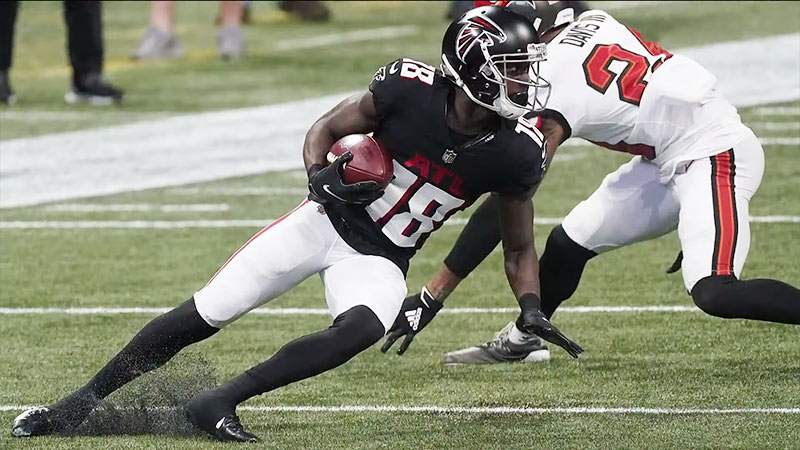
In the high-stakes environment of the National Football League, the physical demands placed upon elite wide receivers are unparalleled.
For a player like Calvin Ridley, whose game is predicated on explosive acceleration, precision route-running, and the ability to win at the point of attack, maintaining peak physical health is a constant battle against the attrition of the sport.
Throughout his career, Ridley has demonstrated remarkable durability, but like many top-tier athletes, he has also had to navigate the complexities of modern orthopedic surgery to sustain his professional trajectory.
Understanding the specific nature of Ridley’s procedures provides more than just a medical timeline; it offers a blueprint of how modern sports medicine allows players to return from potentially career-altering injuries.
This analysis delves into the surgical interventions Ridley has undergone, the renowned specialists involved, and the long-term implications for his performance on the field.
The 2021 Foot Cleanup: Proactive Maintenance After a Breakout Year
The first major surgical milestone in Ridley’s professional career occurred in the summer of 2021.
To understand the necessity of this procedure, one must look back at the 2020 NFL season, where Ridley established himself as one of the league’s most dominant threats while playing for the Atlanta Falcons.
Despite producing elite statistics, it was later revealed that he had been managing a persistent and “nagging” foot issue throughout the duration of that breakout campaign.
In June 2021, Ridley opted for a minor offseason foot surgery to address the lingering discomfort. In the world of professional sports, these types of procedures are often referred to as “cleanup” surgeries.
They typically involve debridement—the removal of damaged tissue or bone fragments—or addressing minor structural irregularities that do not require a complete reconstruction but hinder a player’s “fifth gear” or lateral twitch.
The Authority Behind the Procedure
One of the most critical trust signals regarding Ridley’s recovery was the involvement of Dr. Robert Anderson. Based in Green Bay, Dr. Anderson is widely regarded as the preeminent foot and ankle specialist for professional athletes in North America.
When a player of Ridley’s caliber travels to Green Bay for a consultation, it signifies a commitment to the highest standard of orthopedic care.
The successful “cleanup” was designed to ensure that the foot would no longer be a limiting factor as he entered the prime of his career.
For a wide receiver, foot health is the foundation of their entire skill set; any lack of stability or presence of pain during the “plant and drive” phase of a route can negate their athletic advantages.
By addressing this in the 2021 offseason, Ridley and his medical team were prioritizing long-term durability over short-term “grit”.
The 2025 Fibula Fracture: Navigating a Season-Ending Crisis
While the 2021 procedure was a calculated, proactive move, the medical challenges Ridley faced in late 2025 were far more acute.
During a November matchup against the Houston Texans, while playing for the Tennessee Titans, Ridley suffered a season-ending broken fibula.
This injury represented a significant departure from his previous “nagging” issues, shifting the focus from maintenance to emergency structural repair.
Surgical Stabilization and Medical Intervention
A fractured fibula in a professional athlete often requires more than just a traditional cast and rest. To ensure the bone heals in perfect alignment and can withstand the torque of NFL-level movement, surgical stabilization is frequently employed.
This often involves the use of specialized hardware—such as plates and screws—to internalize the “splinting” of the bone.
Following the injury in November 2025, Ridley underwent medical procedures throughout the remainder of the year and into early 2026 to repair the fracture. This timeline suggests a comprehensive approach to healing, likely involving:
- Internal Fixation: To stabilize the lateral aspect of the lower leg.
- Soft Tissue Management: Ensuring the surrounding ligaments and tendons remained mobile during the bone-healing phase.
- Monitored Rehabilitation: A phased return to weight-bearing activities to prevent muscle atrophy in the calf and ankle complex.
The transition from a “cleanup” in 2021 to a “stabilization” in 2025 highlights the two different worlds of sports medicine: the first being the refinement of a healthy machine, and the second being the reconstruction of a vital structural component.
Comparative Analysis: Cleanup vs. Structural Repair
For fans and analysts evaluating Ridley’s future, it is essential to distinguish between the physiological impacts of these two different types of surgeries.
- The 2021 Foot Cleanup: This procedure had a relatively short recovery window. Its primary goal was pain management and mechanical efficiency. Historically, receivers returning from minor debridement surgeries do not lose their top-end speed; in many cases, they gain explosiveness because they are no longer compensating for a dull ache.
- The 2025/2026 Fibula Repair: This is a more complex recovery. While the fibula is not the primary weight-bearing bone (that role belongs to the tibia), it is essential for ankle stability and rotational strength. The recovery period for such a fracture involves ensuring the bone has reached “union” (total healing) before the athlete can resume high-impact cutting.
The fact that Ridley’s 2025 injury was described as requiring “medical intervention” into 2026 underscores the seriousness of the fracture and the disciplined approach the Titans’ medical staff took to protect their investment.
The Path to Recovery: What the Future Holds for Ridley
As we look toward the upcoming seasons, the narrative surrounding Calvin Ridley is one of resilience.
Navigating two major surgical interventions in five years would be daunting for any athlete, but the advancements in modern surgical techniques offer a high probability of a successful return to form.
Key Recovery Indicators to Watch:
- Offseason Strength and Conditioning: The 2026 offseason will be the most pivotal of Ridley’s career. Restoring the “push-off” power in his repaired leg will be the primary focus of his trainers.
- Route Precision: Observers should look at Ridley’s ability to “sink his hips” and break at 90-degree angles. If his surgical stabilization was successful, his change-of-direction should remain elite.
- Mental Confidence: Often the final hurdle in surgical recovery is the athlete’s willingness to trust the repaired limb in heavy traffic.
Frequently Asked Questions (FAQ)
Who performed Calvin Ridley’s foot surgery in 2021?
The procedure was performed by Dr. Robert Anderson in Green Bay, a leading expert in foot and ankle injuries for professional athletes.
What was the nature of the surgery Ridley had with the Tennessee Titans?
Following a game against the Houston Texans in November 2025, Ridley required surgical stabilization and medical intervention for a broken fibula.
Did Calvin Ridley play through his foot injury before having surgery?
Yes. Ridley played through the foot issue during his 2020 breakout season with the Falcons before opting for the “cleanup” in June 2021.
How does a broken fibula affect a wide receiver?
A fibula fracture impacts the lateral stability of the ankle. While the bone typically heals well with surgical intervention, the challenge for a wide receiver is regaining the explosive lateral movement required for elite route-running.
Conclusion: A Legacy of Professionalism
Calvin Ridley’s career has been a testament to the grit required to play at the highest level of professional football.
By proactively addressing nagging issues with world-class specialists like Dr. Anderson and diligently following the recovery protocols for major fractures, Ridley has maximized his window of elite performance.
For the Tennessee Titans and the broader football community, his journey serves as a reminder that behind every spectacular touchdown is a rigorous cycle of medical management and physical rehabilitation.
As he moves further away from his 2025/2026 procedures, the focus shifts from the operating room back to the turf, where Ridley continues to prove that his talent is matched only by his durability.