
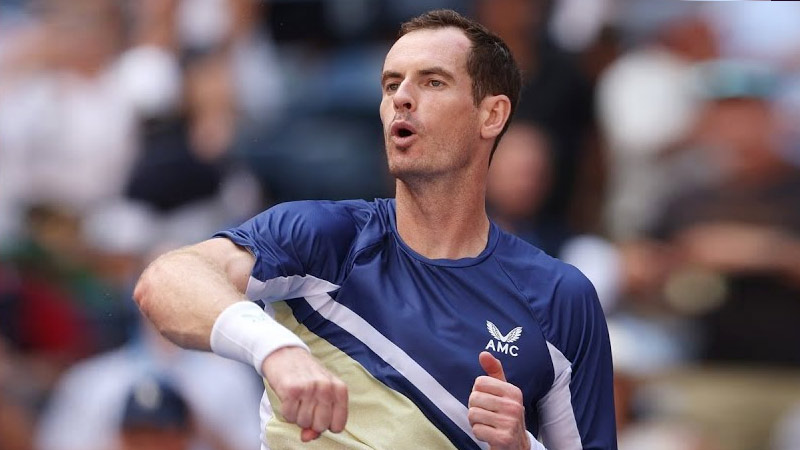
In the landscape of elite professional sports, few figures have navigated the complexities of national identity with as much grace and consistency as Andy Murray.
For over two decades, the three-time Grand Slam champion has stood as a symbol of unity and a point of discussion regarding the nuances of heritage versus citizenship.
To understand his standing on the global stage, one must look beyond the scores on the scoreboard and examine the layers of his personal history and formal allegiances.
The Foundation: Legal Nationality and the Glasgow Roots
The formal answer to the question of Andy Murray’s nationality is straightforward: he is British. This status is rooted in his birth in Glasgow, Scotland, a major city within the United Kingdom.
Under the legal framework of the British government, anyone born within the constituent nations of the UK—England, Scotland, Wales, and Northern Ireland—holds British citizenship.
However, in the British Isles, nationality is rarely a one-dimensional label. While Murray holds a British passport and is recognized globally as a British citizen, his specific regional identity is a foundational element of his character.
Being born in Glasgow provided him with the initial legal standing that would eventually allow him to represent the United Kingdom as a whole in international diplomatic and sporting arenas.
The Cultural Anchor: Defining Scottish Heritage
While his passport says British, Andy Murray’s personal and cultural heritage is Scottish. This distinction is critical for understanding the man behind the athlete.
For many in Scotland, national identity is a deeply felt connection to the history, landscape, and community of their specific nation within the Union.
Murray has never shied away from this aspect of his life. His Scottish heritage informs his perspective, his public persona, and his connection to his fans in the north.
This duality—being British by law but Scottish by heart—is not a contradiction but a reflection of the multi-layered identity shared by millions of people living in the United Kingdom.
He exemplifies the way an individual can maintain a fierce pride in their regional roots while functioning within a broader national framework.
The Global Stage: Representing Great Britain in Professional Tennis
The complexity of Murray’s identity often comes to the forefront during major international competitions where athletes do not compete as individuals, but as representatives of a nation-state. In these contexts, Murray represents Great Britain.
The Olympic Games
The Olympics serve as one of the most visible platforms for this representation. Competing for “Team GB,” Murray has reached the pinnacle of sporting achievement, most notably winning gold medals in the singles category.
In these moments, he stands under the Union Flag, representing the collective strength of all the British nations. His success in the Olympics has often been cited as a unifying force, bringing together fans from London to Edinburgh in support of a single champion.
The Davis Cup
Another pillar of his international career is his participation in the Davis Cup. As a premier team event in men’s tennis, the Davis Cup requires players to compete for their national associations.
Murray has been the spearhead for the British team for years, leading them to historic victories. In this environment, his role is clearly defined: he is the lead player for Great Britain, working alongside teammates from across the UK to achieve a common goal.
The Intersection of Sport and Public Perception
Throughout his career, Murray has been at the center of a unique cultural phenomenon regarding his identity. In the early stages of his rise to fame, there was a frequent observation in British media that he was often labeled “British” when he was winning and “Scottish” when he was losing.
While often discussed with a hint of irony, this reflected the inherent tensions and shifts in how the public perceives athletes with dual identities.
Murray’s ability to transcend these labels is a testament to his longevity and his achievements. By consistently performing at the highest level while remaining authentic to his Scottish roots, he has forced a more nuanced conversation about what it means to be a modern British athlete.
He has shown that representing a larger collective (Great Britain) does not require the erasure of one’s specific cultural heritage (Scotland).
Managing a Dual Identity in the Modern Era
For a global brand or a high-level executive looking at the Murray “model,” the takeaway is one of authentic integration. Murray’s brand is built on honesty.
He does not pretend that his Scottishness is secondary, nor does he reject the British platform that has allowed him to achieve global stardom.
This balance has made him an incredibly effective ambassador. He appeals to local Scottish pride while also serving as a cornerstone of British sporting excellence.
This dual-track identity has provided him with a broader base of support and a more complex, interesting public narrative than an athlete with a more singular national background.
Conclusion: A Unified Legacy
Ultimately, Andy Murray’s identity is defined by a synthesis of two worlds. He is a British national who has brought immense pride to the United Kingdom through his representation in the Olympics and the Davis Cup.
Simultaneously, he is a man of Scottish heritage, deeply connected to the place of his birth and the culture that shaped him.
His career serves as a masterclass in navigating the complexities of identity in the 21st century. By embracing both his British nationality and his Scottish heritage, Murray has created a legacy that is both regionally specific and globally significant.
He remains a Scottish sporting legend and a British icon, proving that in the world of high-performance athletics, identity is not about choosing a side, but about honoring every part of where you come from.






