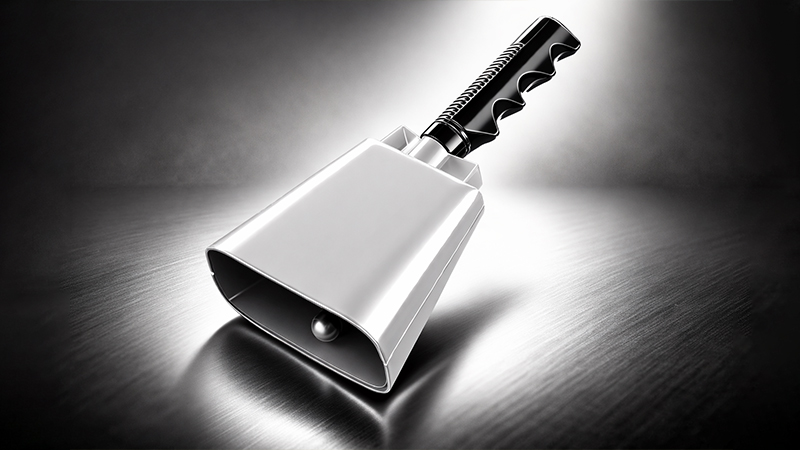
The sound of a bell in a football context is a multi-faceted auditory signal that shifts in meaning depending on whether you are sitting in a stadium or listening to one of the sport’s most popular media outlets.
While traditionally associated with third-down signals in stadiums, the “bell” has gained legendary status within the “Around the NFL” podcast community as a versatile tool for humor, corporate commentary, and internal lore.
The Lore of the “Around the NFL” Podcast Bell
For many listeners, the question of “what is the bell” refers specifically to the recurring sound effect used by the producers of the Around the NFL podcast.
This sound is not a random chime; it is a layered piece of audio shorthand that has evolved through several distinct “eras” of the show.
1. The Derek Carr “Atonement” Arc
The most famous origin of the podcast bell involves a long-running “pseudo beef” between the podcast hosts and quarterback Derek Carr. According to the sources, the bit began after Carr allegedly blocked the hosts on Twitter.
To make amends and restore “good vibes,” the hosts committed to a bit where they promised to say three positive things about Carr or his team in every episode.
The producer would use the bell to “ding” each compliment, tracking the progress toward their three-compliment goal. This created a humorous dynamic where the “Heroes” (the hosts) were forced to find silver linings in even the most difficult Raiders performances.
Even years after the original bit ended, long-time fans still find themselves saying “ding” aloud whenever a host speaks positively about Carr.
2. “Carrying Water” for the League
Beyond the Derek Carr era, the bell evolved into a tool for meta-commentary on the hosts’ relationship with their employer, the NFL. In the podcast’s lexicon, the bell is frequently triggered when the heroes are perceived to be “carrying water” for the league.
This is a self-aware, subtle joke about the hosts’ inability to be completely independent critics while being paid by the league they cover. Specific instances where the bell might ring include:
- Promoting the “LA Teams”: The bell was notably used when the hosts were “pumping up” the Rams and Chargers following their high-profile move to Los Angeles.
- Corporate Promotion: The bell dings when the hosts promote specific league-mandated articles, guest spots, or other NFL media shows.
- The “Company Man” Signal: It serves as a lighthearted admission that they are fulfilling a corporate requirement.
3. “That’s a Great Point, Marc.”
Another frequent use of the bell is tied to a specific soundboard drop: “Ding! Well, that’s a great point, Marc…” This is used specifically to validate host Marc Sessler when he makes a particularly insightful, abstract, or brilliant observation.
Because Sessler is known for his unique and often unconventional takes, the bell acts as a rhythmic punctuation mark to acknowledge his “genius” within the flow of the conversation. In this context, the bell is a sign of respect and comedic timing among the hosts.
4. The “Sneaky Number” and Gambling References
As sports betting has become more integrated into NFL coverage, the bell has found a new purpose in highlighting point spreads. Sources indicate the bell often goes off when a host manages to “sneak a number” (a betting line) into a standard football discussion.
For example, if a host mentions a team is a 7-point underdog during a narrative breakdown, a “ding” from the producer acknowledges the subtle nod to the gambling world.
5. Producer Cues and Personal Agreement
Finally, the bell serves a functional role for the producer (historically Eric). Some listeners interpret the bell as a tactical signal to the hosts to “move on” from a long tangent or to transition into an advertisement break.
Others suggest it is simply a way for the producer to express personal agreement with a point being made by a host without interrupting the audio with their voice.
Bells and Stadium Atmosphere: The Third-Down Tradition
Outside the world of podcasting, the “bell” is a staple of the live football experience, particularly during high-leverage defensive moments.
Information outside the provided sources—which I recommend you independently verify—indicates that bells in stadiums are almost universally used to incite crowd noise during critical plays.
1. The New England Patriots and the 3rd Down Bell
The sources explicitly mention the use of “3rd Down Bells” by the New England Patriots. In the context of a game at Gillette Stadium, a bell or chime is often played over the PA system when the opposing team faces a third down.
This serves several purposes:
- Crowd Engagement: It acts as a Pavlovian trigger for fans to start screaming, making it harder for the opposing quarterback to communicate with his offensive line.
- Defensive Momentum: It builds a sense of dread for the offense and excitement for the home defense.
- Audio Identity: Many teams have specific “sounds” for third down—some use sirens, some use bells, and others use “gongs”.
2. The “Gong vs. Train” Debate
Stadium sounds can often be ambiguous to the listener. In collegiate environments, such as with the Texas A&M Aggies, there is a recurring debate among fans as to whether the sound played on third down is a “gong” or a “train” sound.
This highlights a broader trend in football: the use of metallic, industrial sounds to create a hostile environment for the visiting team. Whether it is a literal bell or a synthesized gong, the goal is to create a “wall of sound” that disrupts the rhythm of the game.
Bells in NFL Media and Cinematography
The use of bells extends into the artistic presentation of the game through NFL Films and major broadcasts like the Super Bowl.
1. NFL Films and Orchestral Bells
Sources note that certain songs used in NFL Films consist mostly of bells ringing. The use of tubular bells or orchestral chimes is a hallmark of the “epic” style pioneered by Sam Spence and the NFL Films music library. These bells are often used to:
- Signify Gravity: Bells lend a sense of historical importance and “battlefield” weight to the slow-motion highlights of the game.
- Holiday Context: During late-season “Saturday Night Football” or Christmas Day games, bells are often integrated into the broadcast music to provide a seasonal feel.
2. Super Bowl Themes
During the Super Bowl, broadcast networks frequently use bell-heavy soundtracks for their intros and transitions. These are designed to feel “prestigious” and “grand,” separating the championship game from a standard regular-season broadcast.
Conclusion: Why Sound Matters in Football
The bell is a perfect example of how audio cues build community in football. In the stadium, the bell is a weapon of the “12th man,” used to rattle the opposition.
In the media, specifically the Around the NFL podcast, it is a sophisticated language of inside jokes that rewards long-term listeners for their dedication.
Whether it is a “ding” for a Marc Sessler take or a “gong” on 3rd-and-long at an Aggies game, these sounds transform a game of statistics into a rich, lived experience.
The next time you hear a bell during a football broadcast or episode, listen closely—it might be telling you more about the corporate politics, gambling lines, or legendary “Hero” lore than the play on the field ever could.