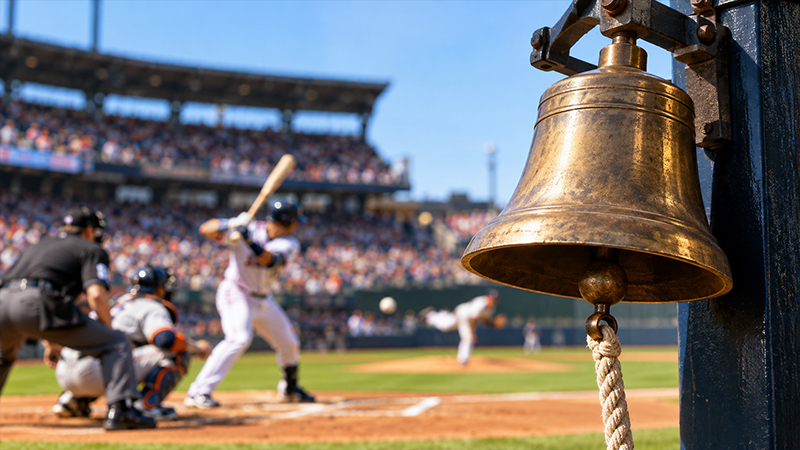
In the modern landscape of Major League Baseball, the stadium experience is defined as much by its auditory landscape as by the action on the field.
For the casual observer or the fan watching a high-definition broadcast, few sounds are as distinct—or as frequently misunderstood—as the sudden, resonant chime of a bell or the deep toll of a gong.
These sounds are not random occurrences; they are calculated auditory signals designed to communicate game-state leverage, celebrate milestones, and manipulate the psychological atmosphere of the ballpark.
Understanding the “why” behind these chimes requires a deep dive into the intersection of baseball strategy, regional traditions, and the psychological impact of sound in professional sports.
The Primary Catalyst: The “Hitter’s Count” and Pitching Leverage
The most frequent reason a fan will hear a bell or gong sound during a game is to signal a specific leverage point in the pitch count: the 3-1 count.
The Mechanics of the 3-1 Count
In baseball, the count refers to the number of balls and strikes a batter has accumulated during a single plate appearance. A 3-1 count—three balls and one strike—is widely regarded as the most advantageous position for a hitter, often referred to as the “hitter’s count”.
At this precise moment, the strategic tension reaches a peak for several reasons:
- Pitcher Vulnerability: The pitcher is one ball away from walking the batter. To avoid this, they are often forced to throw a “strike-zone” pitch, which is typically a fastball or a “get-me-over” breaking ball that is easier for the batter to track and hit.
- Batter Selectivity: Because the batter still has two strikes to work with (even if they take a strike or swing and miss), they can be incredibly selective. They are looking for one specific pitch in a specific location. If they don’t get it, they can simply take the pitch.
- Predictability: The statistical likelihood of a “hitter-friendly” pitch increases dramatically, creating a moment of high-stakes anticipation for the crowd.
The Purpose of the Bell Signal
Stadiums utilize a bell or gong sound effect at the 3-1 mark to warn the crowd and build anticipation. It serves as a non-verbal cue that a “big hit” or a significant shift in momentum is imminent.
By signaling this count, the stadium operations team aligns the fans’ attention with the game’s internal logic, ensuring that the collective energy of the ballpark peaks just as the pitcher begins their wind-up for a critical delivery.
The Atlanta Braves and the “Hells Bells” Tradition
While many teams use a standard gong for a 3-1 count, the Atlanta Braves have institutionalized a more specific and ominous auditory tradition.
Impending Doom and the Three-Ball Count
At Truist Park, the Braves’ organist often triggers the introductory toll from AC/DC’s iconic track, “Hells Bells,” whenever a pitcher reaches a three-ball count.
This choice of sound is deeply symbolic. In the context of a game, a three-ball count represents “impending doom” for the defense.
If a pitcher walks a batter, it places a runner on base for free, increasing the complexity of the inning and the likelihood of a high-scoring rally.
The deep, mournful toll of the bell is intended to signify “upcoming death or pain” for the opposing side—in this case, the statistical “death” of an easy inning or the recording of a vital out.
This tradition has become so ingrained that the tones are often played until the pitcher takes the rubber for the next pitch, maintaining a constant state of auditory pressure.
Regional Icons: The Philadelphia Phillies and the Liberty Bell
Perhaps the most famous physical manifestation of this tradition is found at Citizens Bank Park in Philadelphia. Unlike the digital sound effects used for pitch counts, the Philadelphia Phillies utilize a giant physical replica of the Liberty Bell.
A Celebration of Power
In Philadelphia, the bell is not a warning; it is a celebration. The deep chime of the Liberty Bell is triggered specifically when a Phillies player hits a home run.
This auditory signal is usually accompanied by a synchronized display of fireworks, creating a multi-sensory experience that cements the home run as the ultimate moment of team success.
The use of the Liberty Bell serves two distinct purposes:
- Cultural Branding: It ties the team’s identity directly to the historic iconography of the city.
- Momentum Maintenance: The resonance of a physical bell carries further and feels more “authentic” than a digital file, effectively sustaining the crowd’s adrenaline long after the ball has cleared the fence.
The Closer’s Entrance: Psychological Warfare and “The Toll”
Beyond the tactical signals of the pitch count, bells are frequently employed during one of the most dramatic moments in a baseball game: the entrance of the closer.
Signaling the End
The closer is a relief pitcher tasked with finishing the final inning of a game, usually under high-pressure “save” conditions. To heighten the drama, many teams adopt entrance music featuring heavy bell tolls.
- The Undertaker Influence: Many entrance themes draw inspiration from professional wrestling (specifically The Undertaker) or heavy metal (AC/DC’s “Hells Bells”), where the bell signifies that the “end is near” for the opposition.
- Defensive Hype: These sounds are used for general crowd hype during big defensive moments. The goal is to create an atmosphere of inevitability—that the game is effectively over now that the specialist has arrived.
By using these specific frequencies and sounds, teams can trigger a Pavlovian response in the fan base, transitioning the stadium from a state of passive observation to one of intense, rhythmic support.
Strategic Utility: Why Teams Invest in Auditory Cues
From an operational standpoint, the use of bells and gongs is a sophisticated tool for fan engagement and game-flow management.
1. Attention Management
Baseball is a sport of long lulls followed by explosive action. The 3-1 gong or the “Hell’s Bells” toll acts as a “push notification” for the live audience.
It tells the fans who may be distracted—talking to friends, looking at their phones, or visiting the concourse—that they need to look at the field immediately.
2. Enhancing the Broadcast Experience
For fans watching at home, these sounds provide contextual clarity. Even if the viewer cannot see the score bug on their screen, the sound of the bell immediately communicates the leverage of the count.
This allows the broadcast to feel more interactive and informative without requiring constant verbal explanation from the announcers.
3. Establishing Home-Field Advantage
The psychological impact on the opposing pitcher cannot be ignored. Standing on the mound while a stadium full of fans reacts to a “warning bell” regarding your count adds a layer of mental pressure. It reinforces the narrative that the pitcher is in trouble and that the environment is hostile.
Enhanced FAQ: Decoding Ballpark Sounds
Q: Why did I hear a bell during a 2-ball count?
While the 3-1 count is the industry standard for the “gong” sound, some stadiums or specific organists may trigger signals at different points. For instance, some fans have noted chimes occurring on any two-ball count to begin building tension earlier in the plate appearance.
Q: Is the bell sound always the same?
No. The sound varies significantly by stadium. Some use a sharp “ding,” others a deep “gong,” and some utilize the opening chords of famous rock songs. The Phillies stand out for using a physical bell rather than a digital recording.
Q: Does the bell sound mean someone was walked?
Not necessarily. The bell is a pre-pitch signal for the 3-1 count. It signifies that a walk is likely or that a big hit is possible because the hitter has the advantage. The outcome of the pitch (whether a walk, a strikeout, or a hit) happens after the bell has already rung.
Q: Is there a historical reason for these sounds?
Some traditions are tied to specific seasons or team milestones. For example, some fans associate certain auditory cues with the 1988 Dodgers season, suggesting that these “traditions” often start as a one-time excitement that becomes a permanent fixture due to fan popularity.
Baseball Bell Meanings
| Sound Type | Context | Meaning |
|---|---|---|
| Single Gong/Bell | 3-1 Count | “Hitter’s Count” – Warning that the batter has a major advantage. |
| Physical Deep Chime | Home Run | Celebration – Specifically used by the Philadelphia Phillies. |
| “Hells Bells” Intro | 3-Ball Count | Impending Doom – Signaling that the pitcher is in danger of a walk. |
| Rhythmic Bell Tolls | Relief Entrance | Psychological Warfare – Ushering in the closer to finish the game. |
Conclusion: The Future of the Ballpark Soundscape
The use of bells and gongs in baseball is a testament to the sport’s ability to blend centuries-old tradition with modern psychological marketing.
Whether it is the physical toll of the Liberty Bell in Philadelphia or the digital warning of a 3-1 count in Atlanta, these sounds serve a vital purpose in the “diamond’s resonance.”
They provide a map for the fan’s emotions, ensuring that the most critical strategic moments are never missed.
The next time you are at the park and hear that distinct chime, take a moment to look at the scoreboard.
You aren’t just hearing a noise; you are hearing the heartbeat of the game’s strategy, alerting you that something significant is about to happen.