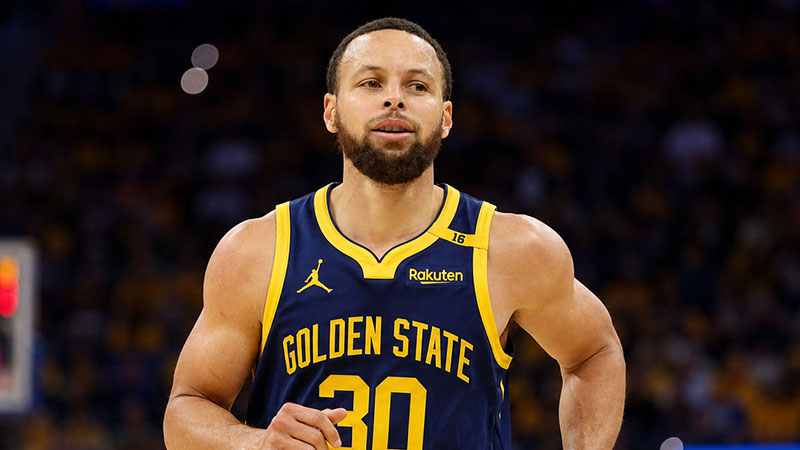
The intersection of raw athletic metrics and professional dominance often leads fans to a singular, burning question: how fast is the greatest shooter in NBA history?
While the 40-yard dash is the definitive gold standard for NFL prospects, basketball enthusiasts frequently use it to gauge the “burst” of elite point guards.
Stephen Curry, known more for his “gravity” and perimeter lethality than baseline-to-baseline sprinting, possesses a physical profile that is frequently underestimated.
By analyzing official combine data and modern performance projections, we can finally decode the true velocity behind the man who transformed the geometry of the game.
The Reality of Stephen Curry’s 40-Yard Dash
In the world of professional scouting, metrics are highly specialized. The 40-yard dash is almost exclusively an NFL scouting metric used to determine a player’s acceleration and top-end speed in a football context.
Because of this, Stephen Curry has never run an official, electronically-timed 40-yard dash at a sanctioned event like the NBA Draft Combine.
However, sports scientists and scouts often use a player’s performance in the NBA’s standard speed test—the three-quarter court sprint—to estimate their 40-yard dash potential.
Based on his official combine results, Stephen Curry’s speed on the basketball court translates to a projected 40-yard dash time of approximately 4.6 seconds.
While a 4.6-second dash would not set records at an NFL training camp, it represents a highly competitive level of speed for a professional basketball player whose primary role involves intricate movement rather than long-distance sprinting.
Understanding the 40-Yard Dash Projection
To understand how a 4.6-second projection is reached, we must look at the mechanics of the sprint. A 40-yard dash measures pure acceleration over 120 feet.
In contrast, an NBA court is only 94 feet long. Most “speed” in basketball is contained within the three-quarter court sprint, which covers 75 feet (roughly 25 yards).
The transition from a 25-yard sprint to a 40-yard dash involves maintaining acceleration for an additional 15 yards—a feat that relies on “track speed.”
While Curry is exceptionally quick in short bursts, he is not a “burner” in the traditional sense, which is why his projection sits at the 4.6-second mark rather than the sub-4.4 times seen by the NBA’s most explosive athletes.
Breaking Down the 2009 NBA Combine Metrics
To accurately assess Curry’s athleticism, we must look at the official data from the 2009 NBA Draft Combine. These numbers provide the only objective baseline for his physical capabilities before he became a multi-time MVP.
| Metric | Official Result |
|---|---|
| Three-Quarter Court Sprint | 3.28 Seconds |
| Lane Agility Time | 11.07 Seconds |
| Standing Vertical Jump | 29.5 Inches |
The Three-Quarter Court Sprint Analysis
Curry’s time of 3.28 seconds in the 75-foot sprint is often a point of contention among fans. For context, this is the exact same time recorded by Omri Casspi during his respective combine.
While 3.28 seconds is respectable, it illustrates that Curry was not drafted based on overwhelming “straight-line” speed.
Instead, he falls into a category of athletes who are “fast enough” to compete at the highest level while utilizing other elite traits to gain an advantage.
Lane Agility: The Secret to Curry’s Success
If the 40-yard dash measures how fast you run in a line, the lane agility test measures how well you play basketball. Curry’s 11.07-second time in this drill is arguably more significant than his sprint time.
This test involves shuffling, backpedaling, and sprinting around the “key.” It measures a player’s ability to change direction, which is the cornerstone of Curry’s off-ball movement and defensive positioning.
Speed Comparisons: Curry vs. NBA Elite
To truly grasp where Curry stands, we must compare his data against other notable NBA guards who are considered “hyper-athletic.” This data highlights the gap between functional basketball speed and elite-tier explosive athleticism.
| Athlete | 3/4 Court Sprint (Actual) | Estimated 40-Yard Dash |
|---|---|---|
| Derrick Rose | 3.05 Seconds | ~4.3 Seconds |
| Russell Westbrook | 3.08 Seconds | ~4.4 Seconds |
| James Harden | 3.13 Seconds | ~4.5 Seconds |
| Stephen Curry | 3.28 Seconds | ~4.6 Seconds |
Analyzing the Velocity Gap
When placed side-by-side with Derrick Rose or Russell Westbrook, the data confirms what the “eye test” suggests: Curry does not possess “blazing” straight-line speed.
A 0.2-second difference in a 75-foot sprint may seem negligible to a casual observer, but in the NBA, that fraction of a second is the difference between a contested layup and an open dunk.
However, it is important to note that Curry’s game does not rely on pure baseline-to-baseline sprinting. Unlike Westbrook, who uses velocity as a primary weapon to collapse defenses, Curry uses his speed to create space for his jumper, which requires a different type of athletic engagement.
Functional Agility vs. Raw Track Speed
The debate surrounding Curry’s athleticism often ignores the difference between track speed and functional basketball agility. While he may not win a 100-meter dash against his peers, he is frequently the most “agile” player on the court.
The Power of Change-of-Direction
Curry’s primary athletic advantage is his spatial awareness and change-of-direction agility. This is seen in his uncanny ability to navigate through a forest of screens.
Most defenders can match Curry’s top speed, but few can match his “stop-and-start” frequency. His ability to decelerate instantly and then re-accelerate is what creates the “Curry Gravity” that pulls defenses apart.
Conditioning as an Athletic Weapon
Perhaps the most overlooked aspect of Curry’s physical profile is his elite conditioning. In a 40-yard dash, stamina is irrelevant. In an NBA game, speed is only useful if you can maintain it in the 4th quarter.
Curry’s ability to run at near-top speed for 35 minutes a night is an athletic feat that traditional combine metrics fail to capture. While his sprint time might be average, his sustained sprint time over the course of a game is world-class.
The Amateur vs. Pro Debate: Could You Outrun Steph?
One of the most viral discussions surrounding Curry’s athleticism originated on social media platforms like Reddit, where amateur athletes compared their high school metrics to his combine numbers.
The High School Perspective
A notable debate surfaced where a former high school athlete claimed that their 4.55-second hand-timed 40-yard dash and 33.5-inch vertical jump would allow them to beat or match Curry in a race.
This argument is common among fans who see Curry’s “average” 29.5-inch standing vertical or his 3.28-second sprint and assume he is an “attainable” level of athlete.
Why the “Eye Test” and Hand-Timing Fail
There are two major flaws in comparing amateur stats to Curry’s official numbers:
- Electronic vs. Hand-Timing: Professional combine times are electronically recorded. Hand-timed sprints (using a stopwatch) are notoriously inaccurate and often “faster” than reality by 0.1 to 0.2 seconds.
- Contextual Athleticism: While an amateur might match a single sprint time, they rarely possess the long wingspan and uncanny ability to notice anything “off” on the court instantly that Curry does. Curry’s “athleticism” is a synergy of vision, coordination, and professional-grade endurance that transcends a simple dash.
How Curry’s Speed Redefined Modern Basketball
Stephen Curry’s athletic profile is a testament to the idea that skill can optimize athleticism. By understanding his physical limits, Curry has developed a style of play that maximizes his specific type of velocity.
Off-Ball Movement and Endurance
Because Curry isn’t a “burner” like Westbrook, he has mastered the art of “non-stop motion.” He covers more distance per game than almost any other player in the league. This is not just speed; it is work rate.
By forcing defenders to chase him through screens at a 4.6-second-dash-equivalent pace for 48 minutes, he eventually wears down even the fastest opponents.
The Role of Spatial Awareness
Curry’s success is rooted in his uncanny ability to immediately notice any defensive lapse. His brain processes the court faster than his feet move.
This cognitive speed allows him to take a “fast” first step because he is moving before the defender even realizes there is a threat. In this sense, his mental “40-yard dash” is sub-4.0.
Frequently Asked Questions (FAQ)
What was Steph Curry’s official 40-yard dash time?
Stephen Curry never ran an official 40-yard dash at the NBA Combine, as the league uses a three-quarter court sprint (75 feet) instead. His projected 40-yard time is roughly 4.6 seconds based on his 3.28-second court sprint.
Is Steph Curry considered a “fast” NBA player?
By NBA standards, Curry has “average” straight-line speed but “elite” functional agility and conditioning. He is faster than the average person, but not as fast as “explosive” guards like Russell Westbrook or De’Aaron Fox.
How does Curry’s vertical jump compare to other players?
Curry recorded a 29.5-inch standing vertical jump at the 2009 Combine. This is considered modest compared to the 35+ inch jumps of many NBA wing players, but it is sufficient for his style of play.
Did Curry’s speed improve after his rookie year?
While his raw sprint speed likely peaked early in his career, his “functional speed”—how he uses his pace to navigate screens and create shots—has improved significantly through advanced conditioning and lower-body strength training.
Final Thoughts: The Evolution of the Exceptional Athlete
The fascination with Steph Curry’s 40-yard dash reveals a deeper truth about how we perceive greatness. We often look for superhuman metrics—sub-4.4 speeds or 40-inch verticals—to justify why a player is a legend.
Curry, however, provides a different blueprint. He proves that while raw speed is a gift, the mastery of agility, the discipline of conditioning, and the brilliance of spatial awareness are what truly define an “exceptional” athlete.
Curry may not be the fastest man to ever lace up a pair of sneakers, but his ability to maintain his pace and notice every opening on the floor makes him more dangerous than any track star.
He has traded “blazing” speed for “intelligent” speed, and in doing so, he has conquered the basketball world.