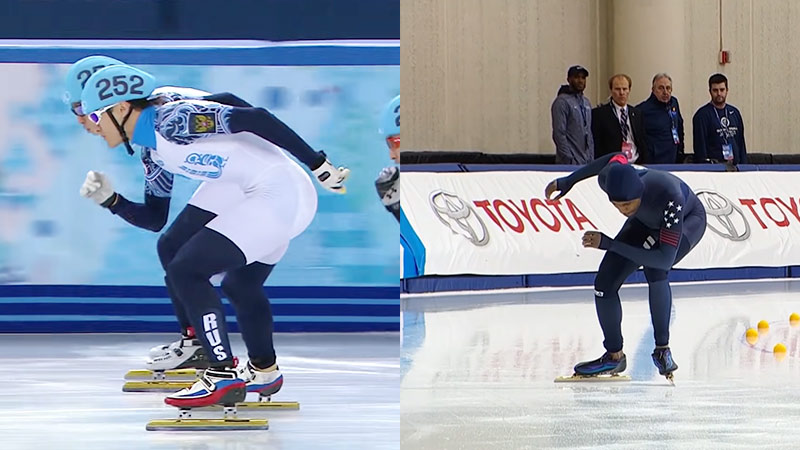
Speed skating is one of the most thrilling and technically demanding winter sports in the world. At first glance, all speed skating may look the same—athletes racing at incredible speeds on ice.
However, there are two distinct disciplines within the sport: Short Track Speed Skating and Long Track Speed Skating. While both require power, precision, and strategy, they differ dramatically in rink size, race format, techniques, tactics, and overall experience.
Both disciplines are featured in the Winter Olympic Games, showcasing elite athletes from around the globe. Let’s take a deep dive into how these two exciting formats compare.
Track Size and Layout
The most obvious difference between short track and long track lies in the size of the rink.
Short Track
Short track races take place on a standard ice hockey rink. The oval track is just 111.12 meters in length. The tight corners and small surface area mean athletes are constantly turning and skating in close quarters.
Because it uses a hockey rink, short track events are often held in arenas like those used by professional teams such as the Toronto Maple Leafs.
Key Characteristics:
- Tight corners
- Close proximity to competitors
- Quick accelerations and rapid changes in pace
- High-contact environment
Long Track
Long track is raced on a much larger 400-meter oval, similar in size to an outdoor running track. These tracks are purpose-built speed skating facilities, such as the Utah Olympic Oval.
Key Characteristics:
- Wide, sweeping turns
- Longer straightaways
- More emphasis on rhythm and endurance
- Less direct contact between skaters
The difference in track size significantly affects racing style and strategy.
Racing Format
Short Track Racing Format
Short track races typically feature 4 to 6 skaters competing simultaneously. They skate together in elimination-style heats. The top finishers advance to the next round until a final winner is crowned.
Common short track distances:
- 500 meters
- 1000 meters
- 1500 meters
- 3000-meter relay
Because multiple skaters share the ice, short track often resembles NASCAR-style racing on ice—full of drafting, overtaking, and sometimes crashes.
Long Track Racing Format
Long track events are usually raced in pairs. Two skaters compete against the clock rather than directly against a large group.
Common long track distances:
- 500 meters
- 1000 meters
- 1500 meters
- 3000 meters (women)
- 5000 meters
- 10,000 meters (men)
In long track, the fastest time wins—even if the skater is not in the final pairing. This time-trial style emphasizes pacing and efficiency over tactical positioning.
Strategy and Tactics
Short Track Strategy
Short track is highly tactical. Skaters must:
- Draft behind opponents
- Block inside passes
- Time overtakes perfectly
- React quickly to sudden changes
Because of the tight pack racing, falls are common. In fact, dramatic crashes have changed medal outcomes at events like the 2002 Winter Olympics.
Positioning is everything. Often, the skater in second or third place will wait until the final lap to sprint past competitors.
Short track is unpredictable and chaotic, making it thrilling for spectators.
Long Track Strategy
Long track is more about consistency and technique. Since skaters race against time:
- Smooth stride mechanics are crucial
- Aerodynamics matter greatly
- Even pacing determines success
Skaters must carefully manage energy output across longer distances. For example, in the 10,000 meters, starting too fast can lead to exhaustion in the final laps.
Long track strategy is closer to long-distance running than pack racing.
Physical Demands
Both disciplines demand immense strength and cardiovascular endurance, but in different ways.
Short Track Demands:
- Explosive acceleration
- Strong lateral push in tight turns
- Balance in close contact situations
- Rapid recovery between heats
Athletes like Apolo Ohno became famous for their explosive speed and tactical brilliance.
Long Track Demands:
- Sustained power output
- Aerodynamic body control
- Muscle endurance over long distances
- Technical precision in stride
Long track champions such as Sven Kramer built their careers on consistent lap times and endurance dominance.
Equipment Differences
While both sports use speed skates with long blades, there are subtle differences.
Short Track Skates:
- Slightly higher boots for ankle stability
- Blades are bent to assist tight cornering
- Protective gear (helmet, gloves, shin guards) is mandatory
Due to high contact risk, safety equipment is critical.
Long Track Skates:
- Lower cut boots for flexibility
- Straight blades
- “Clap skates” that detach at the heel for extended glide
Clap skates revolutionized long track skating by increasing stride efficiency and speed.
Rules and Penalties
Short Track Rules
Short track has strict penalties for:
- Impeding another skater
- Pushing or blocking illegally
- Causing collisions
Officials frequently review races. Disqualifications are common.
Because athletes race closely together, the referee plays a major role in outcomes.
Long Track Rules
Long track has fewer interference penalties because skaters stay in separate lanes. The main rules concern:
- Lane changes on backstretch
- False starts
- Proper crossing procedures
Disqualifications are far less frequent than in short track.
Spectator Experience
Short Track = Drama
Short track offers:
- Sudden crashes
- Last-lap passes
- Emotional finishes
- Tactical mind games
The unpredictability keeps fans on the edge of their seats.
Long Track = Precision
Long track offers:
- Smooth, flowing motion
- Speed records
- Head-to-head time comparisons
- Strategic pacing battles
It’s more about appreciating technical perfection and record-breaking performances.
Olympic Popularity and Global Presence
Both disciplines have strong international followings.
Short track is especially popular in:
- South Korea
- China
- Canada
- United States
Long track dominates in:
- Netherlands
- Norway
- Germany
The Netherlands, in particular, treats long track speed skating like a national sport.
Risk and Safety
Short track has higher injury risk due to:
- Pack racing
- High-speed corner collisions
- Blade contact
Long track injuries tend to result from overuse rather than impact.
Protective padding lines short track rinks because skaters frequently crash into the boards.
Which Is Faster?
Long track skaters generally reach higher top speeds because of:
- Longer straightaways
- Wider turns
- Less interference
However, short track feels faster because of:
- Constant action
- Close contact
- Aggressive overtaking
The visual intensity differs even if average speeds are comparable.
Mental Game
Short Track:
- Quick decision-making
- Adaptability
- Tactical awareness
- Comfort with chaos
Long Track:
- Focused rhythm
- Patience
- Self-discipline
- Mental endurance
Both demand extreme concentration—but in different ways.
Training Differences
Short track training emphasizes:
- Sprint intervals
- Cornering drills
- Race simulations
- Reaction time
Long track training focuses on:
- Aerodynamic posture
- Lactate threshold workouts
- Long endurance sessions
- Technique refinement
Final Comparison Summary
| Category | Short Track | Long Track |
|---|---|---|
| Track Size | 111.12m | 400m |
| Format | Pack racing | Time trial pairs |
| Strategy | Tactical, aggressive | Technical, paced |
| Contact | High | Minimal |
| Crash Risk | Higher | Lower |
| Spectator Feel | Chaotic, dramatic | Smooth, precise |
Conclusion
Short track and long track speed skating may share the same icy foundation, but they are fundamentally different sports in execution and experience.
Short track is about tactical brilliance, explosive power, and thriving in chaos. It’s dramatic, unpredictable, and emotionally intense.
Long track is about rhythm, precision, endurance, and time mastery. It’s elegant, technical, and methodical.
Both require incredible athleticism, and both deliver unforgettable moments at the Winter Olympic Games. Whether you prefer the heart-pounding pack races of short track or the sleek precision of long track, one thing is certain: speed skating remains one of the most exciting events on ice.