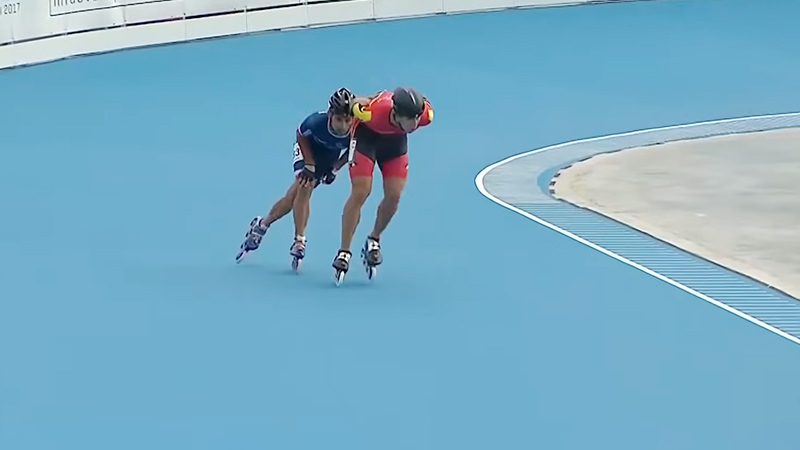
When you hear the word peloton in sports, many people immediately think of cycling — a large group of riders moving together on winding roads. But the term also appears in speed skating, especially in mass start and pack races. So what does it mean in that context? And why is it important? Let’s break it down.
Origins of the Word “Peloton”
The word peloton comes from French literally meaning small ball or packet — a fitting image for a tightly bunched group of competitors moving in unison. In cycling, a peloton refers to the main group of riders who stay close together to conserve energy by taking advantage of “drafting” — the aerodynamics of riding close behind others.
In skating, while the sport and surface differ from cycling, the concept carries over: a peloton is essentially a pack of skaters skating close together, sharing pace, position, and dynamic strategy.
Speed Skating: The Sport in Brief
Before we define peloton, it helps to understand the sport where the term is used:
- Speed skating is a competitive sport where athletes race on skates, usually around an oval track on ice or a similar surface.
- There are different formats — long track, short track, and mass start — each with distinct race styles and tactics.
- Mass start or pack races are where the peloton concept becomes most relevant.
Depending on the event, skaters may be racing against the clock (as in traditional long track races) or directly against each other in close proximity — that’s where peloton dynamics emerge.
What Does “Peloton” Mean in Speed Skating?
In speed skating terminology, especially in disciplines like mass start or elimination races, a peloton refers to the main group or pack of skaters in a race. It’s the most important group in competition, often determining which racers qualify for finals or podium positions.
From official skating rulebooks:
Pack / Peloton: It is the most important group of skaters.
That’s the basic definition — but what does that mean in practice?
How a Peloton Works in Skating Events?
Mass Start Races
In mass start speed skating — especially on ice — all competitors start together. Rather than racing one by one against the clock, they share the track and directly contend with each other. In this format:
- Skaters form a group (the peloton).
- Everyone skates together for many laps, jockeying for position.
- Intermediate sprints or points may be awarded during the race.
- Final ranking often depends on positioning in the peloton toward the finish line. (sportsin.biz)
Because skaters skate so closely in a peloton, the race dynamics become tactical rather than just about who can skate fastest.
Energy, Drafting, and Skating Together
In cycling, riding behind someone reduces wind resistance dramatically — a technique called drafting. (Wikipedia)
In speed skating, especially in outdoor races or pack events like in inline skating, very similar dynamics occur:
- Skaters close together experience less wind resistance than those skating alone.
- Skating directly behind another competitor can require less energy than leading.
- Skaters rotate positions within the peloton, taking turns at the front and then behind others to recover.
This means that strategic riding (or skating) becomes as important as pure speed.
Breakaways and Peloton Splits
Just like a bike race, a speed skating peloton isn’t always static:
- Sometimes a group of skaters will break away from the peloton.
- If they accelerate or attack, they can split the pack, leaving trailing groups behind.
- These breakaways can influence qualification for finals or how points are scored.
So the peloton isn’t just “a group” — it’s a dynamic, ever-changing set of competitors who are constantly reacting to each other’s moves.
Why the Peloton Matters in Competition?
The peloton isn’t just a neutral term — it’s central to race outcomes, strategy, and even the spectator experience.
Energy Conservation
Just like in cycling, drafting within a peloton saves energy. In long races, conserving energy is key:
- Those who lead early may tire more quickly.
- Skaters in the middle or back of the peloton can save strength for late pushes.
- Tactics revolve around when to stay tucked into the group or when to push ahead.
This makes watching a mass start race far more engaging — no one wants to expend all their energy too early!
Positioning and Tactics
Position in the peloton can decide outcomes:
- Being near the front reduces risk of crashes.
- A good position allows skaters to time their final sprint to the finish.
- Late attacks from within the peloton are common.
This approach turns many speed skating races into chess matches on ice, rather than straightforward time trials.
Strategic Breaks and Attacks
Peloton dynamics allow for:
- Breakaway attempts — where a few skaters try to escape the pack.
- Tactics like surges or temporary slowdown to force others to adjust.
- Skaters forming informal alliances to control pace.
All of these play out within or around the peloton, showing that speed skating at this level is as much about tactical intelligence as physical ability.
Peloton in Different Skating Formats
Although the peloton concept is most obvious in mass start and pack races, it’s not as relevant in all forms of speed skating.
Individual Time Trials
In traditional long track speed skating — where skaters compete against the clock over a set distance — the peloton doesn’t form. Each skater races in their own lane, and the focus is purely on time and technique, not group dynamics.
So, the term peloton is mostly associated with race formats where athletes compete together on the same track at the same time, especially mass start or elimination-style events.
The Peloton’s Role in Inline and Roller Speed Skating
The peloton concept isn’t exclusive to ice skating. In inline speed skating — competitive racing on wheeled skates — pack dynamics closely mirror cycling:
- Skaters ride in lines behind each other in a “peloton.”
- Drafting and rotating in the pack are key strategies.
- Teams or groups may work together to break away or conserve energy.
This shows that the idea of a peloton is universal wherever racers are competing in a pack on a course — ice, pavement, or track.
How Understanding the Peloton Enhances Watching Speed Skating?
If you’re new to speed skating, especially mass start events, watching a peloton in action can be confusing at first. But once you understand what’s happening:
You’ll Recognize Tactics
Instead of just speed, you’ll see:
- Drafting and energy management
- Strategic positioning
- Breakaway attempts
- Timing of final sprints
These are the moments that decide winners and make the sport exciting.
You’ll Watch Like an Insider
Understanding the peloton lets you appreciate:
- Why a skater stays back early in the race.
- Why a sudden surge changes the whole race dynamic.
- How teamwork and strategic planning influence finishing results.
It changes your view from “who’s fastest?” to “who raced smartest?”
Wrap-Up: Peloton in Speed Skating Defined
So to summarize:
- A peloton in speed skating is the main group or pack of skaters moving together in a race, especially in mass start or elimination events.
- It’s a tactical formation where skaters conserve energy, position themselves, and compete dynamically.
- Although similar in concept to cycling, the peloton in skating adapts to the unique motions and surface of ice or track.
- Understanding peloton dynamics deepens your appreciation of the sport — not just as a race of speed, but as a strategic battle on skates.
Final Thoughts
Whether you’re a beginner fan or someone interested in racing tactics, the peloton is a key part of speed skating that brings depth and excitement to the sport. It’s where strategy meets speed, where racers decide not just how fast they skate, but how they skate together.
Next time you watch a mass start or elimination race, keep an eye on the peloton — you’ll start to see the race unfold like a story, with twists, alliances, and thrilling finales woven into every lap.