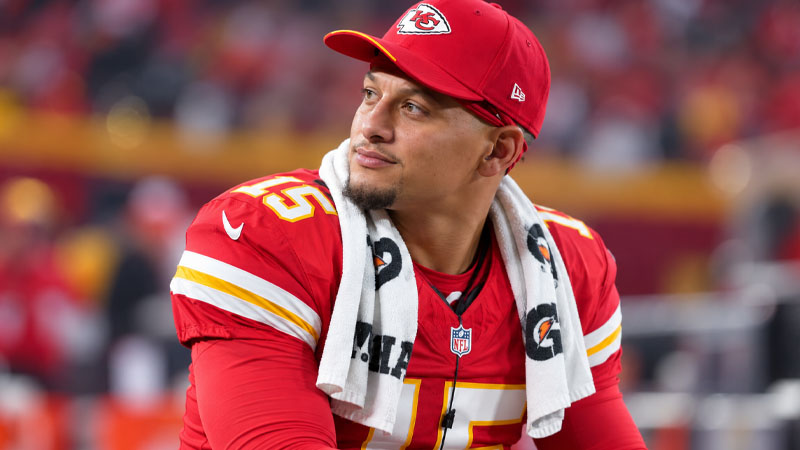
In modern professional sports, few figures command as much analytical interest as Patrick Mahomes. His trajectory has redefined the parameters of quarterback play, merging unprecedented physical traits with an uncanny capacity for off-script improvisation.
Yet, an objective tactical assessment reveals that his greatest asset—his transcendent, boundary-pushing creativity—is directly linked to his primary operational vulnerability.
This comprehensive analysis deconstructs the specific playing style that represents his most notable football weakness: the persistent tendency to “do too much”.
By evaluating the mechanics of this playing style, the physical compromises of his throwing platform, and the specific defensive strategies designed to exploit these traits, we can map the delicate balance between offensive efficiency and high-risk decision-making.
Operational Profile: The Paradox of Transcendence
+------------------------------------------------------------------------------------------+
|                            The Quarterback Efficiency Paradox                            |
+------------------------------------+-----------------------------------------------------+
| Elite Arm Talent & Creative Drive  | Leads to spectacular, off-script plays.             |
| Gunslinger Mentality               | Tempts the quarterback to hunt for high-risk shots. |
| Operational Volatility             | Manifests as avoidable turnovers and stalled drives.|
+------------------------------------+-----------------------------------------------------+
At the elite level of football, quarterback play is a constant battle between execution within the system and creative problem-solving when the system breaks down.
For Mahomes, his exceptional arm talent and natural gunslinger mentality create an environment where the boundaries of the system are constantly tested.
This playing style presents a distinct paradox:
- The Upside: The capacity to convert broken plays into massive, game-changing gains.
- The Downside: A chronic temptation to bypass standard, highly efficient checkdowns in search of low-probability, high-reward deep plays.
The documented analytical consensus indicates that this playstyle introduces an element of avoidable volatility into the offense.
Instead of taking the incremental yards offered by standard defensive alignments, the desire to find a spectacular solution can lead to negative plays, unnecessary sacks, and costly turnovers.
The Tactical Anatomy of “Hero Ball”
To understand why this tendency is classified as a fundamental weakness, we must define the specific behaviors that constitute “Hero Ball.”
This term does not merely refer to taking deep shots; it represents a systematic rejection of high-probability, rhythm-based passing in favor of lower-probability, high-leverage outcomes.
                     [ SNAP ]
                        |
            ________________________
           |                        |
     [Rhythm Option]         [Deep Downfield Shot]
     (Open Checkdown)        (Highly Covered/High Risk)
           |                        |
    (Bypassed by Mahomes)----> [Attempts Hero Ball]
                                    |
                            _________________
                           |                 |
                    [Spectacular Play]   [Turnover/Volatility]
Bypassing the Rhythm Pass
A structured passing offense relies on timing, footwork, and rhythm. When a quarterback plays in rhythm, the ball is released at a specific point in the dropback, matching the route break of the receiver.
“Hero Ball” actively disrupts this structure. When the primary and secondary options within the rhythm of the play are covered, or even when an open checkdown is immediately available, the gunslinger instinct can prompt the quarterback to hold the ball.
This delay is not passive; it is an active search for a “back-breaking” deep shot downfield. By extending the play, the quarterback shifts the challenge from a structured, pre-planned play to an ad-hoc scramble drill.
The Admitted Spark Drive
This operational habit is not merely an external observation; it is an on-field reality that Mahomes has explicitly acknowledged.
On-field self-assessments confirm that when receivers are covered, the correct operational play is to throw the ball away or check it down to let playmakers create yards after the catch.
However, Mahomes has noted a recurring psychological driver behind his decision-making: the desire to spark a struggling offense.
When the team is in a sluggish offensive stretch, the pressure to break the game open can lead him to force a big play rather than trusting the slow, methodical process of moving the chains.
This emotional or leadership-driven urge to create a spark can override tactical discipline, turning a standard play into a high-risk gamble.
Mechanical Costs and Platform Compromise
The physical expression of “doing too much” is most visible in throwing mechanics. Traditional passing concepts require a stable, aligned throwing platform where the feet, hips, and shoulders work in unison to direct the ball. When a quarterback operates outside this framework, the mechanical cost rises.
The Overreliance on Arm Strength
One of Mahomes’ most remarkable physical traits is his ability to generate velocity from almost any body position. However, this gift acts as a double-edged sword:
- The Mechanical Ideal: A quarterback resets their feet, steps toward the target, and transfers energy from the ground up through the torso and arm.
- The Mahomes Exception: Trusting his elite arm strength to deliver the ball to downfield targets without establishing a solid foundation.
When a quarterback consistently trusts their natural arm strength to override fundamental mechanics, the risk of error increases.
Without a stable base, throw accuracy becomes highly dependent on upper-body timing, which can degrade under pressure or during late-game fatigue.
The Mechanics of Off-Balance Throws
Off-balance throws are a defining part of Patrick Mahomes’ playing style, but they also introduce volatility. Instead of consistently resetting his feet and aligning his hips, Mahomes often throws while moving away from the target, falling backward, or even leaving the ground.
His sidearm and unconventional release angles can create spectacular completions that few quarterbacks can replicate. However, throwing from an unstable platform reduces mechanical consistency and accuracy.
These difficult attempts can produce incompletions or interceptions, potentially stalling otherwise promising drives and highlighting one of the risks of his improvisational approach.
Defensive Blueprints — Squeezing the Magic
Defensive coordinators across the league spend thousands of hours analyzing Mahomes’ tendencies. Because his pure physical talent cannot be easily neutralized, defensive game plans focus on exploiting his psychological tendencies—specifically, his desire to make big plays.
+-----------------------------------------------------------------------------------------+
|                                    The Defensive Squeeze                                |
+-----------------------------------+-----------------------------------------------------+
| Patience Testing                  | Deep safeties prevent explosive downfield chunk     |
|                                   | plays, forcing slow, short drives.              |
+-----------------------------------+-----------------------------------------------------+
| Red Zone Squeezing                | Tight spaces limit the vertical passing game,       |
|                                   | punishing off-platform mistakes near the goal.  |
+-----------------------------------+-----------------------------------------------------+
1. Patience Testing
The most effective defensive strategy against a high-volume gunslinger is the “patience test”. Defensive coordinators will drop seven or eight defenders into coverage, playing deep shell coverages that eliminate the big, explosive chunk plays Mahomes prefers to hunt.
The tactical objective of this defense is simple:
- Deny the Deep Pass: Prevent any receiver from getting behind the secondary.
- Concede the Underneath Pass: Keep the space short of the first-down marker open.
- Force Methodical Execution: Challenge Mahomes to complete 10 to 12 consecutive short passes to drive the length of the field.
This defensive alignment tests the quarterback’s willingness to play boring, disciplined football. For a player who thrives on big plays, being forced to slowly chip away at a defense can feel restrictive.
If Mahomes loses patience, he may try to force a pass into tight coverage, playing directly into the defensive game plan.
2. Red Zone Window Tightening
As an offense approaches the opponent’s goal line, the field shrinks. This physical reality changes the dynamics of the passing game. In the red zone, the deep space behind the defense disappears, and defenders can crowd the underneath passing lanes.
                           [ GOAL LINE ]
                      [Defenders Squeezed Close]
                 ==================================
                 [Tight Windows]    [Tight Windows]
                        \              /
                         \            /
                      [Mahomes Scrambling]
                     (High-Risk Off-Platform)
Defenses exploit Mahomes’ playstyle in the red zone by squeezing these passing windows. Because Mahomes is highly confident in his ability to fit the ball into tight spaces, he is more likely to attempt high-risk throws in these crowded areas rather than throwing the ball away to preserve a field goal opportunity.
By forcing long drives and then tightening the windows near the goal line, defenses can turn Mahomes’ creative instincts against him, turning potential touchdowns into costly turnovers or field goal attempts.
The Tactical Path to Balance
The journey toward resolving this operational vulnerability does not require Mahomes to eliminate his creative instincts. Instead, it requires a conscious effort to balance his spectacular playmaking abilities with situational discipline.
Embracing the Checkdown
The primary adjustment needed to reduce offensive volatility is a consistent willingness to accept the safe checkdown option.
- The Traditional Checkdown: A short pass to a running back or tight end in the flat, usually serving as an outlet when downfield routes are covered.
- The Tactical Advantage: While a checkdown may only gain three to five yards, it keeps the offense on schedule, maintains a manageable down-and-distance, and prevents the defense from building momentum.
By taking the checkdown early in a drive, Mahomes can force defenders to play closer to the line of scrimmage, which naturally opens up the deeper passing lanes he wants to exploit.
The Value of the Throwaway
Another critical component of situational discipline is the throwaway. When a play breaks down and no receivers are open, throwing the ball out of bounds is often the most successful outcome for a play. It avoids a sack, prevents a turnover, and allows the offense to play another down.
For Mahomes, learning to accept a dead play and live to fight another down is an important step in his growth as an elite decision-maker.
Strategic Analysis: The Decision-Making Matrix
To understand how Mahomes can find a better balance, we can look at a structured decision-making matrix that compares different in-game scenarios and their tactical outcomes.
| Field Position | Play Development | Traditional Choice | The “Hero Ball” Risk |
|---|---|---|---|
| Own Territory | Primary covered; pressure coming. | Checkdown to back for 4 yards. | Hold ball; escape pocket; risk sack. |
| Midfield | Defense in deep zone; deep routes covered. | Throw away or take short underneath pass. | Force deep throw into double coverage. |
| Red Zone | Squeezed windows; coverage is tight. | Throw out of bounds; preserve field goal. | Try sidearm throw into crowd. |
This matrix highlights how choosing the high-risk “Hero Ball” option in different areas of the field can introduce unnecessary volatility into the game.
By shifting his default choice toward the traditional option in these key moments, Mahomes can significantly improve his team’s offensive efficiency.
The Analytical Perspective on Creative Freedom
From an analytical standpoint, Mahomes’ biggest weakness is not a lack of physical ability or conceptual understanding; it is a side effect of his unique strengths. The same confidence that allows him to complete legendary off-platform throws also leads to his most frustrating mistakes.
+------------------------------------------------------------------------------------------+
|                              The Creative Freedom Spectrum                               |
+------------------------------------+-----------------------------------------------------+
| Extreme Restraint (Over-Discipline)| Predictable, easy to defend, lacks explosive plays. |
| Extreme Freedom (Hero Ball)        | Highly volatile, spectacular plays, high turnovers. |
| The Ideal Balance (Modern Elite)   | System execution with calculated improvisation. |
+------------------------------------+-----------------------------------------------------+
The challenge for Mahomes and his coaching staff is to find the sweet spot on this spectrum. If they restrict his playstyle too much, they risk losing the creative spark that makes him a special talent. If they give him too much freedom, they risk letting the offense stall due to high-risk decisions and mechanical breakdowns.
The ultimate goal is to develop a disciplined approach where improvisation is used as a backup plan when the system breaks down, rather than a primary option on every play.
Conclusion
Patrick Mahomes’ career is a masterclass in pushing the boundaries of what is possible at the quarterback position.
His elite physical gifts and creative instincts have redefined how we evaluate the position. Yet, as this analysis has shown, his tendency to “do too much” remains his most notable on-field vulnerability.
Managing this vulnerability is not about changing who he is as a player; it is about developing the situational discipline to know when to chase the magic and when to play within the system.
As long as he can strike this balance, Mahomes will continue to be one of the most dynamic and effective players in the history of the game.