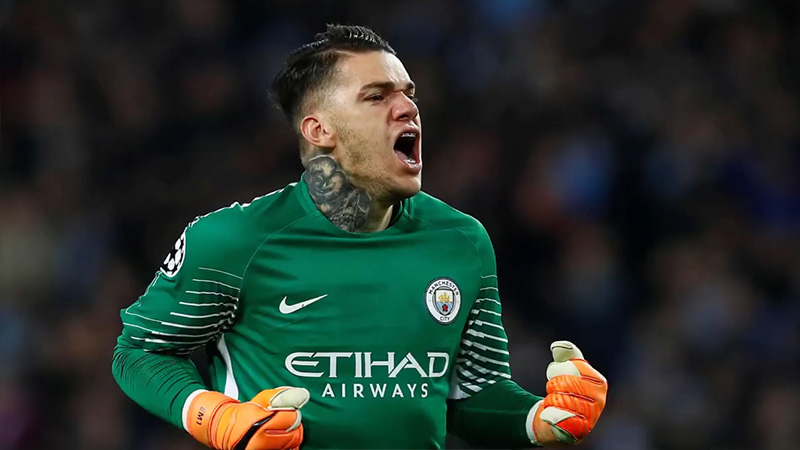
In the high-octane world of the Premier League, few figures are as polarizing or as visually striking as Manchester City’s shot-stopper, Ederson Moraes.
Known for his ice-cold composure, pinpoint distribution, and fearless sweep-keeping, Ederson is a cornerstone of Pep Guardiola’s tactical machine.
However, beyond his tactical utility, Ederson is a canvas of personal expression. Among the dozens of tattoos that adorn his body, one specific piece of ink has captured the curiosity of fans worldwide: the small, bright yellow symbol on the side of his neck.
In this deep dive, we explore the meaning, the motivation, and the philosophy behind Ederson’s neck tattoo, revealing a man whose external appearance belies a surprisingly simple and positive internal outlook.
The Mystery of the Yellow Circle: What is Ederson’s Neck Tattoo?
For years, cameras zooming in on the Brazilian goalkeeper during tense Champions League matches or local derbies have caught glimpses of a distinct yellow mark just below his ear.
Unlike the intricate, grayscale realism of the religious iconography or family portraits found on the rest of his body, this tattoo is minimalist and modern.
The tattoo is, quite literally, a digital icon brought to life: a “joy” emoji. While many professional athletes opt for symbols of aggression, such as lions, tigers, or warriors, to signify their competitive nature, Ederson chose a symbol of pure, unadulterated happiness.
In His Own Words: Why the Joy Emoji?
To understand the “why” behind the ink, one must look at Ederson’s own explanation of his body art. Ederson identifies the tattoo as a direct reflection of his temperament. He explains that the emoji on his neck explicitly means “joy” and “happy”.
For Ederson, the choice wasn’t about following a trend, but about a permanent declaration of his personality. He states quite simply that he wears the mark “because I’m a happy person”.
This revelation offers a fascinating contrast to the “cold” and “fearless” persona he maintains on the pitch. While he may look like an intimidating barrier to opposing strikers, his neck serves as a constant reminder that, at his core, he is driven by a sense of internal positivity.
The Philosophy of a “Happy Person” in Professional Sports
The life of a top-tier goalkeeper is one of immense pressure. A single mistake can lead to a goal, a lost match, or even a lost trophy. In such a high-stakes environment, maintaining a “happy” disposition is no small feat.
By tattooing a symbol of joy on his neck—one of the most visible parts of the body—Ederson is essentially branding himself with positivity. It suggests a psychological approach to the game where happiness is not just a result of winning, but a baseline state of being.
This “joy” likely contributes to the composure he is famous for; if a player is fundamentally a “happy person,” the temporary setbacks of a football match may be easier to process and move past.
The Rise of the “Emoji Tattoo”: A Modern Cultural Statement
Ederson’s choice to use an emoji is also a significant cultural marker. Traditionally, tattoos have relied on classical imagery—anchors, roses, or tribal patterns. By choosing an emoji, Ederson leans into modern digital language.
- Universal Communication: Emojis are a global language. Regardless of what country Ederson is playing in, the “joy” emoji is instantly recognizable.
- Juxtaposition: There is a powerful visual juxtaposition in seeing a “cute” or “simple” emoji placed on the neck of a man who is covered in “tougher” traditional ink. It humanizes him, suggesting that despite his elite status, he shares the same digital vocabulary as any fan.
- Defying Stereotypes: Goalkeepers are often portrayed as the “crazy” or “intense” members of a team. Ederson’s tattoo subverts this by leaning into a softer, more emotive symbol.
The Visual Identity of Ederson Moraes
Tattoos are often described as an external map of an individual’s internal journey. For Ederson, his tattoos tell a story of faith, family, and personal philosophy. The neck tattoo acts as a focal point of his visual brand.
When he stands in the tunnel before a game, the joy emoji is visible to his teammates and his opponents alike. It serves as a testament to his confidence.
It takes a certain level of self-assurance to wear a symbol of “happy” joy while preparing for a physical battle on the grass. It tells the world that while he takes his job seriously, he does not let the pressure of the world strip away his fundamental sense of self.
Technical Aspects: Location and Visibility
The neck is considered one of the most “committal” places for a tattoo. It is difficult to hide and is often the first thing people notice during a conversation. By placing the emoji here, Ederson ensures that his identity as a “happy person” is front and center.
The visibility of this tattoo is what makes it so frequently searched. It is not hidden under a jersey or a sleeve; it is a part of his face-to-face interaction with the world.
Conclusion: More Than Just Ink
Ederson Moraes’ neck tattoo is a masterclass in personal branding and emotional honesty. While it may seem like a simple piece of pop-culture art, it is deeply rooted in his self-perception.
It is a permanent reminder that, despite the fame, the money, and the pressure of the Premier League, he remains the same “happy person” who finds joy in his life and his craft.
In a world that often demands athletes be robotic or hyper-aggressive, Ederson’s “Ink of Joy” is a refreshing reminder that there is always room for a little happiness, even in the middle of a title race.