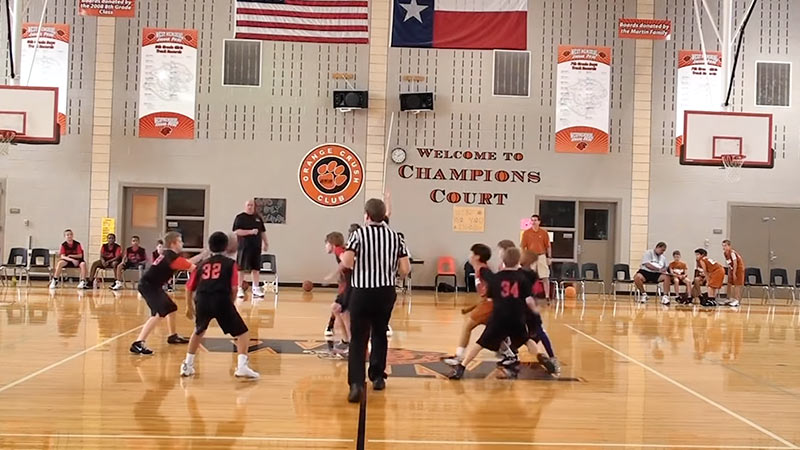
The opening moments of a professional basketball game are defined by a singular, high-stakes event: the tip-off.
Also frequently referred to as the jump ball, this procedure serves as the official commencement of play, establishing the initial rhythm and determining which side will dictate the early tempo.
While the physical act may appear straightforward—a referee tossing the ball between two players—the regulatory framework and strategic nuances surrounding the tip-off are remarkably complex.
To understand the tip-off is to understand the core mechanics of basketball governance and the tactical emphasis on securing the first possession.
This analysis provides a comprehensive exploration of the rules, the physical execution, and the strategic implications of the basketball tip-off, tailored for those seeking an expert-level understanding of the game’s opening sequence.
Defining the Tip-Off: The Foundation of Game Initiation
At its most fundamental level, a tip-off is the opening play used to start a basketball game. It is a controlled method of distributing the ball when neither team has a prior claim to possession.
The procedure is executed at center court, where a referee tosses the basketball into the air, and one representative from each team attempts to direct the ball toward their teammates.
The primary objective of the tip-off is to secure the first possession, providing a team with the immediate opportunity to score the opening points and establish a lead.
In high-level competition, where margins of victory are often razor-thin, the psychological and mathematical advantage of winning the tip-off cannot be overstated.
The Physical Mechanics: Standard Operating Procedures
The execution of a tip-off is governed by a strict set of protocols designed to ensure fairness and athletic integrity. These rules apply to the officials, the primary jumpers, and the eight other players positioned around the circle.
1. The Selection of Jumpers
Typically, teams designate their tallest or most athletic players—usually the centers—to participate in the jump.
The goal is to maximize the reach and verticality available to the team. These two opposing players stand inside the center circle, facing the referee and prepared for an explosive vertical movement.
2. The Official’s Toss
The responsibility for a fair start rests heavily on the referee. According to standard regulations, the official must throw the ball vertically into the air, ensuring it reaches a height greater than either player can reach while standing.
A flawed toss—one that leans too far toward one player or fails to reach a sufficient height—can result in a whistle and a re-jump to maintain competitive balance.
3. The Technical Execution of the Tap
The jumpers are restricted by specific timing and contact rules:
- The Peak Rule: Jumpers are prohibited from touching the ball on its upward flight. They must wait until the ball reaches its highest peak before making contact.
- The “No-Catch” Restriction: A jumper’s role is strictly to “tip” or tap the ball toward a teammate; they are not allowed to catch the ball themselves. This ensures the ball is immediately put into a live-play scenario involving the rest of the team.
- Contact Limits: Jumpers generally have a limit on how many times they can touch the ball (usually twice) before it must touch a non-jumper, the floor, or the rim.
The Role of the Non-Jumpers: Boundary and Positioning Logic
While the focus is often on the two players in the center, the positioning of the other eight players is equally critical to the success of the play.
- Restraining Circle Boundaries: Teammates from both sides must line up along the outside of the center restraining circle. This creates a clear zone for the jumpers to operate without interference.
- Prohibited Entry: These players are strictly forbidden from entering the circle or stepping over the line until the ball has been legally tapped by one of the jumpers.
- Strategic Alignment: Teams will often “box out” or position themselves around the circle to create lanes for the ball to be tapped into. A common strategy involves placing a quick guard in a position where the jumper can easily direct the ball, allowing for a fast-break opportunity immediately following the tap.
Temporal Applications: When Do Tip-Offs Occur?
While the most famous tip-off occurs at the very start of the first quarter, the jump ball mechanism is utilized in several other specific game scenarios.
1. The Commencement of Overtime
Consistency in game structure dictates that a new tip-off is used at the beginning of any overtime period. This resets the possession dynamic, ensuring that the extra period begins with the same neutral start as the initial game.
2. Regulation of Tie-Ups (Held Ball)
In professional and collegiate environments, a jump ball can be triggered during standard gameplay. This occurs when two opposing players firmly grab the ball at the exact same time.
To resolve this stalemate, the referee stops play and initiates a jump ball between the two involved players. This ensures that the resolution of a “tie-up” is decided by a physical contest rather than an arbitrary decision.
The Shift Toward Alternating Possession
It is important to note a significant divergence in how different basketball organizations handle mid-game tie-ups.
While the physical jump ball remains a staple of the NBA and certain professional tiers, many other leagues have transitioned to the alternating possession rule.
Under this system, rather than holding a physical jump ball every time a tie-up occurs, teams take turns receiving the ball. This is tracked by a “possession arrow” at the scorer’s table.
- Efficiency: The alternating possession rule is often favored in amateur or youth leagues because it speeds up the game and reduces the frequency of physical collisions during tie-ups.
- The Technical Trade-Off: While it increases game flow, some purists argue it removes an element of athletic competition from the game’s regulatory framework.
Strategic Implications: The Value of the First Possession
Securing the tip-off provides more than just a highlight-reel moment; it offers tangible strategic benefits that can influence the entire first half of a game.
1. Establishing Offensive Rhythm
Winning the tip-off allows a team to run its first scripted play without defensive pressure having been established through a prior possession. This can lead to high-percentage shots that build early confidence.
2. The Mathematical Edge
In leagues that do not use the alternating possession arrow for every quarter, winning the opening tip can sometimes determine who receives the ball at the start of subsequent quarters.
For example, in some formats, the team that loses the initial jump ball is awarded the ball to start the second and third quarters, while the winner gets the fourth. Understanding these nuances is vital for coaching staff when managing late-game possession strategies.
3. Psychological Momentum
A clean, dominant win on the opening tip-off sends a message of physical readiness. It asserts a team’s vertical presence and forces the opponent into a defensive posture from the very first second of the clock.
Common Infractions and Violations
To maintain a standard of excellence, officials are trained to spot several common violations during the tip-off sequence:
- Early Contact: If a jumper touches the ball before it reaches its apex, the opposing team is typically awarded possession.
- Encroachment: If a non-jumper enters the restraining circle before the tap, it results in a violation.
- The “Steal” Attempt: Players outside the circle sometimes attempt to time the tap and sprint into the circle to intercept the ball. If their timing is off and they cross the line early, the play is whistled dead.
Enhanced FAQ: Expert Insights into the Tip-Off
Q: Can any player participate in the tip-off?
A: Yes. While coaches almost always select their tallest players (centers), any player on the active roster who is on the floor at the time of the jump may participate.
Q: What happens if the ball hits the floor without being touched?
A: If the referee tosses the ball and neither jumper makes contact before it hits the hardwood, the official will blow the whistle and reset the play for a re-jump.
Q: Can a player score directly off a tip-off?
A: While extremely rare, it is technically possible if a jumper taps the ball with enough force and accuracy to send it through their own basket. However, most strategies focus on tapping the ball to a guard to initiate a controlled offense.
Q: Why do some leagues use an arrow instead of a jump ball?
A: The alternating possession rule was introduced to simplify the game and eliminate the delays associated with setting up a formal jump ball during the heat of regulation play.
Q: Does the jumper have to face their own basket?
A: Jumpers must stand in their respective halves of the center circle, facing the sideline or the official, depending on specific league positioning rules, but they are generally oriented toward the opponent’s side to facilitate a forward tap.
Conclusion: The Art of the Opening Play
The basketball tip-off is a masterpiece of precision, timing, and regulatory structure. It represents the transition from preparation to action, serving as the definitive “green light” for competition.
By adhering to the strict procedures of the toss, the jump, and the tap, basketball ensures that every game begins on a foundation of fairness and athletic merit.
Whether it is the opening whistle of a championship game or the start of a critical overtime period, the mechanics of the jump ball remain a vital pillar of the sport’s identity.
Understanding these technicalities allows players, coaches, and fans to appreciate the depth of strategy involved in those first few seconds of flight.