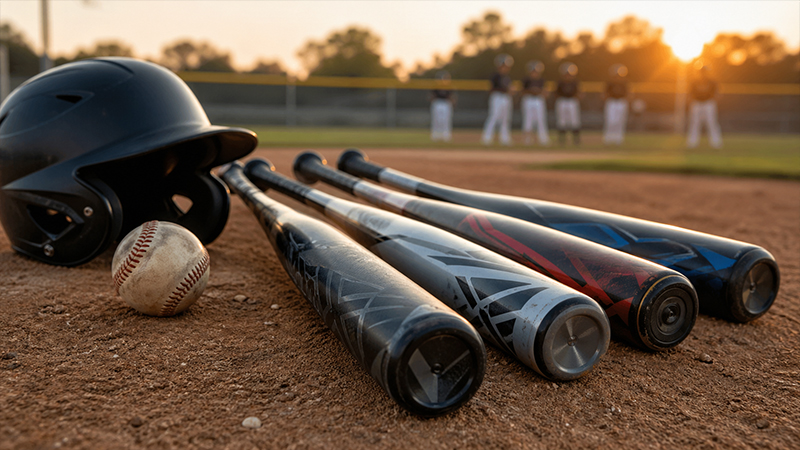
In the high-stakes world of competitive youth baseball, the transition from recreational play to elite “kid-pitch” leagues represents a pivotal milestone for both players and parents.
At the center of this transition is a critical piece of technology: the Senior League Bat. Often referred to in the industry as the Youth Big Barrel bat, this equipment serves as the essential bridge between the entry-level youth game and the rigorous standards of high school and collegiate play.
For the modern athlete aged 10 to 14, choosing a bat is no longer merely about color or brand preference. It is a data-driven decision involving barrel physics, weight-to-length ratios, and league compliance.
This guide provides a deep-dive analysis into the specifications, performance metrics, and strategic importance of the Senior League bat, ensuring that every swing taken is optimized for both development and results.
Defining the Senior League Category: More Than Just a Name
To the uninitiated, the terminology surrounding baseball bats can be a labyrinth of acronyms and overlapping categories. However, in professional and competitive circles, the Senior League bat occupies a very specific niche.
The Demographic Focus
Senior League bats are engineered specifically for players in the 10–14 age bracket. This is a period of rapid physical development where players are moving away from the “coach-pitch” or “machine-pitch” environments of early childhood and entering the competitive “kid-pitch” landscape.
In these leagues, the speed of the game increases exponentially, requiring a tool that balances increased power potential with the necessity for swing control.
Semantic Clarity: Senior vs. Youth Big Barrel
One common point of confusion for consumers is the nomenclature. In the marketplace, “Senior League Bat,” “Youth Big Barrel,” “Senior Big Barrel,” and “Big Barrel Bat” are frequently used interchangeably.
While different manufacturers may favor one term over another, they all describe the same essential equipment: a bat designed for competitive teenagers that features a barrel diameter larger than the standard 2 1/4 inches found in traditional Little League play.
The Anatomy of Performance: Technical Specifications
The primary differentiator of a Senior League bat is its physical construction. These bats are designed to provide a larger “sweet spot” while maintaining a weight that a developing teenager can swing effectively.
1. Barrel Diameter: Maximizing the Hitting Surface
The most visible characteristic of a Senior League bat is its barrel size. While standard youth bats are limited to a 2 1/4-inch diameter, Senior League models typically feature a 2 5/8-inch or 2 3/4-inch barrel.
From an engineering perspective, this increased diameter serves two primary purposes:
- Expanded Sweet Spot: A larger barrel naturally provides more surface area. This increases the probability of solid contact, even on “mis-hits” that might otherwise result in a weak grounder or a pop-up with a smaller barrel.
- Improved Confidence: For a player transitioning to faster pitching, the visual profile of a “big barrel” provides a psychological edge, reinforcing the player’s ability to cover the entire plate.
2. The “Drop” Weight: A Study in Ratios
Perhaps the most technical aspect of selecting a Senior League bat is understanding the “drop” weight. In baseball terminology, the “drop” is the numerical difference between the bat’s length (measured in inches) and its weight (measured in ounces).
In the Senior League category, players typically utilize a range of drops to match their physical strength:
- -10 Drop: The lightest option, ideal for 10- and 11-year-olds who need maximum swing speed to catch up to faster pitching.
- -8 Drop: A middle-ground option for 12-year-olds who have gained strength but aren’t yet ready for a heavy “wood-like” feel.
- -5 Drop: The heaviest Senior League option, used primarily by 13- and 14-year-olds as they prepare for the mandatory transition to high school standards.
The strategic selection of a drop weight is vital. If a bat is too heavy (a low drop number like 5), the player’s swing may drag, leading to late contact. If it is too light (a high drop number like -10), the player may sacrifice the “mass behind the ball” necessary for extra-base hits.
Compliance and the USSSA 1.15 BPF Standard
In competitive youth baseball, performance is strictly regulated by governing bodies to ensure both safety and a level playing field. For Senior League bats, the gold standard for certification is the USSSA 1.15 BPF stamp.
Understanding the 1.15 BPF
BPF stands for Bat Performance Factor. A rating of 1.15 means the bat is designed to produce a “trampoline effect” that is 15% more lively than a solid wood bat.
This certification is what allows USSSA bats to be so “hot” out of the wrapper, providing significant pop for the youth athlete.
League Eligibility
Before investing in a high-end Senior League bat, it is imperative to verify league rules. These bats are the standard for USSSA-sanctioned travel ball and “kid-pitch” leagues.
However, they are generally prohibited in Little League (which requires USA Baseball-certified bats) and in high school play (which requires BBCOR-certified bats).
Using a Senior League bat in a non-compliant league can lead to player disqualification or the bat being removed from play.
The Strategic Transition: From Senior League to BBCOR
One of the most overlooked aspects of the Senior League bat is its role as a preparatory tool. For a 13- or 14-year-old player, the clock is ticking toward high school baseball, where the rules change dramatically.
The “BBCOR Wall”
High school and collegiate players are required to use BBCOR (Batted Ball Coefficient of Restitution) bats, which are strictly limited to a -3 drop.
For a player who has spent years swinging a light -10 Senior League bat, jumping straight to a -3 BBCOR can feel like swinging a lead pipe.
This often leads to a significant “sophomore slump” in performance as the athlete struggles to adjust to the added weight.
The -5 Drop Solution
Elite coaches often recommend that players in their final year of Senior League play (typically age 14) transition to a -5 drop Senior League bat.
This provides a “halfway point” between the light youth bats and the heavy high school bats, allowing the athlete to build the necessary forearm and core strength without sacrificing their entire season to a weight adjustment.
Comparing the Categories: A Summary Table
To help parents and coaches make an informed decision, the following table highlights the key differences between the three major bat categories:
| Feature | Senior League (Youth Big Barrel) | Little League (USA) | High School (BBCOR) |
|---|---|---|---|
| Primary Age | 10–14 years | 5–12 years | 14+ years |
| Barrel Size | 2 5/8″ or 2 3/4″ | 2 1/4″ to 2 5/8″ | 2 5/8″ |
| Certification | USSSA 1.15 BPF | USA Baseball | BBCOR .50 |
| Common Drop | -10, -8, -5 | -10 to -12 | -3 (Mandatory) |
| Performance | High (Maximum Pop) | Moderate (Wood-like) | Controlled (Safety-focused) |
Frequently Asked Questions (FAQ)
1. Can my child use a Senior League bat in Little League?
Generally, no. Most Little League organizations require the USA Baseball stamp, which has a different performance standard than the USSSA 1.15 BPF found on Senior League bats. Always check your local league’s rulebook before purchasing.
2. What is the difference between a 2 5/8″ and a 2 3/4″ barrel?
A 2 3/4″ barrel offers the maximum legal hitting surface for USSSA play, providing a massive sweet spot. A 2 5/8″ barrel is slightly more aerodynamic and is often preferred by players who want a more balanced, faster swing.
3. Why are these bats called “Youth Big Barrel” and “Senior League”?
These are simply different industry terms for the same product category. “Senior League” typically refers to the age bracket (middle school), while “Big Barrel” refers to the physical size of the bat.
4. When should a player move from a -10 to a -8 drop?
There is no hard rule, but once a player shows high-level bat speed with a -10 and starts to “outswing” the bat (meaning they are so fast they lose control or barrel consistency), it is time to move to a -8 to add more mass to their hits.
Conclusion: Investing in the Future
Choosing a Senior League bat is an investment in a player’s development during their most formative years in the sport.
By understanding the nuances of barrel diameter, drop weight, and certification standards, parents and athletes can ensure they are equipped with a tool that doesn’t just look good in the dugout but also performs on the field.
The journey from a 10-year-old taking their first “kid-pitch” hacks to a 14-year-old preparing for the high school varsity squad is a demanding one.
The Senior League bat is the constant companion in that journey—a piece of technology engineered to turn potential into performance.