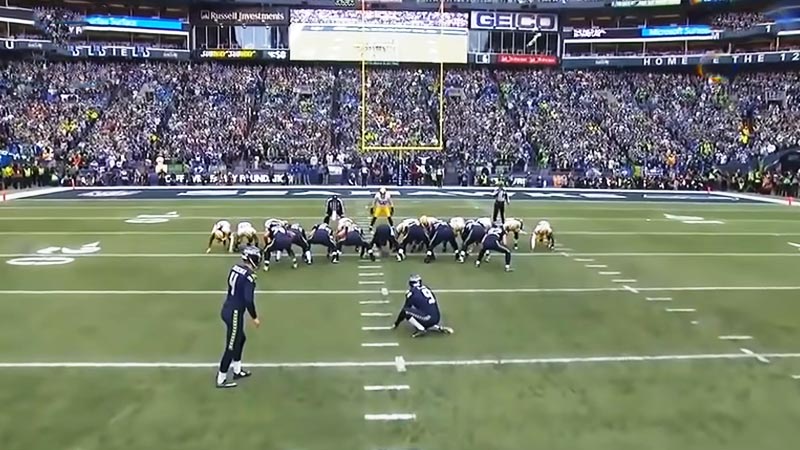
When you help your teammate get open, be sure to do it legally by slowing down their progress on the court. If you’re caught picking play deliberately, you’ll likely incur a penalty and may even lose possession of the ball.
Helping your teammate is a noble cause, but don’t forget about yourself in the process – stay safe and keep playing cleanly. By playing smart and helping out your teammates without breaking any rules, you can create an advantageous situation for your squad.
What Is A Pick Play In American Football?
Remember to play by the rules. If you help your teammate illegally, they may be able to slow down or block your progress on the court. Always try to help your teammate get open with a pass, instead of taking a shot yourself.
Be careful not to hinder their progress in any way – it’s important that they can continue playing as smoothly and efficiently as possible. Stay aware of what’s going on around you so that you don’t inadvertently help an opponent cheat or break the rules.
Playing fair is key for having fun and staying safe on the court – don’t let illegal pick play stop you from achieving either goal.
Illegal Pick Play
An illegal pick play is when a player in American football tries to make a pick, or interception, against the opposing team without being given permission by the referee.
This type of play can result in penalties for both teams and can often lead to turnovers on the field. Be careful not to participate in an illegal pick play during your next game because it could cost you dearly.
If you’re ever unsure whether or not to take a chance with an illegal pick play, consult with your coach before making any decisions. Keep your head up and know that there are other ways to contribute offensively besides trying to make interceptions – just be sure you use them wisely.
Slowing Defender’s Progress
A pick play is a type of offensive play in American football that involves the quarterback or running back picking up a forward pass and then running with it, often towards the end zone.
The purpose of this strategy is to slow down or stop the progress of the opposing team’s defense, giving their offense more time to score points. Because this call can be dangerous, quarterbacks and running backs must be careful not to get hit by defenders while making this maneuver.
In order for a pick play to work properly, both teams need to be on their same page so that everyone knows what they’re supposed to do next. Pick plays are one way that offenses can try and gain an advantage over their opponents on Sunday mornings across America.
Helping Teammate Get Open
A pick play is a move in American football that allows a teammate to get open. The quarterback usually makes the decision to call a pick play, and will hand the ball off or pass it downfield depending on the situation.
If executed correctly, a pick play can lead to an easy touchdown or big gain for your team. Make sure you know how to execute pick plays properly so that you can help your team win. Are you up for helping your team take home the victory?
What does it mean to get picked in football?
Getting picked in football is when a player gets chosen by their team as one of the players who will take part in the game. This means that they are given a place on the pitch and/or in the dugout, and are expected to do their best during the match.
The Ball Was Intended For Another Player But Intercepted
When a player on the offense intercepts the ball, it is called “picking up theball.” This happens when one of their teammates (usually in coverage) makes an exceptional play and snags the ball before it can be caught by an opposing player. In this situation, possession will automatically shift to the defender who intercepted the ball.
Possession Gained By Defender
If a defender successfully interceptions or recovers a fumble, they are said to have gained possession ofthe football. When this occurs, all other players on either team are considered to be “off-limits” until someone from their team touches or takes control ofthe football again.
Player On Offense Did Not Touch The Ball
In order for somebody to gain possession ofa football through contact with another player, that person must make physical contact withthe football itself – no matter how slight that might seem at first glance. If you’re on offense and somebody picks up your pass but doesn’t bring it down into bounds as they run past you – you didn’t touch it so technically your opponent has now acquired possession and scored a touchdown.
Is a pick and interception the same thing?
Yes, a pick and interception are the same thing. A pick 6 is an interception that gets run into the opponent’s end zone for a touchdown, while a regular interception is when the ball is caught by one of your team mates before it goes out of bounds.
Both terms refer to turnovers through the air – interceptions result in points for your team, while picks lead to touchdowns. To make an interception, you need good timing and quick reflexes – if you can get past your opponents defence.
What is a pick block in football?
A pick block is a piece of equipment used in American football to move the ball. It is a long, thin board with handles at one end and a smooth surface on the other. Two players stand opposite each other, holding the ends of the pick block between their feet so that it hangs down between them like a pendulum. The player behind the offensive team swings it forward as if he was hitting a golf ball, while his teammate tries to catch it in his hands.
Receiver Can’t Block Downfield
When the ball is touched by a defender, the receiver cannot block him downfield. Instead, he must run towards the line of scrimmage and try to catch the pass. This rule is called a pick rule in football and it’s designed to prevent receivers from getting blocked out of bounds or interfering with defenders on defense.
Once the Ball is Touched, Receiver Can Block Defender
Once the ball has been touched by a defender, that player can no longer be blocked by any other player on either team. This allows receivers more room to get open for catches and blocks on defensive players who may attempt to tackle them after catching the ball.
Is a pick play illegal in the NFL?
A pick play is an illegal offensive tactic in the NFL and can give your opponent an unfair advantage. If a player makes intentional contact with another player before he has had a chance to protect himself, it’s considered an unsportsmanlike conduct penalty and can result in a five-yard loss of yardage on the play.
Replays are used to review plays for possible penalties, but they won’t be able to determine if a pick play was legal or not unless there’s clear evidence that it was intentional contact between players prior to the catch being made by the receiver. As long as you don’t intentionally commit any unsportsmanlike conduct penalties, you should be safe from receiving a flag for using this type of strategy on offense in the NFL.
Are there illegal routes in football?
No, there are no illegal routes in football – every player is permitted to be moving toward the line of scrimmage when the ball is snapped. However, if an eligible receiver who is on the line moves to another position on the line (not forward), he must reset prior to the snap.
This includes moving backward as well as sideways – so even a lateral move can result in a penalty being called against you.
What’s a pick six in football?
In football, a pick six is an interception returned for a touchdown. It’s considered one of the most dramatic and exciting moments in the game. Topping that off is the Ring of Honor Championship Contender Ranking System, which ranks professional athletes based on their performance over a period of time.
This system helps fans make educated decisions when watching sports competitions.
Why is it called pick and roll?
The name pick and roll is derived from the fact that players are screened before they have a chance to create scoring opportunities. To get around this defensive tactic, passing options must be available to the offensive player, and rotating around the defense should be considered when making decisions about who to pass the ball to.
Another term for pick and roll is “misdirection.” When defenders are screened off their original goal, passers can mistakenly think they’ve created an open shot or pass instead of looking for someone else on the court. Sometimes it’s helpful for a player to simply go after one defender instead of trying to hit all three with his passes in order.
This will help isolate him so teammates can finish off the play or get open themselves . Proper screening not only creates control over how much space each team has oncourt but also allows teams time and space (known as “line spacing”)to set up plays elsewhere onthe floor.
To Recap
A pick play is a type of offensive play in American football that involves one team passing the ball to another player who then runs with it. This allows the receiving player to get closer to the opposing goal, which can lead to more points being scored.