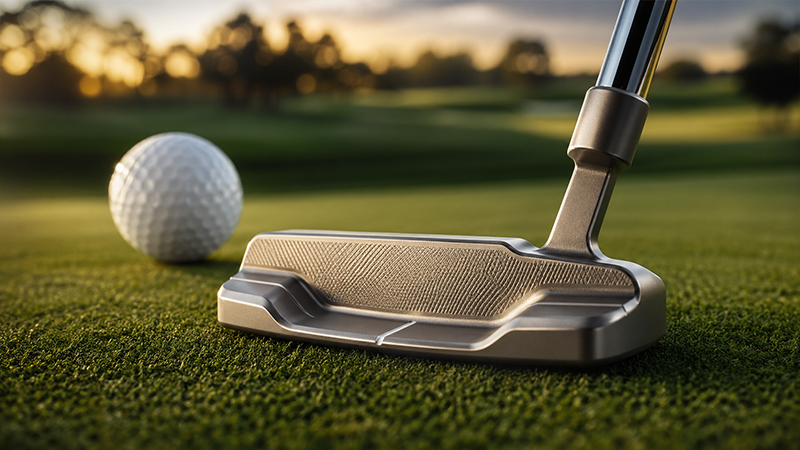
In the high-stakes world of competitive golf, the difference between a podium finish and a mid-pack result often comes down to a single revolution of the ball on the green.
For the discerning golfer, the putter is not merely a club; it is a surgical instrument that requires absolute mechanical reliability.
While the market is flooded with mass-produced options, the milled golf putter stands as the pinnacle of golf club engineering.
Carved with surgical precision from solid blocks of metal, these instruments offer a level of consistency that cast alternatives simply cannot match.
This comprehensive guide explores why the world’s most elite players choose milled technology, diving deep into the craftsmanship, metallurgy, and performance metrics that define the “milled advantage.”
The Engineering Marvel: Understanding the CNC Milling Process
At the heart of every premium milled putter lies a process known as CNC (Computer Numerical Control) milling.
Unlike traditional manufacturing methods, where molten metal is poured into a mold, a milled putter begins its life as a solid “billet” or block of high-grade metal.
From Billet to Blade
The production of a milled putter is a subtractive manufacturing process. A CNC machine, guided by advanced software, uses high-speed rotating carvers to shave away metal from a single block—typically stainless steel, carbon steel, or aluminum—until the final head shape emerges.
This “solid-body” construction is critical for several reasons:
- Minimal Inconsistencies: Because the head is carved from one continuous piece of metal, there are no internal air bubbles or “voids” that can occur during the casting process.
- Structural Integrity: The metallurgical grain of the metal remains intact, providing a uniform density across the entire face of the club.
- Mechanical Precision: CNC machines can operate within tolerances thinner than a human hair, ensuring that every angle, loft, and lie is exactly as the engineer intended.
Milled vs. Cast Construction
Most entry-level putters are “cast.” In casting, molten metal is poured into a pre-made mold. While efficient for mass production, this method can lead to microscopic inconsistencies in the metal’s density.
For a golfer, an inconsistent putter head means that two identical strokes might result in two different ball speeds. A milled putter eliminates these variables, offering a level of “billet-forged” reliability that professional-grade play demands.
The Science of Sensory Feedback: Why “Feel” Dictates Performance
In golf, “feel” is often dismissed as a subjective preference, but for the expert, it is a vital data point. Milled putters are renowned for providing superior, consistent feel and exceptional feedback at the moment of impact.
The Feedback Loop
When a golfer strikes a ball with a milled putter, the vibration travels through the solid metal head, up the shaft, and directly into the hands. Because the head is a single piece of solid metal, this feedback is “unfiltered”.
- Direct Communication: A milled putter provides a firmer, more direct feel and a distinct, audible “click” or sound upon impact.
- Instant Diagnosis: If a golfer strikes the ball slightly off-center (toward the toe or heel), the milled head communicates that error instantly through vibration and sound. This allows the player to make immediate mental adjustments.
Enhancing Distance Control
Consistency in construction leads directly to better distance control. In a cast putter or one with a soft insert, the energy transfer can vary if the ball hits a “soft spot” or an inconsistency in the material.
With a milled, solid-body putter, the energy transfer is uniform across the strike zone. This reliability is why experienced golfers—those who have moved past the “beginner” phase—often transition to milled equipment to fine-tune their lag putting and pace.
Face Technology and the Evolution of the Roll
One of the most visually striking features of a milled putter is the intricate pattern found on the face. These aren’t just for show; they are the result of advanced face technology designed to optimize how the ball interacts with the turf.
Controlling the Roll
When a golf ball is struck by a putter, it initially skids before it begins to roll end-over-end. The goal of any elite putter is to minimize that skid and achieve a “true roll” as quickly as possible. Engineers use the CNC milling process to create:
- Horizontal Grooves: To grip the dimples of the ball and impart immediate topspin.
- Deep Milling Patterns: Often used to soften the sound and feel of a firmer metal like stainless steel.
- Variable Milling: Some brands use patterns that vary in depth from the center to the perimeter to help normalize ball speeds on off-center hits.
These machine-carved patterns are far more precise than any texture that can be achieved through casting or adhesive inserts, ensuring that the ball’s departure from the face is predictable every single time.
Milled vs. Insert Putters: The Great Debate
The most common alternative to a milled putter is the insert putter. While both have their place on the green, they serve very different philosophies of play.
The Insert Philosophy
Insert putters utilize softer, lighter materials—such as polymers or soft metals—embedded into the face of the club.
- The Soft Feel: Inserts are designed to provide a muted, “cushioned” feel. This can be beneficial for players using high-compression, “hard” golf balls.
- The Muting Effect: However, this softness often mutes the feedback. A player may find it harder to distinguish a center strike from a slightly off-center one because the polymer absorbs the vibration.
The Milled Philosophy
Milled putters lean into the “firm and direct” experience. Instead of hiding the impact, they highlight it.
- Sound as Data: Milled putters typically produce a louder, more resonant sound. For many pros, the sound is just as important as the sight of the ball’s path.
- Traditional Preference: Many experienced golfers find that polymer inserts feel “artificial” or “mushy.” They prefer the traditional look and solid-body feel that only a single block of metal can provide.
| Feature | Milled Putter | Insert Putter |
|---|---|---|
| Material | Solid Stainless/Carbon Steel | Polymer / Soft Metal Inserts |
| Feel | Firm, Crisp, Direct | Soft, Muted, Cushioned |
| Feedback | High – Instant sensory data | Low Vibration is absorbed |
| Durability | Extremely High – Single piece | Moderate – Adhesive may degrade |
| Sound | Distinct “Click” | Dull “Thud” |
The Aesthetic of Precision: A “Traditional” Masterpiece
Beyond performance, there is an undeniable “jewelry” aspect to a high-end milled putter. For many golfers, the confidence gained from looking down at a beautiful piece of equipment is a tangible part of their mental game.
The Beauty of the Machine
The milling process often leaves distinctive, precise machine lines on the clubhead. These lines are a “fingerprint” of the CNC process, signaling to the world that the club was carved, not molded. Many manufacturers choose to leave these lines visible to showcase the craftsmanship involved.
Personalization and Customization
Because these putters are made for the premium market, they often offer more opportunities for personalization.
From custom weight ports to specialized finishes (like PVD or oil can), a milled putter is frequently a one-of-a-kind investment for a player seeking a high-quality, customizable option.
This appeals to the “traditional” golfer—someone who values the heritage of the game but wants the absolute best that modern technology can provide.
Is a Milled Putter Worth the Investment?
It is no secret that milled putters carry a higher price point compared to their cast counterparts. This is a direct reflection of the cost of high-grade materials and the extensive machine time required to carve a head from a solid block.
The Premium Choice for Performance
While some skeptics argue that the difference between a milled putter and a cheaper alternative is mostly a matter of personal preference, the data suggests otherwise for the serious player.
The performance, consistency, and classic feel of a milled putter make it a long-term investment in your game.
A milled putter does not “wear out” like a wedge or a driver. A solid stainless steel head can last a lifetime, often becoming a cherished heirloom.
For the golfer looking for consistency and precise feedback, the initial cost is offset by the confidence of knowing their equipment is perfectly engineered.
Enhanced FAQ: Everything You Need to Know
Q: Do milled putters rust?
A: It depends on the material. Stainless steel milled putters are highly resistant to rust. However, carbon steel milled putters, while offering a softer feel, require regular maintenance (oil and wiping) to prevent oxidation.
Q: Are milled putters only for professional golfers?
A: No. While they are a “premium choice” favored by experienced players, any golfer who struggles with distance control or wants more “feel” from their equipment can benefit from the consistency of a milled head.
Q: Why do they sound louder than other putters?
A: The “clickier” sound is a result of the solid-body construction. Without a polymer insert to dampen the sound, the metal vibrates naturally, providing the auditory feedback many players use to judge the quality of their strike.
Q: What does “Billet-Forged” mean?
A: This is a synonym for high-end milling, where a block (billet) of metal is forged to increase density before being CNC milled into its final shape.
Conclusion: The Final Verdict on Milled Technology
In the pursuit of the perfect round, every detail matters. A milled putter represents the intersection of old-world craftsmanship and new-age technology.
By choosing a club carved from a single block of metal, you are choosing absolute consistency, unparalleled feedback, and a classic aesthetic that stands the test of time.
Whether you are a scratch golfer looking for that final 1% of performance or a dedicated enthusiast wanting to invest in the best possible gear, the milled putter is the gold standard of the green.
Ready to elevate your short game? Explore our latest collection of CNC-milled masterpieces and feel the difference that precision makes.