In the high-stakes environment of competitive volleyball, the difference between a championship point and a devastating loss often comes down to a matter of inches.
While power hits and strategic blocks command the highlight reels, technical discipline regarding court boundaries is the foundation of elite play.
A foot fault is one of the most common yet preventable infractions that can shift the momentum of a match in an instant.
Understanding the nuances of these boundary violations is essential for players, coaches, and officials who aim for excellence.
This guide provides a comprehensive analysis of foot fault regulations, the mechanics of violations, and the strategic implications of maintaining boundary integrity.
Understanding the Fundamentals: What is a Foot Fault?
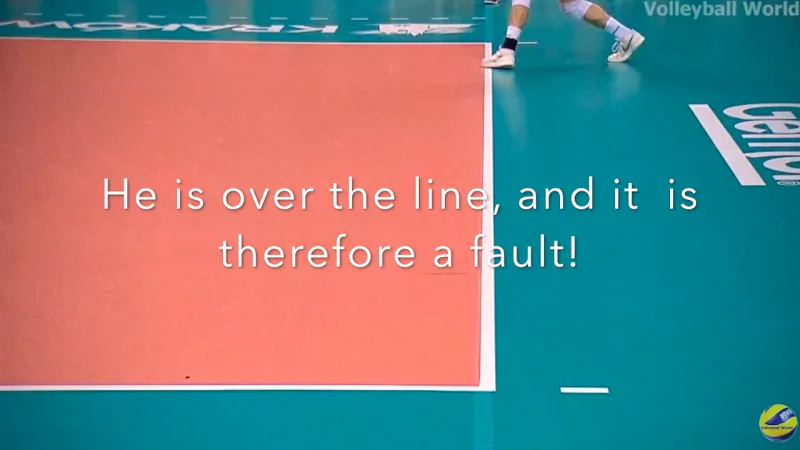
A foot fault in volleyball is defined as a specific type of illegal placement where a player’s foot makes prohibited contact with a boundary line during a critical phase of play.
This infraction typically occurs in two primary areas: the end line during a service attempt and the centerline during active rallies.
When an official signals a foot fault, it results in an immediate dead ball. The consequences are absolute: the current rally ends, and the opposing team is awarded both the ball and a point.
This “side-out” penalty is particularly damaging during the service phase, as it serves as a double-edged blow to the offending team’s scoring potential.
The Anatomy of a Service Foot Fault
The service is the only moment in volleyball where a player has total control over the ball. However, the pressure of the end line often leads to technical errors.
1. The Standing Serve
For a standard standing serve, the rules are rigid. The server’s foot must not touch or cross the end line before or during the moment of contact with the ball.
Even a microscopic overlap with the line is sufficient for an official to whistle the play dead. This requires servers to develop a consistent “toss-and-step” rhythm that accounts for their physical proximity to the boundary.
2. The Jump Serve Violation
The jump serve is a high-risk, high-reward maneuver that requires immense precision. Because the player is airborne, the rules regarding foot placement are specific to the “take-off” phase:
- The Launch: The player’s foot must not touch the end line at the moment of take-off.
- The Contact: The ball must be contacted while the player is in the air.
- The Landing: Unlike the standing serve, a player performing a jump serve is permitted to land on or inside the end line after the ball has been contacted in the air. The violation only triggers if the foot touches the line before the hand makes contact with the ball.
Navigating the Centerline: Mid-Play Boundary Rules
While service faults are individual errors, centerline violations often occur during the chaotic movements of blocking and attacking at the net.
The centerline exists to prevent injuries and maintain the separation of the two competing squads.
The “Complete Cross” Standard
A centerline foot fault is called when a player’s entire foot crosses completely over the line into the opponent’s court.
In many competitive frameworks, if any part of the foot is still touching the centerline (even if most of the foot is on the opponent’s side), it is technically legal, provided it does not interfere with the opponent.
Body Contact and Interference
The boundary rules extend beyond just the feet. A violation occurs if a player touches the opponent’s court with any part of their body while simultaneously interfering with the play.
This rule is designed to prioritize player safety, specifically preventing ankle injuries that occur when players land under the net on an opponent’s feet.
The Penalties: The Cost of Technical Imprecision
The scoring system in modern volleyball (Rally Scoring) ensures that every error has a direct impact on the scoreboard.
- Service Penalties: A foot fault during a serve results in a side-out. This means the serving team loses their chance to score, the ball is turned over, and the opponent gains a point.
- Active Play Penalties: A centerline violation during a rally results in an immediate point for the opposing team.
At the professional level, a single foot fault can be the difference-maker in a set, often leading to a multi-point “run” for the opponent as the offending team struggles to regain psychological composure.
Expert Analysis: Why Foot Faults Occur
To eliminate these errors, one must understand their root causes. Most foot faults are not the result of a lack of knowledge, but rather a breakdown in physical mechanics under pressure.
- Adrenaline and Over-Extension: In high-pressure moments, players often take larger steps than they do in practice, leading to an accidental “stepping on the line” during the serve.
- Fatigue: As a match progresses into the fourth or fifth set, a player’s ability to control their landing after a jump or block diminishes. This leads to “drifting” over the centerline.
- Poor Toss Placement: If a server tosses the ball too far forward, they are forced to chase it over the end line to maintain power, inevitably leading to a service fault.
Digital Integrity and Athletic Resources
As athletes and coaches seek high-quality instructional material to refine their technique, the security of these digital resources is paramount.
Platforms like these utilize advanced security protocols to ensure that their educational content is protected from automated threats.
To maintain a secure environment, these systems perform security verifications to confirm that visitors are human users and not malicious bots.
This ensures that the data and training resources remain accessible to the athletic community without compromise.
For the best experience when accessing detailed rule interpretations or coaching videos, users should ensure that JavaScript and cookies are enabled on their browsers to facilitate these necessary integrity checks.
Frequently Asked Questions (FAQ)
Can I step on the line during a serve?
No. Touching any part of the end line during the service motion—before the ball is struck—is a foot fault.
What happens if I land on the line after a jump serve?
If you have already contacted the ball in the air, landing on or inside the line is perfectly legal. The key is the position of your feet at the moment of take-off.
Is it a fault if my hand crosses the centerline?
Crossing the centerline with your hands is generally only a fault if it interferes with the opponent’s play or touches the net. The “complete cross” rule specifically emphasizes foot placement.
Does a foot fault count as a point for the other team?
Yes. In all standard competitive formats, a foot fault results in a point for the opponent and a change of possession if the offending team was serving.
Strategic Conclusion: Elevating Your Game
Technical mastery of volleyball’s boundary lines is a hallmark of a disciplined athlete. By internalizing the rules of the end line and the center line, players can eliminate unforced errors that gift points to the opposition.
Success in volleyball is not just about how hard you can hit; it is about the precision of your movement and the respect you show for the lines of the court.
For those looking to further their athletic development, consistent practice of service footwork and net transition drills is essential. Maintaining a “buffer zone” of a few inches can save your team from the costly sting of a whistle.