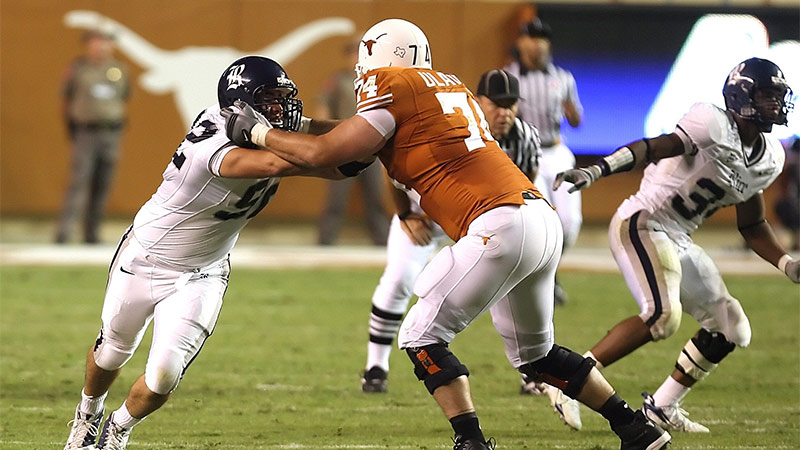
When most sports fans think of an offense exploding down the gridiron, their minds instantly race to the dynamic traits of a dual-threat quarterback, the breathtaking open-field speed of a slot receiver, or the elusive moves of a star halfback.
Yet, foundational to any truly dominant, physical running attack is a quiet architect of success: the fullback.
Often overshadowed by higher-profile skill positions, the fullback remains one of the most intellectually demanding, physically punishing, and strategically vital roles on the football field.
Whether clearing a cavernous running lane through a stacked defensive front or standing firm against a charging linebacker on a crucial passing down, this position has shaped the very DNA of the sport.
The Unsung Hero of the Gridiron
To understand American football, one must appreciate the chess match happening in the trenches and the backfield on every single snap.
While modern offensive schemes continually evolve toward speed, space, and aerial dominance, the core principle of football remains a game of leverage, angles, and physical dominance.
The fullback position sits precisely at this intersection. Traditionally lining up deeper in the backfield than the halfback—often right behind the quarterback in an I-formation—the player in this role acts as the ultimate catalyst.
They do not merely play football; they create opportunities for everyone else to succeed. This comprehensive guide explores everything you need to know about the position, from its core responsibilities and physical profile to its strategic evolution in today’s high-tech game.
Core Responsibilities and On-Field Duties
The modern fullback is a multi-talented athlete who must master several distinct disciplines. While running the ball is only a fraction of their job description, their execution across multiple tasks dictates the overall rhythm of an offense.
Lead Blocking
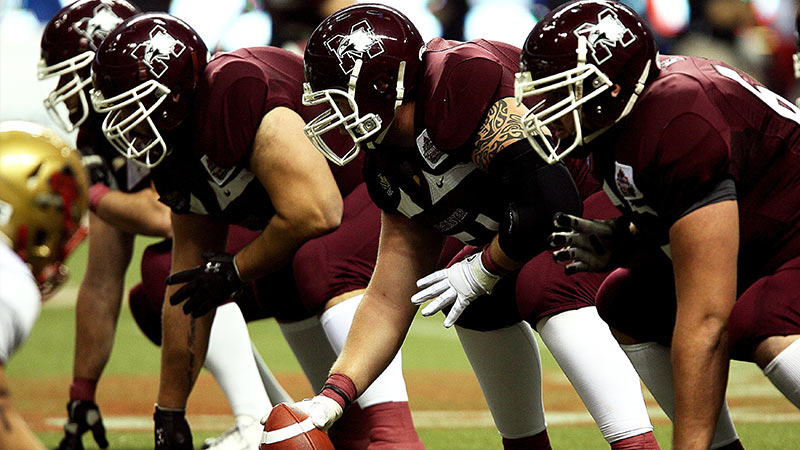
The primary responsibility of a fullback is to serve as the vanguard for the running back. On sweep plays, isolation runs, and counter schemes, the fullback hits the hole first.
Their job is to identify the primary threat—usually a fast-flowing middle linebacker or an aggressive safety—and neutralize them through technical execution, precise leverage, and relentless physical engagement. A successful lead block turns a potential two-yard loss into a ten-yard gain.
Pass Protection
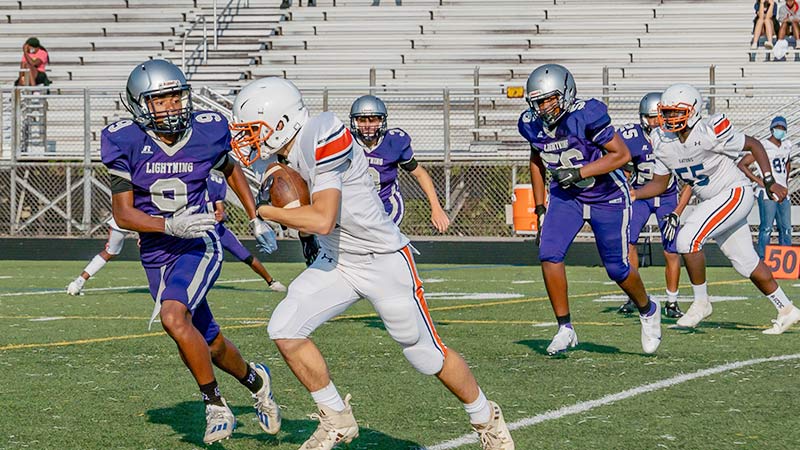
In the modern era of complex defensive blitz packages, keeping the quarterback upright is paramount.
Fullbacks frequently stay in the backfield to pick up blitzing linebackers, edge rushers who slip past the offensive line, or safeties creeping toward the line of scrimmage.
Because of their compact size and low center of gravity, they can anchor effectively against heavier defenders, buying the quarterback precious seconds to find an open receiver.
Short-Yardage Carries
When an offense needs exactly one yard to convert a third down or cross the goal line for a touchdown, subtlety goes out the window. Defenses know the ball is coming, and they stack the box with defenders.
In these high-pressure scenarios, the fullback is often handed the ball to plunge straight ahead. Their combination of momentum, low center of gravity, and sheer grit makes them exceptionally reliable in crowded spaces.
Short Receptions and Safety Valves
Defenses focused on stopping dynamic wide receivers often underestimate the fullback leak-out into the flat or middle of the field.
Fullbacks are reliable check-down options for quarterbacks facing intense pressure. Catching a quick pass and turning upfield can catch a collapsing defense off-guard, moving the chains and keeping the offensive drive alive.
3. Physical Profile and Athlete Demographics
The athletic demands of the position require a very specific physiological makeup. Unlike slender wide receivers or towering offensive tackles, fullbacks occupy a unique physical middle ground.
Build and Composition
- Height: Typically ranging from 5 feet 11 inches to 6 feet 1 inch. This slightly shorter stature provides a naturally lower center of gravity.
- Weight: Generally falling between 235 and 250 pounds. This dense musculature absorbs high-impact collisions while generating maximum force upon contact.
- Athletic Traits: While they do not necessarily need Olympic-level straight-line speed, they require explosive acceleration, exceptional core strength, short-area quickness, and remarkable durability.
Mental Acumen
Beyond physical prowess, a successful fullback must possess an elite football IQ. They must read defensive alignments instantly, understand blocking schemes as thoroughly as an offensive lineman, and communicate adjustments on the fly. A misread assignment can result in a catastrophic loss in the backfield.
4. The Strategic Evolution of the Position
Football is an ever-changing landscape governed by strategic innovation. The way teams utilize this specific backfield position has transformed dramatically over the decades.
The Golden Age of Power Football
In decades past, the I-formation and two-back sets were standard across professional and collegiate football. Offenses relied heavily on establishing a punishing ground game.
Legendary teams built their entire identities around a star running back following a relentless lead blocker. In this era, fullbacks were household names who accumulated significant playing time and earned high recognition.
The Rise of Modern Spread Offenses
As the game shifted toward the turn of the millennium, offensive coordinators began prioritizing spatial advantage, passing efficiency, and pace.
The advent of the spread offense—which often features three or four wide receivers, a single running back, and an athletic quarterback—drastically reduced the snaps available for traditional fullbacks.
Many teams opted to replace the position with an extra pass-catcher, a hybrid tight end, or an agile H-back who could motion across formations.
The Resurgence and Hybrid Adaptation
Today, football is cyclical. Defensive coordinators responded to spread offenses by deploying smaller, faster linebackers and defensive backs designed to defend the pass.
Recognizing this vulnerability, forward-thinking offensive minds realized that a heavy, physical power-running game could exploit these smaller defensive fronts.
Consequently, the position has evolved rather than vanished. Modern fullbacks are frequently utilized as versatile chess pieces. They line up in the backfield, motion out wide into the slot, or act as extra tight ends.
This versatility forces defenses to make difficult personnel choices: match the offense with smaller, faster players and risk getting worn down by power runs, or keep heavier personnel on the field and risk getting exploited in the passing game.
Frequently Asked Questions
Do all modern professional teams use a fullback?
No. While some offensive coordinators build their entire scheme around a traditional power-running philosophy that relies heavily on the position, others use spread concepts that favor hybrid tight ends or extra wide receivers instead.
Can a running back play fullback?
Generally, yes, though the skill sets differ. Running backs typically require greater elusiveness and top-end speed in the open field, whereas fullbacks must excel at blocking, absorbing contact, and operating in tight spaces. However, many versatile athletes transition between the two roles depending on team needs.
Why is the position considered so physically demanding?
Every single play involves high-impact collisions. Whether blocking a blitzing linebacker weighing 240 pounds or plunging into a pile of defenders on a short-yardage rush, the player absorbs substantial physical contact on nearly every snap, requiring exceptional durability and recovery protocols.
Conclusion
The fullback remains a fascinating cornerstone of American football strategy. Far from being a relic of the past, the position represents the gritty, foundational elements of teamwork, selflessness, and physical execution that define the sport.
Whether paving the way for a game-winning touchdown run or standing tall against a fierce pass rush, the fullback proves that athletic value extends far beyond scoring touchdowns—it is found in the relentless pursuit of team success.