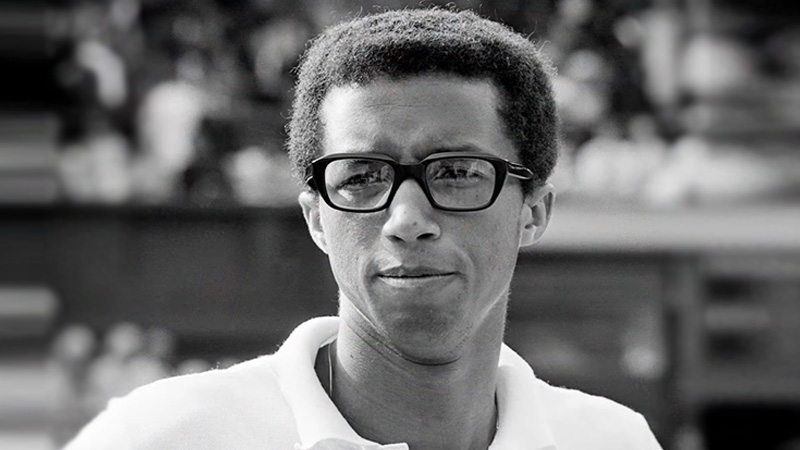
Arthur Ashe remains a singular figure in the history of global sports and social activism. While many remember him as the first Black man to win titles at Wimbledon, the US Open, and the Australian Open, his most enduring contribution to the human condition may well be his courageous battle against HIV/AIDS and his institutionalization of health equity.
His life was a testament to the idea that a platform earned on the court could be leveraged to dismantle systemic barriers in the clinic and the community.
To understand what happened to Arthur Ashe is to look beyond a medical diagnosis and into the heart of a man who transformed personal misfortune into a global movement for medical transparency and urban health reform.
His journey was marked by a series of health crises that would have sidelined most, yet he utilized his final years to build a framework for advocacy that continues to save lives decades after his passing.
The Early Health Challenges: A Professional Setback
The narrative of Arthur Ashe’s health struggles began long before the world learned of his HIV status. In 1979, at the relatively young age of 36 and still active in the upper echelons of professional tennis, Ashe suffered a significant heart attack.
This event was a shock to the sporting world, as it highlighted that even the most elite athletes were not immune to cardiovascular disease.
Following this initial cardiac event, Ashe underwent quadruple bypass surgery in 1979. This procedure was intended to extend his life and potentially allow him to continue his athletic pursuits in some capacity.
However, the complexity of his condition required a second heart surgery in 1983. It was during this second intervention that the trajectory of his life was irrevocably altered.
The 1983 Surgery and the Tainted Blood Transfusion
The pivotal moment in Arthur Ashe’s medical history occurred during his second bypass operation in 1983. During the recovery or the procedure itself, Ashe received a blood transfusion that was contaminated with HIV.
At the time, the medical community’s understanding of the virus was in its relative infancy, and standardized screening of the blood supply had not yet been fully implemented across the healthcare system.
Ashe lived with the virus unknowingly for five years. This period of his life was characterized by a transition from his playing days into a career as a broadcaster, writer, and captain of the U.S. Davis Cup team.
He remained a figure of immense dignity and intellectual depth, unknowingly carrying a condition that was then synonymous with a social and medical death sentence.
The 1988 Diagnosis: A Private Battle Begins
In 1988, Arthur Ashe was hospitalized after experiencing neurological symptoms. It was during this hospitalization that he received the formal diagnosis of HIV.
For a man who valued his privacy and the sanctity of his family life above all else, the diagnosis presented an agonizing dilemma.
Between 1988 and 1992, Ashe made the deliberate choice to keep his health status private. This decision was not rooted in shame, but in a protective instinct for his wife, Jeanne Moutoussamy-Ashe, and their young daughter, Camera.
He wished to shield them from the intense media scrutiny and the profound stigma that surrounded HIV/AIDS in the late 1980s.
During these four years, he continued his work, though his focus began to shift toward the broader implications of health and social justice.
The 1992 Press Conference: Privacy vs. the Public Interest
The wall of privacy that Ashe had carefully constructed was breached in April 1992. The newspaper USA Today contacted Ashe, informing him that they were planning to run a story regarding his HIV status.
Faced with the loss of control over his own narrative, Ashe decided to preempt the report by holding a press conference on April 8, 1992.
During this historic announcement, Ashe confirmed that he had contracted the virus through a tainted blood transfusion during his 1983 heart surgery. He spoke with characteristic grace, yet he did not hide his frustration with the media’s intrusion into his private life.
He famously noted that he was forced to speak because a newspaper was “going to put it in the paper anyway.” This moment sparked a global conversation about the ethics of journalism and the right to medical privacy, even for public figures.
A Race Against Time: The Final Year of Advocacy
Once his status was public, Arthur Ashe did not retreat. Instead, he accelerated his efforts to combat the disease and the systemic inequities that allowed it to flourish in certain communities. He devoted his final year of life to intensive public health advocacy.
Ashe recognized that HIV/AIDS was not just a medical issue, but a social one. He understood that the stigma surrounding the disease was a barrier to testing and treatment.
By speaking openly about his condition, he became one of the most prominent “faces” of the virus, helping to decouple it from the discriminatory tropes that had previously defined the public’s perception.
Institutionalizing Change: The Foundations of a Legacy
To ensure that his advocacy would outlive him, Ashe founded two critical organizations that remain active and influential today:
- The Arthur Ashe Foundation for the Defeat of AIDS: This organization was established to raise funds for research and to support clinical trials for new treatments. Ashe used his global connections to bring together medical experts, philanthropists, and policymakers to prioritize the eradication of the disease.
- The Arthur Ashe Institute for Urban Health: Recognizing that healthcare outcomes were often dictated by zip code and race, Ashe founded this institute to address the disparities in healthcare delivery within inner cities. The institute focuses on community-based health education and the training of healthcare providers to better serve marginalized populations.
These institutions represented Ashe’s move from a “patient” to a “pioneer.” He was no longer just a victim of a tainted transfusion; he was the architect of a new approach to urban medicine and infectious disease management.
The Passing of a Legend
On February 6, 1993, at the age of 49, Arthur Ashe died from AIDS-related pneumonia. His death was met with a global outpouring of grief.
From the tennis courts of Wimbledon to the streets of his hometown in Richmond, Virginia, he was remembered not just for his backhand, but for his backbone.
His funeral was attended by thousands, reflecting the diverse coalition of people he had touched—athletes, civil rights leaders, healthcare professionals, and ordinary citizens.
He had faced his death with the same quiet intensity that had defined his career, working up until his final days to ensure his foundations were secure and his message was clear.
Posthumous Recognition and the Presidential Medal of Freedom
The impact of Arthur Ashe’s life was officially recognized by the highest office in the United States. In June 1993, President Bill Clinton posthumously awarded Ashe the Presidential Medal of Freedom.
This honor is the nation’s highest civilian award, and it was given to Ashe in recognition of his “extraordinary contributions to the nation” both as an athlete and as a tireless advocate for human rights and public health.
President Clinton noted that Ashe’s life was a reminder that “the greatest of all victories is the triumph of the human spirit.”
The award served as a formal validation of the work Ashe had done to bring HIV/AIDS into the national conversation and to champion the cause of those who were often ignored by the traditional medical establishment.
Why Arthur Ashe’s Story Matters Today
The story of Arthur Ashe is more than a historical footnote; it is a blueprint for modern health advocacy. His experience highlights several themes that remain relevant in the contemporary medical landscape:
- The Importance of Medical Transparency: Ashe’s infection through a tainted transfusion underscored the need for rigorous screening and safety protocols in the blood supply.
- The Right to Privacy: His forced disclosure remains a case study in the tension between the public’s “right to know” and an individual’s right to medical confidentiality.
- Health Equity: Through the Arthur Ashe Institute for Urban Health, he pioneered the focus on social determinants of health, a concept that is now central to modern public health policy.
- Destigmatization: By coming forward, Ashe helped shift the public perception of HIV/AIDS from a moral judgment to a medical challenge.
Conclusion: The Unfinished Match
Arthur Ashe’s life was cut short at the age of 49, but the work he started continues to evolve. He showed the world that a diagnosis is not a definition.
Through his foundations and his public advocacy, he ensured that his legacy would be one of healing and equity rather than just loss.
He moved the needle on how the world views infectious diseases and healthcare in urban environments.
As we reflect on what happened to Arthur Ashe, we see a man who took a catastrophic medical error and used it to build a more compassionate and just healthcare system for everyone.
His life reminds us that the measure of a champion is found not in how they play the game when they are winning, but in how they lead when the stakes are life and death.
For those looking to honor his legacy, supporting the Arthur Ashe Institute for Urban Health remains a powerful way to continue the mission he began in his final, most impactful year.
Arthur Ashe may have left the court in 1993, but his influence on public health and human dignity remains a permanent part of the global record.