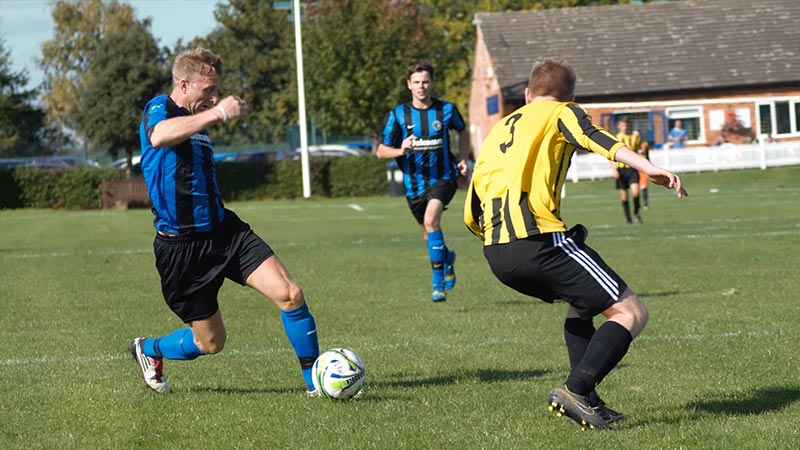
The Central Attacking Midfielder, commonly known as the CAM, represents the creative pulse of a modern soccer team.
Often occupying the most prestigious position on the pitch, the CAM acts as the primary link between the engine room of the midfield and the clinical edge of the attack.
Known traditionally as the “Number 10,” this player is tasked with more than just running; they are the architects of goal-scoring opportunities.
Understanding the CAM role is essential for anyone looking to grasp the tactical nuances of the beautiful game, as they define how a team breaks down stubborn defensive structures.
The Core Definition of the CAM Position
In the tactical nomenclature of soccer, CAM stands specifically for Central Attacking Midfielder. This player is recognized as the team’s primary creative playmaker, serving as the focal point for offensive maneuvers.
Positionally, they are situated centrally on the pitch, operating in the crucial territory between the defensive-minded midfielders and the forward line.
The Symbolic Number 10
Historically, the CAM has been referred to as the “Number 10”. This designation implies a high level of technical responsibility and prestige within the squad.
While modern jersey numbers vary, the “Number 10” label remains a tactical shorthand for the player responsible for the team’s creative output.
The Orchestra Conductor
The CAM functions as the “orchestra conductor” of the attack, setting the tempo and rhythm of the game. They do not just participate in the play; they dictate where the ball goes and how quickly the team transitions into a goal-scoring threat.
The Tactical Architecture: Where a CAM Operates
Success in the CAM role is heavily dependent on spatial awareness. Unlike wingers who hug the touchlines or defensive midfielders who guard the back four, the CAM must find utility in the most congested area of the field.
Finding Pockets of Space
A CAM’s most valuable skill is their ability to operate in “pockets” of space. These pockets are typically the small gaps located between the opponent’s midfield line and their defensive line.
By positioning themselves in these zones, they become difficult for defenders to track. If a central defender steps up to mark them, they leave a gap behind; if a midfielder drops back, they lose control of the center.
Evading the Marker
The primary objective of finding these pockets is to avoid being marked by the opposition. In these slivers of space, the CAM gains the extra second needed to receive the ball, turn, and assess the field for the next decisive action.
Primary Responsibilities of the Creative Engine
The role of the CAM is multifaceted, requiring a balance between selfless distribution and clinical finishing. According to the sources, their responsibilities can be categorized into three main pillars: linking play, creating chances, and scoring goals.
Linking Play Across the Pitch
The CAM serves as a vital bridge for the team’s ball progression. They are responsible for receiving the ball from defensive or central midfielders and successfully transitioning it to the forwards.
Without an effective CAM, a team often struggles to move the ball through the center, forcing them to rely on less efficient long balls or predictable wing play.
Creating High-Value Scoring Chances
The ultimate metric for a CAM is their ability to provide assists. This is achieved through:
- Line-breaking passes: Executing passes that slice through the opponent’s midfield or defensive structures.
- Through balls: Precise deliveries into the path of a running striker that unlock the defense and create one-on-one situations with the goalkeeper.
Acting as a Scoring Threat
While their primary identity is that of a creator, modern CAMs must also be clinical finishers. They are expected to pose a scoring threat in two specific ways:
- Late runs: Bursting into the penalty area after the initial attack has begun, often arriving unmarked to meet a cross or a cut-back.
- Distance shooting: Forcing the defense to stay honest by being capable of shooting with power and accuracy from outside the box.
Essential Attributes of Elite Playmakers
To excel in the crowded central corridors of a professional soccer match, a CAM must possess a specific toolkit of mental and physical skills. These attributes separate average players from world-class maestros like Kevin De Bruyne or Zinedine Zidane.
Technical Mastery and Ball Control
Because they operate in high-pressure areas, technical skill is non-negotiable. An exceptional first touch is required to settle the ball instantly under intense pressure from opposing defenders.
Furthermore, a CAM must possess superior dribbling abilities to maintain possession in tight windows where a single mistake can trigger a counter-attack.
Vision and Decision Making
The mental aspect of the game is what truly defines the CAM. Vision and creativity allow them to see and execute passing lanes that are invisible to other players on the pitch.
This is coupled with split-second decision-making; a CAM must know exactly when to release a pass, when to take an extra touch to draw a defender, or when to take the shot themselves.
| Attribute | Tactical Benefit |
|---|---|
| Exceptional First Touch | Allows for immediate play in congested areas. |
| Vision | Unlocks deep-seated defensive blocks. |
| Line-Breaking Passing | Transitions the team from midfield to attack instantly. |
| Late Runs | Adds an extra man to the attack that defenders can’t track. |
Evolution of the CAM: From Classic to Modern
The CAM role has undergone significant changes as tactical systems have evolved. In the past, the “Classic Number 10” was often a luxury player who did little defensive work. Today, the role requires high levels of fitness and tactical discipline.
The Defensive Shift
In modern football, a CAM is often the first line of defense during the transition phase. When the team loses possession, the CAM is expected to press the opponent’s defensive midfielder or “regista,” preventing them from starting their own attack.
This “defensive playmaker” aspect is a far cry from the stationary creators of the 1980s.
Transition to the “Half-Space”
While the sources mention central “pockets”, many modern CAMs now drift into the “half-spaces”—the vertical corridors between the center of the pitch and the wings.
This movement forces the opposing full-backs and center-backs into difficult decisions regarding who should step out to press, further destabilizing the defensive block.
Statistical Benchmarks for Success
For professional scouting and performance analysis, the CAM’s impact is measured through specific data points that go beyond simple goals and assists.
Key Passes and Expected Assists (xA)
A “Key Pass” is a pass that leads directly to a shot on goal. For a world-class CAM, maintaining a high volume of key passes per 90 minutes is a primary KPI.
Expected Assists (xA) measure the quality of the chances created, regardless of whether the striker actually scores, providing a more accurate reflection of the CAM’s creative efficiency.
Progressive Carries
This metric tracks how often a player moves the ball significantly closer to the opponent’s goal through dribbling. A CAM who can carry the ball through the midfield bypasses defensive lines and creates numerical advantages in the final third.
Famous Examples of the Creative Engine
Looking at the greatest players to ever grace the position provides a blueprint for aspiring midfielders. The sources highlight two specific icons who define the role’s standards.
Kevin De Bruyne: The Modern Prototype
Kevin De Bruyne represents the pinnacle of the modern CAM. His game is built on a blend of physical power, crossing accuracy from central areas, and an unparalleled ability to find the “corridor” of uncertainty between the goalkeeper and the defenders.
Zinedine Zidane: The Technical Master
Zinedine Zidane is the gold standard for technical skill and composure. His ability to control the ball in impossible situations and his vision to orchestrate the entire team’s movement made him the ultimate “orchestra conductor”.
Frequently Asked Questions About the CAM Role
What is the difference between a CAM and a CM?
While a Central Midfielder (CM) focuses on the general transition of play and maintaining possession across the center of the pitch, the Central Attacking Midfielder (CAM) is positioned further forward.
The CAM has a more specific focus on creating and scoring goals rather than defensive positioning or ball retention in the middle third.
Does a CAM need to be fast?
While top-end speed is helpful, it is not the primary requirement for a CAM. Quickness of thought and a fast first touch are far more important.
A CAM beats opponents with their vision and positioning in pockets of space rather than outrunning them in a straight line.
Can a CAM play on the wing?
Many CAMs are versatile enough to play as “Inverted Wingers.” In this role, they start on the flank but drift into the central “pockets” to act as a playmaker, effectively performing CAM duties from a wider starting position.
What formation is best for a CAM?
The 4-2-3-1 is the most common formation that utilizes a dedicated CAM. In this system, the “3” consists of two wingers and one CAM sitting behind a lone striker. The 4-3-1-2 (Diamond) also features a prominent CAM at the tip of the midfield diamond.
Mastering the Creative Pulse
Becoming an elite Central Attacking Midfielder requires a lifetime of technical refinement and tactical study. It is a role that demands the courage to take risks and the intelligence to understand the geometry of the pitch.
Whether you are a coach looking to implement a “Number 10” or a player striving to become the team’s creative engine, focusing on spatial awareness and decision-making is the key to success.
The CAM remains the most exciting position in soccer because they are the players who make the impossible seem routine.
By finding space, linking play, and delivering that final, defense-splitting pass, the CAM ensures that soccer remains a game of beauty and invention.