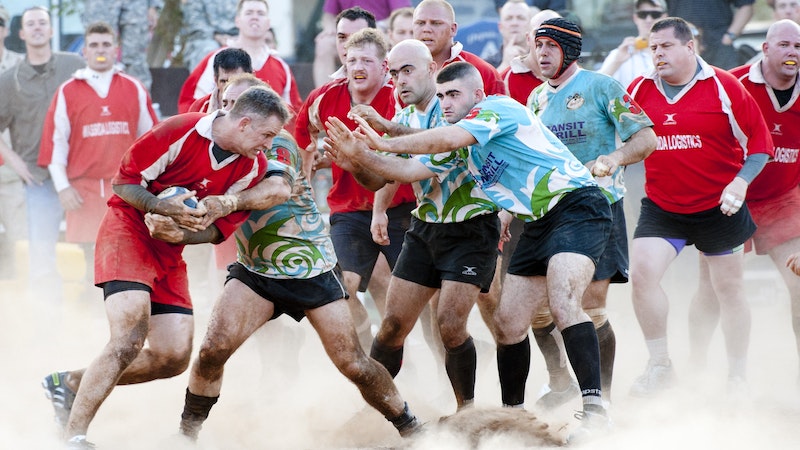
In the high-stakes environment of professional rugby, success is often dictated by the efficiency and raw power of the forward pack.
At the very heart of this unit lies the “Engine Room”—the two locks. Wearing jerseys number 4 and 5, these athletes are the tallest and most physically imposing members of the team.
Their influence extends across every facet of the game, from the technical intricacies of the set piece to the grueling physical battles in open play.
To understand why the lock is considered the indispensable foundation of a rugby team, one must look beyond their height.
While being the tallest players on the field provides a natural advantage, the role requires a unique combination of explosive power, tactical intelligence, and the mental resilience to lead a team’s defensive line under extreme fatigue.
The Anatomy of a Giant: Physical Requirements of the Lock
The physical profile of a lock is distinctive. They are almost universally the tallest members of the squad, often utilizing their long legs and substantial frame to create leverage in physical contests.
However, height alone is insufficient for the modern game. A world-class lock must possess:
- Immense Core Strength: To stabilize the scrum and provide pushing power.
- Vertical Explosiveness: To win the ball high in the air during lineouts.
- Aerobic Capacity: To maintain defensive organization and support play throughout eighty minutes of high-intensity action.
- Tactical Awareness: To act as the strategist for the team’s set pieces.
Mastering the Set Piece: The Lock’s Primary Domain
The set piece—consisting of the scrum and the lineout—is where the game is won or lost in terms of possession and momentum. The locks are the primary operators in both areas.
Providing the Foundation in the Scrum
The term “lock” is derived from their function in the scrum. They pack down in the second row, situated directly behind the front row of props and the hooker.
By binding tightly together, they “lock” the scrum in place, creating a stable and unified platform.
The primary responsibility here is pushing power. Locks must transfer their immense leg drive through the front row to disrupt the opposition or provide a clean channel of ball for their own scrum-half.
Without a strong second row, the front row would lack the necessary support to withstand the pressure of an opposing pack. This physical strength is essential for gaining a competitive advantage in these high-pressure set pieces.
Dominating the Skies: The Lineout
The lineout is perhaps where the lock’s height is most visually impactful. Because they are typically the tallest players on the pitch, they serve as the primary targets for lineout throws.
The process is a masterpiece of timing and coordination. Teammates, known as “lifters,” hoist the lock high into the air to catch or tap the ball from the throw-in. This allows the team to secure possession and immediately set up attacking plays or driving mauls.
Furthermore, a lock’s presence is equally vital on defense; their height can disrupt the opposition’s lineout, providing a significant defensive advantage by contesting the ball in the air.
Beyond the physical jump, one lock often takes on the role of the “caller”. This player is the strategist of the lineout, analyzing the opposition’s defensive alignment and deciding in real-time where the ball should be thrown. This requires a high level of tactical awareness and the ability to communicate clearly under pressure.
Winning the War of Attrition: Rucks, Mauls, and Physicality
Once the ball is in open play, the lock’s role shifts from the vertical battle of the lineout to the horizontal battle for territory and possession.
Clearing the Path
In the chaos of rucks and mauls, locks use their massive size and strength to drive opponents away from the ball. This process, often referred to as “clearing out,” is crucial for maintaining momentum.
By securing possession and removing defensive threats at the breakdown, locks ensure that the attacking team can continue their phases of play without interruption.
The Defensive Anchor
Defensively, the locks are the heavy hitters of the middle field. They are expected to make heavy tackles near the center of the pitch, often forming the “second wave” of defenders.
This positioning ensures that even if an attacker manages to evade the first line of defense, they are immediately met by the imposing presence of a lock who can halt their progress.
Crucially, locks act as the communicators of the defensive line. When a team is under pressure and fatigue begins to set in, the locks are responsible for “directing traffic” and organizing the defensive structure.
Their central position on the field allows them to see the game unfolding and ensure that gaps in the line are filled before the opposition can exploit them.
The Evolution of the Modern Lock: Power in Open Play
The traditional image of a lock as a player who only does the “grunt work” in the shadows is rapidly changing.
In the modern era of rugby, the position has evolved significantly.
Powerful Ball Carrying
Locks are increasingly becoming dynamic ball carriers. Rather than simply hitting rucks, they are now frequently used to run hard into tight spaces, using their strength and momentum to gain ground.
By carrying the ball into the heart of the opposition’s defense, they wear down the defenders, creating fatigue and opening up space for the faster, more agile backs to score.
Strategic Focal Points
Coaches now build entire game plans around the specific strengths of their locks. Whether it is exploiting a lock’s exceptional lineout jumping or utilizing their ability to drive a maul over the try line, these players have become a focal point of overall team strategy.
When analyzing a match, an expert observer can often determine a team’s success by evaluating how effectively their locks are securing possession and influencing forward play.
Strategic Insights for Performance Optimization
For teams looking to enhance their performance, the recruitment and development of locks should be a priority.
The “Engine Room” does not just provide power; it provides the intellectual and physical framework upon which the rest of the team operates.
- Investment in Technical Coaching: Since one lock often calls the lineout, investing in their tactical education is as important as their physical conditioning.
- Data-Driven Analysis: Evaluating a lock’s effectiveness should go beyond simple tackle counts. Coaches should look at “quality of clear-out” in rucks and “success rate of lineout calls” to truly measure their impact.
- Focus on Mobility: As the game becomes faster, the most valuable locks are those who can combine traditional second-row power with the mobility of a back-rower.
Conclusion: The Pillar of Success
The lock is much more than just a tall figure in the middle of a scrum. They are the tactical heart and the physical engine of the rugby team.
From the moment the ball is thrown into the lineout to the final defensive stand on the goal line, the locks are constantly working—often in ways that are not immediately visible to the casual observer.
Their ability to provide pushing power, dominate the air, and lead the defense makes them indispensable.
Whether you are a fan trying to understand the nuances of the game or a coach looking to build a winning side, recognizing the command and power of the lock is essential to understanding the very essence of rugby union.