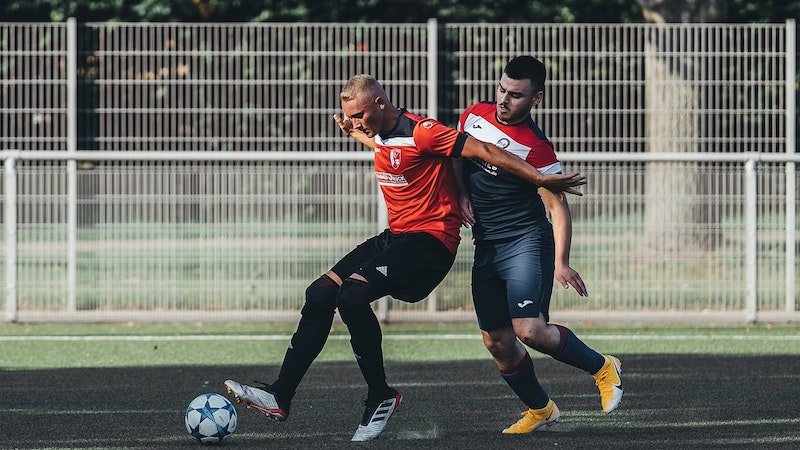
Soccer is often celebrated for its goals, but championships are truly built on the discipline of the backline. To understand the game’s tactical depth, one must first ask: what does a defender do in soccer?
At its most fundamental level, the defender’s primary objective is to prevent the opposing team from scoring goals while securing the defensive third of the field.
They act as the primary shield for the goalkeeper, combining physical strength with elite reading of the game. From delaying dangerous attacks to initiating counter-strikes, the defender’s role is the bedrock of team stability.
The Core Responsibilities of the Defensive Unit
While the glory often goes to the strikers, the defensive unit performs the most high-stakes operations on the pitch. Their work is a blend of physical intervention and mental anticipation designed to neutralize threats before they reach the goal.
Delaying and Neutralizing Attacks
One of the most critical, yet understated, roles of a defender is delaying the opposition’s progress. When an opponent breaks forward, a defender must “jockey” or slow them down.
This strategic hesitation is vital because it buys precious seconds for teammates to retreat and regain their defensive shape, effectively turning a dangerous breakaway into a controlled situation.
The Precision of Tackling and Interception
Defenders are the masters of regaining possession through physical and tactical means. This involves executing precise ground or sliding challenges to strip the ball away from an attacker safely.
Beyond physical contact, elite defenders excel at interceptions—reading the opponent’s passing lanes to cut off the ball before it ever reaches the intended target. This requires a high “Soccer IQ” to predict where the ball will be seconds before it is played.
Mastery of Clearing and Marking
When the pressure mounts inside the penalty area, a defender’s priority shifts to immediate risk mitigation. This is often achieved through clearing, which involves kicking or heading the ball far away from the dangerous “red zone” to reset the defense.
Simultaneously, defenders must engage in marking, which is the act of closely guarding specific attacking players to deny them the time or space needed to turn and shoot.
Positional Breakdown: Understanding Specific Roles
Defense is not a monolithic role; it is a collection of specialized sub-positions that work in harmony to protect the goal. Each position requires a unique profile of speed, strength, and tactical awareness.
| Position | Primary Focus | Key Attributes |
|---|---|---|
| Central Defender | Blocking central shots, winning aerial duels | Strength, Height, Leadership |
| Full-Back | Stopping wingers, blocking crosses from flanks | Speed, Stamina, 1v1 Defending |
| Wing-Back | Supporting midfield and offense with runs | Elite Aerobic Capacity, Crossing |
| Sweeper (Libero) | Cleaning up loose balls behind the main line | Reading the Game, Composure |
The Central Defenders: Pillars of the Backline
Positioned in the heart of the defense, center-backs are the physical anchors of the team. Their primary duty is to block central shots and dominate the air by winning headers during crosses and goal kicks.
Because they have a full view of the field, they often serve as the “on-field coaches,” directing the movement of the midfielders in front of them to ensure no gaps open up in the formation.
Full-Backs and Wing-Backs: The Flank Guardians
Full-backs operate on the left and right sides of the field. Their main mission is to neutralize wingers and prevent crosses from entering the box.
In modern systems, these players have evolved into wing-backs—highly mobile defenders who sprint forward to provide width for the attack.
This dual-threat role requires them to be as comfortable crossing the ball into the opponent’s box as they are tackling in their own.
The Modern Defender’s Offensive Contribution
The traditional image of a defender as a player who only “kicks the ball away” is obsolete in the modern era of the sport. Today, defenders are often the first point of attack, serving as the architects of a team’s offensive transition.
Modern defensive specialists are expected to initiate counter-attacks with accurate, long-range passing that can bypass the opponent’s entire midfield.
They are integral to maintaining possession by circulating the ball with midfielders, forcing the opposition to chase and tire out.
Furthermore, during offensive set-pieces such as corner kicks, defenders use their superior height and aerial timing to move forward and attempt to score headers.
This evolution means a defender must possess the technical skill of a playmaker while retaining the grit of a traditional stopper.
Strategic Positioning and the Offside Trap
Beyond individual skills, defenders must operate as a synchronized unit. This involves maintaining a “defensive line” that moves up and down the pitch in unison.
Understanding the Offside Trap
The offside trap is a high-level tactical maneuver where the defensive line steps forward just before an opponent passes the ball to an attacker. If timed correctly, this catches the attacker in an offside position, resulting in a turnover.
This requires immense trust and communication, as a single defender “dropping deep” can ruin the trap and leave the goalkeeper in a 1v1 situation.
Zonal vs. Man-to-Man Marking
Defenders must also adapt to different marking schemes. In man-to-man marking, a defender is assigned a specific opponent to follow everywhere on the pitch. In zonal marking, defenders are responsible for any player who enters their designated area.
Understanding when to switch between these two philosophies is what separates professional-grade backlines from amateur ones.
Essential Skills for High-Level Defensive Performance
To excel as a defender, one must develop a toolkit that blends physical attributes with mental discipline. It is a role that rewards patience over impulsivity.
Communication and Leadership
A quiet defense is often a failing defense. Defenders must constantly communicate with one another and their goalkeeper. They provide instructions on who to mark, when to “push up,” and when to “drop back.”
In many teams, the captain is a central defender because they possess the organizational authority needed to manage the game’s flow.
Physicality and Aerial Dominance
Strength is a non-negotiable requirement for central defenders. They must be able to hold off powerful strikers and use their bodies to shield the ball.
Aerial dominance is equally important; winning a header from a corner kick can be just as impactful as scoring a goal, as it prevents high-probability scoring chances for the opposition.
The Mental Game: Discipline and Anticipation
Defending is often a game of waiting. A defender might play a perfect game for 89 minutes, but a single second of lost concentration can result in a goal. This requires a unique mental profile.
Reading the Game (Anticipation)
Great defenders don’t just react to the ball; they anticipate where it will be. By watching an attacker’s body language or the angle of their foot, a defender can predict a pass or a shot.
This ability to “read the game” allows them to make interceptions that look easy but are actually the result of elite cognitive processing.
Tactical Discipline
Discipline involves staying in position even when the urge to chase the ball is strong. A defender who leaves their post to hunt the ball creates a “gap” that a clever opponent will exploit.
Maintaining the structural integrity of the formation is a defender’s most selfless and important task.
Frequently Asked Questions (FAQ)
Can a defender score goals in soccer?
Yes. While their primary job is defensive, defenders often score from set-pieces like corners or free kicks due to their height and heading ability. Modern wing-backs also score from open play by joining the attack.
What is the hardest part of being a defender?
The mental pressure is often cited as the most difficult aspect. Unlike attackers, who are forgiven for missing several chances if they eventually score, a defender is often judged solely on their mistakes. One error can lead to a goal, making the margin for error incredibly slim.
Why do some teams play with three defenders instead of four?
A three-defender system (typically 3-5-2 or 3-4-3) allows for more numbers in the midfield and more attacking freedom for wing-backs. However, it requires exceptionally mobile center-backs who can cover the extra space on the flanks.
Conclusion: The Backbone of Success
Ultimately, the role of a defender is defined by resilience, intelligence, and a commitment to the team’s collective safety.
By mastering the art of delaying attacks, executing clinical tackles, and transitioning seamlessly into the offensive phase, defenders ensure that their team remains competitive even under immense pressure.
Whether it is a center-back winning a crucial header or a full-back sprinting to block a cross, these players provide the stability required for the rest of the team to flourish.
In the complex chess match of soccer, the defenders are the pieces that ensure the king—the goal—remains protected at all costs.