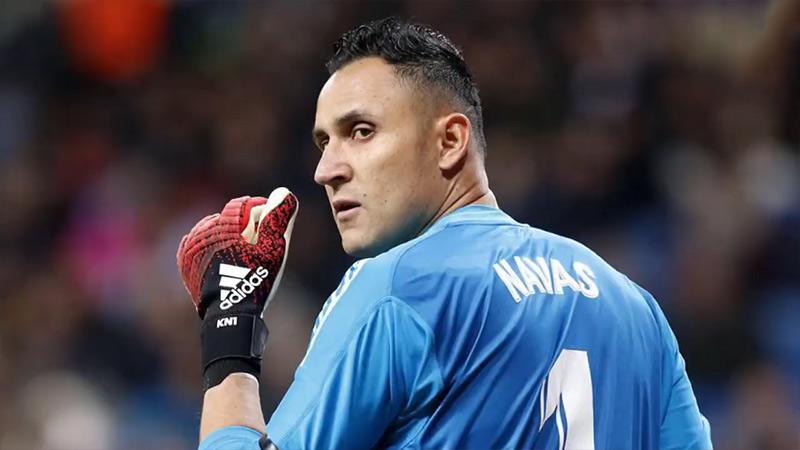
The narrative of modern football is often written by strikers and creative midfielders, yet few individual journeys are as compelling as that of Keylor Navas.
From the quiet landscapes of Costa Rica to the gleaming trophy rooms of Madrid and Paris, Navas has redefined what it means to be a modern goalkeeper.
His career is not merely a collection of statistics but a masterclass in resilience, professional integrity, and elite performance under the highest possible pressure.
This comprehensive analysis explores the pivotal moments that shaped the “Legendary Guardian,” examining his tactical contributions, his historic achievements, and the administrative fluke that altered the trajectory of European football history.
The 2014 World Cup: A Global Introduction
Before he was a household name in Europe, Keylor Navas was the heartbeat of a nation. The 2014 FIFA World Cup in Brazil served as his arrival on the world stage.
Costa Rica, placed in a “Group of Death” alongside heavyweights like Italy, England, and Uruguay, was widely expected to exit early. Instead, they emerged as the tournament’s greatest underdog story.
Navas was the primary architect of this success. His performances were characterized by cat-like reflexes and an uncanny ability to read the game, which carried Costa Rica to a historic quarter-final finish.
This achievement remains a peak for the national team and cemented Navas as a national icon before he ever stepped onto the pitch for a major European powerhouse.
His retirement from the national team in May 2024 marked the end of a golden era for Costa Rican football, a decade-long period defined by his leadership at the back.
The Real Madrid Dynasty (2014–2019)
Following his World Cup heroics, Navas signed with Real Madrid, stepping into one of the most high-pressure environments in professional sports. While many players crumble under the weight of the “Galactico” expectations, Navas thrived.
The Three-Peat and Continental Dominance
The centerpiece of his legacy is his role as the starting goalkeeper during Real Madrid’s unprecedented run of three consecutive UEFA Champions League titles from 2016 to 2018.
During this period, Navas was instrumental in a defensive unit that withstood some of the most potent attacking forces in the world.
His individual metrics during this time were equally staggering. Navas set a record by keeping eight consecutive clean sheets in the Champions League, a testament to his focus and technical proficiency in the tournament’s most critical moments.
By the time he departed the Spanish capital in 2019, he had secured a total of 12 trophies, including:
- Three UEFA Champions League titles.
- One La Liga title.
- Four FIFA Club World Cups.
Beyond the trophies, Navas earned the respect of the Madrid faithful through his quiet professionalism. He was a player who led by example, rarely seeking the spotlight but always present when the team needed a decisive save.
The Fax Machine Incident: The Transfer That Changed History
One of the most unusual chapters in football history occurred on the transfer deadline day in August 2015.
Real Madrid had reached an agreement with Manchester United to trade Keylor Navas for David de Gea. Navas was reportedly already at the airport, prepared to board a flight to Manchester to finalize the move.
However, the deal collapsed due to a clerical delay. Manchester United’s documentation was sent via fax and arrived only two minutes after the transfer window had officially closed. Consequently, the paperwork was deemed invalid, and Navas remained in Madrid.
While many players might have been discouraged by being used as a transfer “chip,” Navas responded with characteristic grace and elite performance.
He went on to win three consecutive European titles immediately following this incident, turning a potential career setback into a legendary stint that defied expectations.
This moment is now remembered as a “sliding doors” event that kept one of the world’s most effective goalkeepers in the position where he would achieve his greatest successes.
The Paris Chapter and Global Travels
In 2019, Navas moved to Paris Saint-Germain (PSG), where he continued to prove his elite status. Transitioning from La Liga to Ligue 1, he remained a formidable force in European competition.
His impact in Paris was immediate. He played a vital role in guiding PSG to their first-ever UEFA Champions League final, validating his ability to elevate a team’s defensive standards regardless of the league or environment.
His five-year tenure in Paris (2019–2024) saw him continue to collect domestic honors and maintain his reputation as a big-game player.
Following his time in France, Navas embarked on a journey that showcased his global appeal and professional versatility.
He spent time in the English Premier League with Nottingham Forest and had a stint with Newell’s Old Boys in Argentina. These moves allowed him to test his skills in diverse tactical systems and environments, further enriching his professional resume.
Currently, Navas brings his wealth of experience to the Mexican club Pumas UNAM in Liga MX. His presence in the Mexican league is a significant draw for fans and a testament to his enduring desire to compete at a high level.
Professionalism and Style: What Makes Navas Unique?
Navas is frequently described as a “shot-stopper” of the highest order. Unlike modern “sweeper-keepers” who focus heavily on distribution, Navas’s primary strength lies in his explosive agility and positioning.
His ability to make “impossible” saves—often from close-range headers or deflected shots—set him apart during his peak years in Madrid.
His mental fortitude is perhaps his most defining trait. Whether facing a penalty in a World Cup knockout game or dealing with the uncertainty of a failed transfer, Navas maintained a calm, focused demeanor.
This psychological resilience is a key factor in his longevity and his ability to succeed in different countries and cultures.
Frequently Asked Questions
How many Champions League titles did Keylor Navas win?
Keylor Navas won three consecutive UEFA Champions League titles with Real Madrid between 2016 and 2018. He also reached the final with Paris Saint-Germain.
Why did the transfer to Manchester United fail?
The 2015 transfer failed because the necessary paperwork arrived via fax two minutes after the transfer window had closed. This resulted in Navas staying at Real Madrid and David de Gea remaining at Manchester United.
When did Keylor Navas retire from international football?
Keylor Navas officially announced his retirement from the Costa Rican national team in May 2024, after a career highlighted by a 2014 World Cup quarter-final appearance.
Which club does Keylor Navas play for now?
As of the most recent updates, Navas plays for the Mexican side Pumas UNAM, following his departure from European football.
Conclusion: A Legacy of Resilience
Keylor Navas’s career is a reminder that excellence is not just about talent, but about how one handles adversity.
Whether he was defying the odds with Costa Rica or making history with Real Madrid, he remained a model of consistency and humility.
He did more than just stop shots; he provided the foundation for some of the most successful teams of the 21st century. As he continues his journey in Liga MX, his legacy as the “Legendary Guardian” is secure.
He remains a symbol of hope for aspiring athletes in Central America and a respected figure for football fans worldwide. Keylor Navas didn’t just play the game—he protected the goal with a level of dedication that few will ever match.