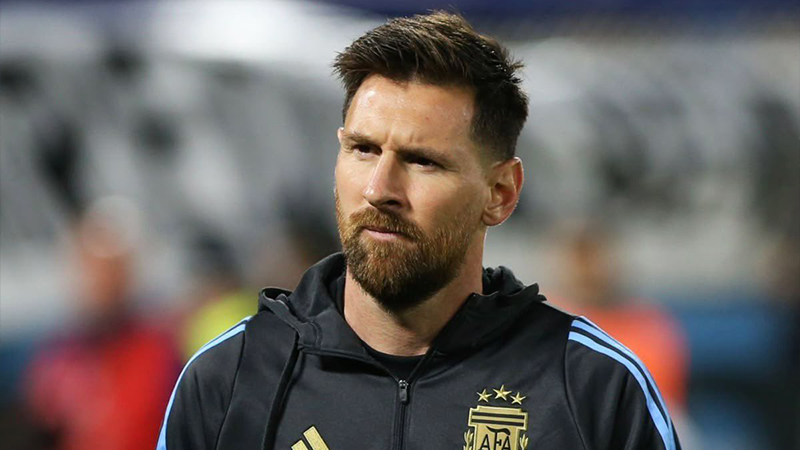
In the modern era of professional sports, few figures have redefined the parameters of excellence as profoundly as Lionel Messi.
His career is not merely a collection of highlights but a comprehensive case study in sustained elite performance, tactical evolution, and global influence.
As of May 2026, the data confirms a reality that has long been observed on the pitch: Lionel Messi is the most decorated and statistically dominant individual to ever play the game.
With a record 46 collective trophies and an unprecedented 8 Ballon d’Or awards, his resume serves as the ultimate standard for professional achievement.
This analysis examines the pillars of Messi’s legacy, from his foundational years in Barcelona to his transformative impact on international football and his role in the global expansion of the sport through Major League Soccer.
The Architecture of a Legend: Unprecedented Individual Honors
To understand the magnitude of Messi’s career, one must first look at the individual accolades that distinguish him from his contemporaries.
These awards are not just trophies; they are markers of a player who remained at the pinnacle of a global industry for over two decades.
The Ballon d’Or and Individual Dominance
Lionel Messi holds the record for the most Ballon d’Or awards in history, with eight titles. This achievement reflects more than just talent; it signifies a level of consistency that is statistically anomalous.
Winning the award across different decades and different club environments highlights his ability to adapt his game as he aged, transitioning from an explosive winger to a deep-lying playmaker without losing his efficiency.
Complementing these are his 3 “The Best” FIFA Men’s Player awards and 6 European Golden Shoes, the latter of which highlights his historical scoring proficiency during his peak years in Europe. These honors solidify his position as the most efficient offensive weapon in the history of the sport.
International Redemption: The Final Ascent
For much of his career, the primary critique of Messi’s legacy was the perceived lack of a major international trophy with the Argentina senior team.
However, the period between 2021 and 2024 represents one of the most successful international runs by any captain in history.
The 2022 FIFA World Cup
The crowning achievement of Messi’s career was the 2022 FIFA World Cup victory in Qatar. Messi did not merely participate; he orchestrated the tournament, becoming the first player to win the World Cup Golden Ball twice (2014 and 2022).
His performance in 2022 was a masterclass in leadership and high-pressure execution, culminating in Argentina’s third star.
Beyond the trophy itself, the data shows that Messi holds the record for the most goal contributions (goals + assists) in World Cup history.
This metric is vital because it proves his involvement in every phase of the attack, a recurring theme throughout his professional life.
Continental Dominance
The World Cup was preceded and followed by continental success that reshaped South American football.
Messi led Argentina to two Copa América titles in 2021 and 2024, as well as the 2022 Finalissima. These victories ended a decades-long drought for his nation and established Argentina as the dominant force in global football.
Currently, Messi stands as Argentina’s all-time leading goalscorer and the all-time top goalscorer for all South American national teams.
This dual-record status cements his role as the greatest player to ever emerge from a continent known for producing the world’s most elite talent.
The Quantitative Case: Records That Defy Logic
While the “eye test” often favors Messi’s aesthetic style, the quantitative data provides the objective evidence of his superiority. His career is characterized by numbers that seem impossible in a low-scoring sport like football.
The 900-Goal Threshold
Messi has surpassed 900 senior career goals, a milestone reached through sheer longevity and clinical finishing.
His 2011–12 season remains the gold standard for individual production, where he set the record for the most goals in a single La Liga season with 50.
However, looking at his goal-scoring through the lens of club loyalty reveals an even more impressive figure: 672 goals for FC Barcelona.
This is the record for the most goals ever scored for a single club, a testament to a level of loyalty and sustained excellence that is increasingly rare in the modern transfer market.
The Playmaking Pioneer
Perhaps the most significant gap between Messi and other “all-time greats” is his contribution to chance creation. Messi holds the record for the most official recorded assists in football history, with over 408.
This assist record is the cornerstone of the argument that Messi is a more “complete” player than his rivals. He does not just finish attacks; he initiates them.
His ability to lead both goal-scoring and playmaking charts simultaneously for much of his career indicates a tactical intelligence that transcends specific positions.
Club Eras: From the Camp Nou to the United States
Messi’s career can be divided into three distinct organizational phases, each marked by significant hardware and a profound impact on the brand value of his employers.
The Barcelona Dynasty
At FC Barcelona, Messi was the centerpiece of a team that many analysts consider the greatest club side ever assembled. His tenure resulted in 10 La Liga titles, 7 Copa del Rey titles, and 4 UEFA Champions League titles.
This era redefined modern tactical systems, with Messi often operating as a “False 9,” a role that required both the finishing of a striker and the vision of a midfielder.
The Paris and Miami Transitions
Following his time in Spain, Messi secured 2 Ligue 1 championships with Paris Saint-Germain before embarking on a groundbreaking move to North America.
His arrival at Inter Miami was immediate in its impact, leading the club to the 2023 Leagues Cup title and finishing as the tournament’s top scorer.
This move was more than athletic; it was a strategic expansion of his brand and the sport itself.
His recognition as the 2023 Time Athlete of the Year reflects his role as a global ambassador, capable of shifting the cultural and economic landscape of football in the United States.
The Strategic Value of 46 Trophies
The most compelling data point in the “Greatest of All Time” debate is the total trophy count. Lionel Messi is the most decorated player in the history of the game with 46 collective trophies.
In a team sport, the ultimate goal is winning. While individual stats are important, the ability to consistently lead different teams—in different countries and different formats—to championships is the ultimate indicator of value. Messi’s 46 trophies include:
- International: World Cup, Copa América (x2), Olympic Gold, Finalissima.
- Domestic Leagues: La Liga (x10), Ligue 1 (x2).
- Continental Club: Champions League (x4).
- Cup Competitions: Copa del Rey (x7), Leagues Cup.
This breadth of success across all levels of competition suggests that Messi’s presence alone significantly increases a team’s statistical probability of winning a title.
Expert Perspectives: Frequently Asked Questions
What is the most significant record held by Lionel Messi?
While many point to his goals, his 46 collective trophies is arguably his most significant record because it represents the ultimate objective of the sport. Additionally, his 8 Ballon d’Or awards serve as the definitive expert consensus on his individual talent over two decades.
How does Messi’s playmaking compare to his goal-scoring?
The data shows he is equally elite in both. With 900+ goals and a record 408+ assists, he is the only player in the modern era to dominate both the “finisher” and “creator” statistical categories at such a high level.
What was his impact on football in the United States?
Messi’s impact was both immediate and measurable. He led Inter Miami to their first major trophy, the 2023 Leagues Cup, and was named the 2023 Time Athlete of the Year, signaling a massive shift in the popularity and commercial viability of the sport in North America.
Has he maintained his performance into his late 30s?
Yes. His recent success, including the 2024 Copa América championship, proves that he remains a decisive factor in elite-level tournament football even in the final stages of his career.
Conclusion: The Permanent Standard
The career of Lionel Messi is a rare intersection of peak athletic performance and historical longevity. By securing the 2022 World Cup and the 2024 Copa América, he has closed the final remaining gaps in his legacy.
When combined with his 900+ goals, 408+ assists, and 46 trophies, the conclusion is supported by every available metric: Messi has established a standard of excellence that may never be surpassed.
He is no longer just a player competing for titles; he is the benchmark against which all future generations of footballers will be measured.
Whether through the lens of individual brilliance (8 Ballon d’Ors) or collective success (46 trophies), Lionel Messi remains the definitive record-holder of the beautiful game.