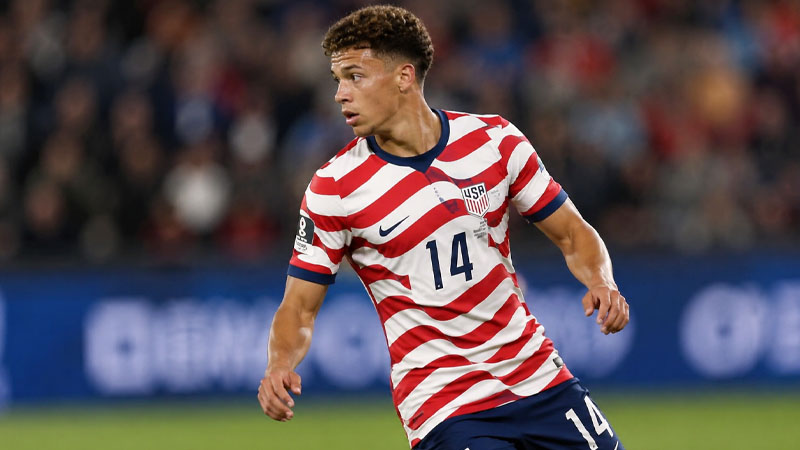
The professional soccer landscape is increasingly defined by its diversity, and few players represent this multicultural evolution better than Sebastian Berhalter.
As a central midfielder making waves in Major League Soccer, his identity is a fascinating blend of international experience and deep-rooted American soccer tradition.
Fans often inquire about his background, seeking to understand the heritage that fuels his drive on the pitch.
By examining his family lineage, his unique birthplace in London, and his upbringing in the American Midwest, we gain a comprehensive view of a player whose identity is as multifaceted as his tactical role in the midfield.
Understanding Sebastian Berhalter’s Multi-Ethnic Heritage
When discussing the ethnic background of Sebastian Berhalter, it is essential to recognize that he identifies as being of both White/Caucasian and Hispanic/Latino ethnicity.
This dual heritage provides him with a rich cultural perspective that is common in the modern United States but remains a point of significant interest for fans following the national team.
His identity is not just a personal descriptor; it is a reflection of the two distinct lineages that converged to shape his personal and professional worldview. This section explores how these two cultural pillars contribute to the man and player he has become today.
The European-American Influence of Gregg Berhalter
On his paternal side, Sebastian Berhalter inherits a legacy deeply embedded in the American soccer system. His father, Gregg Berhalter, is of White/Caucasian American descent with European roots.
Gregg’s influence on Sebastian cannot be overstated, not only as a father but as a mentor who reached the highest levels of the sport.
The Berhalter family name has become synonymous with professional soccer in the United States, representing a lineage of European-descended Americans who helped transition the sport from a niche interest into a major professional endeavor.
This side of the family provides a foundation of traditional American sporting values combined with a deep understanding of the tactical nuances associated with European soccer.
The Hispanic-Latino Heritage of Rosalind Santana
The other half of Sebastian’s ethnic identity comes from his mother, Rosalind Berhalter (née Santana), who is of Puerto Rican descent. This heritage adds a significant Hispanic/Latino dimension to his background.
The Puerto Rican influence often brings with it a rich cultural history and a unique connection to the Caribbean’s sporting traditions.
In the context of American soccer, players with Hispanic heritage have historically brought a specific flair and technical proficiency to the game.
By embracing his Puerto Rican roots, Sebastian represents the growing number of Hispanic-Latino athletes who are redefining the face of the United States Men’s National Team (USMNT), ensuring that the squad reflects the true demographic makeup of the country.
Birthplace vs. Upbringing: A Global Soccer Journey
A player’s identity is often forged by the environment in which they were born and the community that raised them. Sebastian Berhalter’s story is unique because it spans two of the world’s most influential soccer nations.
While his ethnicity provides the biological and cultural framework of his life, his geographic history adds layers of international complexity.
Born in one of the world’s soccer capitals and raised in an American soccer hub, Sebastian’s journey is a testament to the global nature of the modern game.
This intersection of British birth and American life creates a narrative of a player who belongs to a global community.
Born in the Heart of London
Sebastian Berhalter was born in London, England. His birth occurred during a pivotal time in his father’s professional career, as Gregg Berhalter was then playing professional soccer for Crystal Palace.
Being born in London placed Sebastian at the center of the footballing world from day one. In England, soccer is not just a sport; it is a cultural cornerstone.
While he moved away at a young age, the fact of his British birth remains a significant part of his biography, granting him a technical connection to the United Kingdom that few American players possess.
This European start is a hallmark of many high-level American soccer families who traveled abroad during the early 2000s.
Formative Years in Columbus, Ohio
Despite his international birthplace, Sebastian Berhalter was primarily raised in Columbus, Ohio. Columbus is a city with a profound soccer history, being the home of the first-ever soccer-specific stadium in Major League Soccer.
Growing up in this environment allowed Sebastian to develop within the American youth system while remaining close to the professional game through his family’s connections. He holds American citizenship and fully identifies with his upbringing in the United States.
This blend of London-born prestige and Midwestern American grit has created a player who understands the global standards of the game while possessing the work ethic required to succeed in the physical environment of MLS.
International Eligibility and National Identity
One of the most intriguing aspects of Sebastian Berhalter’s background is the array of options he had for his international career. In the world of FIFA-sanctioned soccer, eligibility is determined by birth, citizenship, and ancestry.
Because of his diverse background and his father’s career path, Sebastian found himself at the center of a three-nation eligibility map. This status is a “good problem to have” for any elite athlete, as it offers multiple pathways to the world stage.
The following table outlines the three nations Sebastian was technically eligible to represent and the reasons for that eligibility:
| Nation | Basis for Eligibility |
|---|---|
| United States | Parental citizenship and upbringing |
| England | Country of birth (London) |
| Puerto Rico | Maternal heritage (Rosalind Santana) |
While the allure of playing for a powerhouse like England or representing his mother’s heritage in Puerto Rico existed, Sebastian chose to commit to the United States. He plays internationally for the United States Men’s National Team system.
This decision reinforces his identity as an American player who values his diverse roots but feels a primary calling to represent the stars and stripes on the global stage.
The Influence of Family Legacy on His Professional Career
Growing up in a household where professional soccer was the primary occupation has undeniably shaped Sebastian’s trajectory. His father, Gregg, wasn’t just a player; he was a coach who led the USMNT through a World Cup cycle.
This environment meant that Sebastian was exposed to high-level tactical discussions and professional standards from a very young age.
This type of “soccer IQ” is difficult to teach in a formal academy setting and is often something that is absorbed through a lifestyle dedicated to the sport.
However, having a famous father also brings a level of scrutiny. Sebastian has had to work twice as hard to prove that his place in the professional ranks is earned through merit rather than his last name.
His performance on the pitch—characterized by disciplined positioning, a wide passing range, and defensive tenacity—shows a player who has mastered the fundamentals while carving out his own niche.
He is not merely “Gregg’s son”; he is a modern midfielder with a distinct playing style that blends the tactical discipline of his father’s era with the athletic demands of today’s game.
Impact of Multiculturalism in Modern American Soccer
The story of Sebastian Berhalter’s ethnicity is a microcosm of a much larger trend within the United States soccer ecosystem. For decades, the USMNT was seen as a predominantly suburban, single-demographic team.
Today, that has completely changed. The infusion of Hispanic-Latino heritage, combined with the experiences of players born to American parents living abroad, has created a team that is more representative of the American melting pot.
Sebastian’s Puerto Rican heritage via his mother is particularly significant. Puerto Rico has a unique relationship with the United States, and its athletes are often celebrated as heroes in both territories.
By identifying as Hispanic/Latino, Sebastian connects with a massive and passionate segment of the American soccer fanbase.
This multiculturalism is a competitive advantage; it brings different styles of play, different cultural approaches to team building, and a broader sense of pride to the jersey.
The diversity in his background is a strength that allows him to navigate different social and professional circles with ease, an essential trait for a modern athlete.
Sebastian Berhalter’s Growth in Major League Soccer
In Major League Soccer, Sebastian has demonstrated that he is a reliable and evolving talent. His time with clubs like Columbus Crew and Vancouver Whitecaps has allowed him to showcase his ability to anchor a midfield.
Scouts and analysts often point to his composure on the ball as a key trait. This composure likely stems from his upbringing in high-pressure environments where soccer was always the focus.
His journey through the MLS ranks is also a testament to the success of American youth academies. While he had the advantage of his father’s knowledge, he still had to progress through the standard development pathways.
His success proves that the American system is capable of producing technically gifted players who can compete with international counterparts.
As he continues to mature, his role as a leader in the midfield will likely grow, further cementing his status as a key figure in the league.
Frequently Asked Questions About Sebastian Berhalter
What is Sebastian Berhalter’s primary ethnicity?
Sebastian Berhalter is of mixed ethnicity, specifically White/Caucasian and Hispanic/Latino. His father is of European-American descent, while his mother is of Puerto Rican descent.
Where was Sebastian Berhalter born?
He was born in London, England, while his father, Gregg Berhalter, was playing for the English club Crystal Palace.
Can Sebastian Berhalter play for the England national team?
Technically, because he was born in London, he was eligible to represent England. However, he has committed his international career to the United States.
Does Sebastian Berhalter speak Spanish?
While official reports focus on his heritage, many players with Puerto Rican roots grow up in bilingual households or maintain a strong connection to the Spanish language through their extended family.
How has his mother influenced his career?
His mother, Rosalind Santana, was also an athlete, having played soccer herself. Her Puerto Rican heritage and her own athletic background provided Sebastian with a supportive and competitive environment from both parents.
The Future of a Multi-Talented Midfielder
As we look toward the future, Sebastian Berhalter remains a player to watch. His story is one of tradition meeting transition. He carries the legacy of an American soccer dynasty while representing the diverse, multicultural future of the sport in the United States.
His background—spanning from the streets of London to the suburbs of Columbus, and from European lineages to Puerto Rican roots—makes him a unique ambassador for the game.
For fans and analysts, understanding his ethnicity and heritage is about more than just facts; it is about appreciating the richness that diversity brings to the pitch. Sebastian Berhalter is a reminder that the “American” identity is expansive and inclusive.
As he continues to develop his game and contribute to his club and country, his background will remain a foundational part of his narrative, proving that where we come from is just as important as where we are going on the field.
He stands as a prime example of the modern athlete: global, grounded, and exceptionally talented.