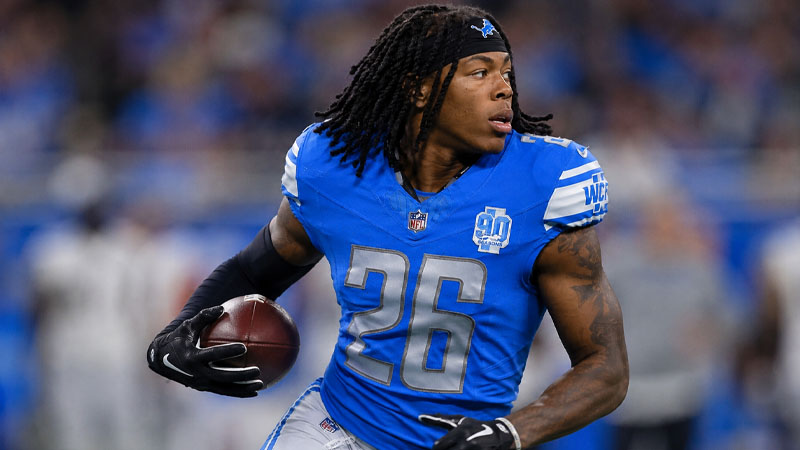
In modern professional football, few topics generate as much debate as the financial valuation of running backs.
For years, the prevailing consensus among front offices has favored a conservative approach, often treating the position as highly replaceable and short-lived.
However, in August 2026, the Detroit Lions shattered this fiscal orthodoxy. By signing playmaker Jahmyr Gibbs to a record-breaking contract extension, the franchise did more than just secure their offensive centerpiece—they established a brand-new benchmark for position valuation.
This historic agreement challenges the traditional team-building model by demonstrating that elite, versatile weapons command premium market rates regardless of their primary position listing.
Over the next few seasons, the ripple effects of this contract will likely alter how organizations structure long-term extensions and manage their salary caps.
This analysis provides a comprehensive breakdown of Gibbs’ new contract, examining the precise guarantee structures, the immediate cap implications, and what this means for the broader sports business landscape.
The Core Terms of the Historic Extension
To understand the magnitude of this deal, one must first look at the headline metrics. The contract is a 3-year extension worth $67.5 million in base value, which establishes an unprecedented average annual salary of $22.5 million.
This average annual value surpasses all previous records for the position, officially positioning Gibbs as the highest-paid running back in league history.
Furthermore, the structure of the agreement allows the overall value to climb even higher based on performance. Through various escalators and incentives, the maximum potential value of the contract reaches $75.75 million.
This ensures that if Gibbs continues to perform at an elite level, his compensation will reflect that output while offering the team protection through performance-based tiers.
The table below outlines the core parameters of this historic agreement:
| Contract Parameter | Value Details |
|---|---|
| Total Base Extension Value | $67.5 Million |
| Maximum Potential Value | $75.75 Million (with incentives) |
| Average Annual Value (AAV) | $22.5 Million |
| Total Guaranteed Money | $51.48 Million |
| Fully Guaranteed at Signing | $37.7 Million |
| Signing Bonus | $15.0 Million |
| Contract Duration | Through the 2030 Season |
| Free Agency Status | Unrestricted Free Agent (UFA) in 2031 |
Deconstructing the Guarantee Structure: Security and Risk Management
In professional sports contracts, the headline value is rarely the most telling metric. Instead, the true measure of a deal’s strength lies within its guarantees.
Gibbs’ contract features a total guarantee of $51.48 million (often rounded to $51.5 million), securing a massive portion of the overall contract value against injury or release.
This ensures that even if unexpected circumstances arise, the vast majority of the promised funds remain secure.
However, the contract further distinguishes itself when examining the immediate guarantees. At the moment of signing, Gibbs secured $37.7 million as fully guaranteed.
This upfront commitment provides immediate financial security and underscores the franchise’s unwavering belief in his durability and long-term role in their offensive system.
The difference between the total guarantees ($51.48 million) and the amount fully guaranteed at signing ($37.7 million) represents future guarantees. In typical league contract structures, these remaining guarantees are tied to specific roster dates in future league years.
For instance, future base salaries or roster bonuses may convert into full guarantees if the player remains on the roster by a designated day in 2027 or 2028.
This mechanism allows the team to defer immediate cap commitments while offering the player a clear path to realizing the full $51.48 million guaranteed structure.
Additionally, the incorporation of a $15.0 million signing bonus plays a dual role. For the player, it represents immediate, liquid wealth paid out upon execution of the contract.
For the organization, the signing bonus is a vital accounting tool. Under current league rules, a signing bonus is prorated equally over the life of the contract (up to a maximum of five years), allowing the team to spread the immediate cash payout’s cap impact over multiple seasons rather than absorbing it all in year one.
Strategic Salary Cap Architecture: Maximizing the Championship Window
One of the most impressive aspects of this contract is how the front office managed the first-year cash flow.
Often, when a player signs a record-setting extension, their immediate cap hit skyrockets, forcing the team to make difficult roster sacrifices elsewhere. Detroit avoided this pitfall through meticulous cap engineering in the 2026 season.
During the 2026 league year, Gibbs will receive a total cash flow that far exceeds his cap charge. This is achieved by combining a low base salary with prorated bonuses:
- Low Base Salary: Gibbs’ base salary for 2026 is set at just $1.145 million. Because base salary hits the salary cap entirely in the year it is paid, keeping this number low is the primary method for maintaining immediate cap flexibility.
- Upfront Signing Bonus: The $15.0 million signing bonus provides Gibbs with immediate financial yield. By spreading this bonus across the contract’s duration, the team limits the single-year cap impact of this massive cash payout.
- Targeted Roster Bonus: A roster bonus of $2.038 million is paid out for the 2026 season, providing additional cash flow while keeping the overall cap hit manageable.
- The Year-One Cap Hit: Thanks to this deliberate structure, Gibbs’ total salary cap hit for the 2026 season is limited to just $8.68 million.
To visualize how these year-one elements interact, review the following breakdown of his 2026 financial mechanics:
| 2026 Financial Element | Value / Cap Impact |
|---|---|
| Base Salary | $1.145 Million |
| Signing Bonus (Full Cash Payout) | $15.0 Million |
| Roster Bonus | $2.038 Million |
| Total 2026 Salary Cap Hit | $8.68 Million |
This $8.68 million cap hit is an extraordinary win for the organization. It allows the team to pay their superstar player market-setting money while leaving ample cap room to sign complementary free agents, reinforce the offensive line, and retain other key contributors during a crucial championship window.
Why Detroit Broke the Mold: The Hybrid Playmaker Premium?
To evaluate why this contract makes sense, one must look past the traditional position label. In the modern league, traditional hand-off-and-run players have seen their market value decline because their production is often heavily dependent on offensive line blocking. However, Gibbs represents the modern evolution of the position—a hybrid offensive weapon.
Rather than operating strictly behind the tackles, Gibbs’ skillset allows him to line up in the slot, run intermediate route trees, and create explosive plays in the passing game. This multi-dimensional utility creates severe defensive mismatches.
When Gibbs is on the field, opposing defensive coordinators are forced to decide whether to cover him with a linebacker (who is usually too slow) or a defensive back (which weakens their run defense).
By rewarding this unique skillset with a $22.5 million average annual salary, Detroit is signaling that they do not view Gibbs merely as a running back, but as a premier offensive chess piece.
This contract bridges the financial gap between elite running backs and top-tier wide receivers, acknowledging that a player who can excel at both roles deserves a combined premium.
The Ripple Effect on the Professional Football Landscape
Gibbs’ record-breaking extension will undoubtedly serve as a major inflection point for future contract negotiations across the league.
For years, representatives for elite running backs have struggled to break through the salary ceilings established by previous market cycles. With an average annual value of $22.5 million, the ceiling has officially been shattered.
Other young, highly productive running backs approaching the end of their rookie contracts will point to this contract as the new baseline for elite compensation.
Agents will argue that if their clients possess similar dual-threat capabilities, their starting ask should align with the $22.5 million mark.
This will force front offices to decide whether to adopt Detroit’s aggressive, player-centric valuation model or stick to conservative, short-term commitments.
Conclusion: A Calculated and Historic Investment
The Detroit Lions’ decision to sign Jahmyr Gibbs to a 3-year, $67.5 million contract extension represents a bold, forward-thinking investment in their offensive core.
By locking up their superstar playmaker through the 2030 season, the franchise has solidified its offensive identity while setting a historic benchmark for the entire sports industry.
Through clever cap management, including a modest $8.68 million cap hit in 2026, the front office has successfully balanced immediate championship aspirations with long-term stability.
As Gibbs continues to redefine what is possible on the field, this landmark agreement will be remembered as the moment the running back position reclaimed its premium status in the modern era of professional football.