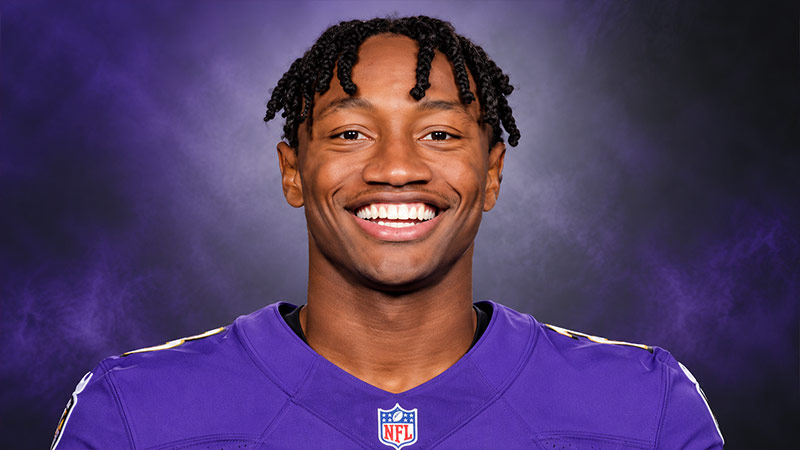
In online fantasy football communities, a recurring debate centers on whether Zay Flowers represents a “sell high” candidate or a player to “stash” on the bench during a roster overhaul.
This debate stems from a fundamental misunderstanding of player categorization in dynasty fantasy football. Stashing is a strategy reserved for high-upside developmental backups, young developmental prospects, or injured players who lack immediate starting roles.
Applying a “stash” label to a core producer misrepresents his role, as Flowers is a weekly starting wide receiver who commands premier target share in his offense.
Similarly, seeking to “sell high” on an ascending wideout after strong performances misses the overarching objective of dynasty management, which is to acquire and retain elite, durable core starters.
| Player Category | Operational Definition & Action |
|---|---|
| Bench Stash | Unproven prospect; hold on the bench |
| Sell-High Candidate | Overproducing asset; trade to capitalize on value |
| Dynasty Anchor (Zay) | Locked-in WR1/WR2; core weekly starter |
Dynasty Market Value Overview
Flowers currently maintains a firm position near the top of consensus dynasty rankings, sitting around WR13 in dynasty trade value with a market evaluation of roughly 815 points.
This valuation places him squarely in the upper tier of wide receivers, functioning as a primary building block rather than a speculative asset.
For rebuilding teams holding substantial future draft capital, such as five 2027 first-round picks, liquidating a proven top-15 receiver for a single mid-first-round pick creates an unnecessary roster void without guaranteeing equivalent production.
Production Profile & On-Field Dominance
Heavy Target Volume & Weekly Consistency
Flowers has established himself as the focal point of the Baltimore Ravens’ passing attack, consistently delivering elite target acquisition metrics.
In a Week 5 matchup against the Atlanta Falcons, Flowers demonstrated his baseline floor by securing 8 receptions on 9 targets for 53 receiving yards while adding 13 rushing yards.
This level of involvement has fueled an extraordinary streak of consistency, with Flowers recording nine consecutive games finishing as a WR2 or better in fantasy scoring.
His ability to produce consistently across different matchups confirms that his fantasy output is driven by structural scheme design and high target volume rather than unsustainable big-play variance.
Production Progression & Efficiency Metrics
Flowers’ trajectory builds upon a breakout campaign in 2025, where he established career highs across all primary receiving categories with 86 receptions and 1,211 receiving yards.
That breakout season solidified his status as a finished top-12 receiver in fantasy football, proving his capability as a primary target in an NFL offense.
Continuing that momentum into 2026, Flowers registered 26 receptions, 405 receiving yards, and 2 touchdowns through the first four to five games of the schedule.
Individual game performances further highlight his ceiling; during a Week 4 victory over the Tennessee Titans, Flowers caught 8 of 10 targets for 118 yards and a touchdown.
Underlying efficiency metrics further validate his elite play: Flowers leads all wide receivers in yards per route run, demonstrating that his per-snap effectiveness ranks among the absolute best in the league.
Contract Security & System Context
Financial Commitment from Baltimore
Long-term security in dynasty fantasy football requires both raw talent and organizational investment. Flowers achieved the ultimate security signal by signing a 4-year, $140 million contract extension with $108 million in guaranteed money prior to the season.
This financial backing guarantees his role as the focal point of the Ravens’ passing infrastructure for the foreseeable future.
High-guaranteed contracts protect players from reduced usage or sudden depth chart competition, insulating Flowers’ dynasty valuation from team scheme changes or draft additions over the next several seasons.
Resilience to Scheme & QB Changes
Throughout minor team transitions and short-term quarterback shifts, Flowers has maintained his weekly baseline utility.
His manufactured touches, quick-release routes, and backfield involvement ensure that his target volume remains protected even when secondary option dynamics or passing environments fluctuate.
Addressing Injury History & Public Narratives
Minor Ailments vs. Long-Term Health
Managers occasionally express hesitation over minor injury reports that surface during the season. Flowers has navigated a series of minor physical issues, including quad and hamstring strains that required limited practice sessions or day-to-day designations.
For instance, he briefly exited a contest against the Indianapolis Colts with a hamstring strain before being designated as day-to-day, ultimately being cleared for subsequent action.
These minor soft-tissue ailments represent standard operational wear-and-tear rather than chronic structural degeneration, making them negligible factors for long-term dynasty evaluation.
An intriguing physical nuance of Flowers’ game is his ball-carrying habit: he carries the football exclusively in his right hand after a catch to compensate for a persistent hand injury dating back to his high school career. Despite this quirk, his ball security and yards-after-catch playmaking remain exceptional.
Practice Intensity Dynamics
Narratives surrounding player durability in Baltimore gained public attention when Flowers offered candid remarks regarding head coach John Harbaugh’s practice intensity.
Flowers noted that practicing in full pads and running one-on-one drills late into Week 17 contributed to team-wide late-season wear.
While intense practice regimens can trigger temporary injury reports during the season, Flowers’ academic and physical discipline—evidenced by completing his degree from Boston College—underpins a resilient professional approach that supports long-term career durability.
Dynasty Strategy Playbook: Hold, Buy, or Sell
Why Trading Zay for a Mid-1st Pick is a Mistake
A common pitfall for dynasty managers in a roster rebuild is over-valuing future rookie draft picks relative to established, young proven talent. Trading a proven WR1/WR2 option like Flowers for a single projected mid-2027 first-round pick represents a net loss in expected value.
Draft picks carry a substantial failure rate; trading away a young receiver who produces top-12 output and possesses a $108 million guaranteed contract simply to re-roll on an unproven rookie pick undermines the rebuild process.
Managers accumulating multiple first-round picks should use those selections to draft complementary talent rather than trading away the very players required to compete once the championship window opens.
Actionable Recommendations for Managers
Rebuilding Rosters: HOLD
If your team is rebuilding, do not sell Flowers for standard draft pick packages. He possesses the young age profile, contract length, and baseline volume needed to anchor your receiving corps when your roster turns the corner into contention.
Contending Rosters: HOLD / BUY
If you own Flowers, start him weekly as a locked-in core producer. If you are looking to purchase Flowers, recognize that rival managers aware of his metrics will demand premium WR1 returns, making him a targeted buy only for teams seeking a guaranteed target share.
When to Consider Selling
The only acceptable scenario to trade Flowers is if a competitor offers an overpay consisting of a top-tier elite asset plus significant draft capital, or multiple high-end starting pieces that immediately solve multiple position gaps.
| Roster Condition | Tactical Recommendation |
|---|---|
| Rebuilding Team | HOLD firm; anchor receiver for the future |
| Contending Team | HOLD / BUY; locked-in weekly starter |
| Trade Consideration | SELL ONLY for an elite WR1 plus a premium asset |
Conclusion
Zay Flowers is neither a sell-low candidate nor a bench stash. He is an elite WR13 dynasty cornerstone backed by heavy target volume, contract security, and top-tier efficiency.
Dynasty managers must hold firm, avoid trading him for a single mid-first-round pick, and leverage his locked-in production to win fantasy matchups.