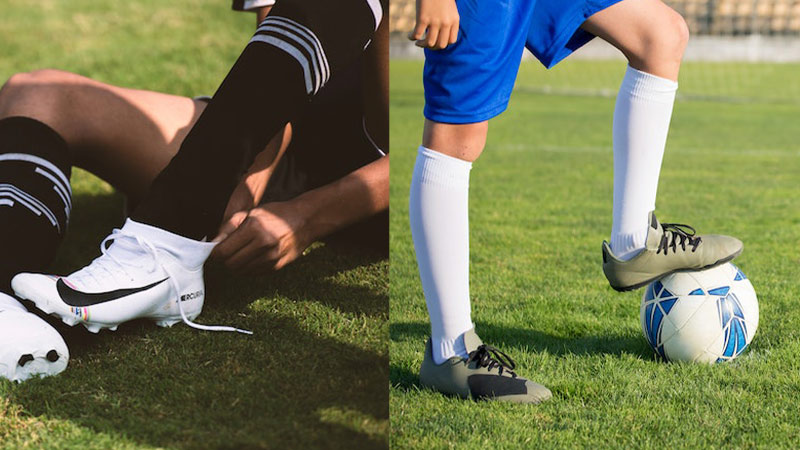
Choosing the right footwear is a foundational decision for any athlete, directly influencing traction, injury prevention, and mechanical agility.
For many multi-sport participants and slowpitch players, the question “Is there a difference between soccer and softball cleats?” arises from a desire for versatility and cost-efficiency.
While both styles feature studded outsoles for field grip, their engineering is dictated by the unique biomechanical demands and safety regulations of their respective sports.
Understanding these nuanced technical distinctions—from the controversial toe spike to midsole density—is essential for optimizing on-field performance while ensuring compliance with league standards and protecting long-term physiological health.
The Engineering of Traction and Safety
When examining the physical construction of field footwear, the differences are not merely aesthetic; they are rooted in the specific physical movements required by each sport.
The Critical Role of the Toe Spike
The most significant engineering distinction is the inclusion of a front-center toe spike on softball cleats, which is entirely absent from soccer footwear.
In softball, players require this specific spike to provide a “digging” point for explosive take-offs from the batter’s box or when sprinting between bases.
Conversely, soccer cleats are designed with a smooth or rounded front to prevent catastrophic injuries during slide tackles or close-contact play.
A protruding toe spike in soccer could easily puncture an opponent’s leg or ankle during a challenge, making it a liability rather than an asset.
Midsole Geometry and Shock Absorption
The internal structure of the shoe varies significantly to accommodate different playing surfaces and durations of play. Softball cleats often feature a thicker, more robust midsole designed to provide cushioning and comfort during long innings spent standing on hard-packed dirt infields.
In contrast, soccer cleats utilize a minimal or entirely absent midsole to keep the foot as close to the ground as possible.
This low-profile design is intentional, as it enhances “ball feel” and tactile feedback, which are essential for precise dribbling and kicking—factors that are irrelevant in the sport of softball.
Material Composition and Ankle Stability
Softball players frequently engage in sudden lateral movements, leading manufacturers to offer low, mid, and high-top versions to provide varied levels of ankle stability. Some players specifically choose softball cleats because they prefer a hi-top design for extra support.
Soccer cleats are almost exclusively low-cut to prioritize maximum ankle mobility and speed, allowing the foot to move through a full range of motion while sprinting.
Furthermore, soccer cleats are often made of lightweight, pliable leather or synthetic materials to facilitate “ball touch,” while softball cleats are more structured and durable to withstand dirt abrasion and sliding.
League Regulations and Safety Protocols
Before stepping onto the field, it is vital to understand the legalities of your footwear, as choosing the wrong pair can result in disqualification or safety risks.
| Feature | Soccer Cleat Standards | Softball Cleat Standards |
|---|---|---|
| Toe Spike Presence | Strictly Prohibited | Standard/Required for Digging |
| Midsole Depth | Minimal (Low-Profile) | Thicker (Cushioned) |
| Common Materials | Lightweight/Thin | Reinforced/Durable |
| Allowed in Other Sport? | Yes, usually permitted in softball | No, strictly banned in soccer |
| Primary Safety Concern | Contact injury to other players | Traction and joint stability |
The regulatory environment creates a “one-way street” for interchangeability. Soccer cleats are generally allowed in most softball and slowpitch leagues, making them a popular “double-duty” option, especially for youth players.
However, softball cleats are strictly prohibited in soccer matches. Referees are trained to check for the presence of a toe spike; if discovered, the player will be barred from the match due to the extreme safety risk posed to opponents during contact.
Performance Analytics by Defensive Position
Real-world feedback from the slowpitch community highlights a clear divide in footwear preference based on where a player stands on the diamond.
Outfielders and the Soccer Cleat Advantage
Many experienced outfielders (OF) swear by soccer cleats for performance-based reasons. Players note that soccer footwear is significantly lighter than traditional softball or baseball molds, which reduces fatigue and increases top-end speed when chasing down fly balls in the gap.
Furthermore, the stud pattern on soccer cleats is often optimized for grip on lush grass surfaces, providing a more nimble and comfortable experience than the often-bulky softball alternatives.
For players who prioritize speed over power, the lightweight soccer design is a frequent favorite.
The Infield Challenge and Traction Deficiency
While soccer cleats dominate on the grass, the narrative shifts when a player moves to the dirt infield. Some athletes describe wearing soccer cleats on hard-packed clay as being “like playing on ice”.
The shallower studs of a soccer shoe are often unable to penetrate the hard surface of an infield as effectively as the specialized spikes of a softball shoe.
This lack of traction can be detrimental for infielders who need to make sudden, explosive lateral movements to stop a ground ball. Consequently, dedicated infielders usually prefer the digging power provided by the softball-specific toe spike.
The Durability Deficit and Surface Impact
Longevity is a major concern for the frequent player, and here the differences in material science become apparent. Softball cleats are constructed using reinforced materials designed to withstand the high-friction environment of sliding and dirt abrasion.
Soccer cleats, which prioritize “feel,” often utilize thinner uppers that may not hold up to the rigors of the diamond. Players have reported that their cleats may only last two seasons before they are torn up or lose all structural support when used consistently for softball.
Additionally, because the spikes on soccer cleats are typically not as deep as those on softball shoes, they tend to wear down much faster when exposed to abrasive dirt or turf.
Alternative Field Footwear for Hybrid Performance
For athletes who find that neither soccer nor traditional softball cleats perfectly meet their needs, the modern market offers several alternative solutions.
Lacrosse Cleats and Football Molds
Lacrosse cleats are frequently cited by players as an excellent “middle-ground” alternative. They often provide more lateral support than soccer cleats but remain lighter and more flexible than traditional baseball or softball options.
Similarly, some players opt for molded football cleats. These tend to be narrower than standard baseball footwear but offer a different support profile and aggressive traction that some athletes find more effective for the multi-directional nature of softball.
Turf Shoes and Trail Runners
For players competing primarily on artificial turf or extremely hard-packed dirt, “turf shoes” or high-traction trail runners have become a go-to choice.
Popular models like the Solomon Speedcross are used by both infielders and outfielders for their exceptional grip on non-grass surfaces.
These shoes offer a dense pattern of smaller rubber lugs that provide grip without the discomfort or “pressure points” sometimes caused by traditional plastic spikes on hard surfaces.
Strategic Selection Framework
To ensure you are making a data-driven decision that aligns with your specific needs, consider the following strategic guidelines:
- Evaluate Your Primary Position: If you are a dedicated outfielder, the lightweight nature of a soccer cleat may enhance your range. If you are an infielder, the stability and “dig” of a softball-specific toe spike are indispensable for traction on clay.
- Assess the Playing Surface: For leagues played on well-maintained grass, soccer cleats excel. For local parks with hard-packed dirt or turf-only facilities, specialized turf shoes or trail runners often provide superior comfort and longevity.
- Consider Ankle Health: Players who require additional joint stability should opt for mid- or high-top softball cleats. Those who prefer maximum mobility and a lower profile will find soccer cleats more accommodating.
- Verify League Compliance: Always confirm your league’s specific rules regarding metal spikes and safety standards. While soccer cleats are generally safe for softball, softball cleats are a non-starter for soccer.
Frequently Asked Questions
Q: Is it safe for a youth player to wear soccer cleats for softball?
A: Yes, it is common for youth players to use soccer cleats for both sports. It is a cost-effective solution that is generally permitted by softball league organizers, though the player may experience slightly less traction on the basepaths.
Q: Can I use softball cleats for a casual soccer game?
A: No. Even in casual settings, the toe spike is a major safety hazard. Referees and organizers will almost certainly prohibit their use to protect other players from puncture wounds during contact.
Q: Why do my soccer cleats feel slippery on the infield?
A: Soccer cleats have shallower studs and lack the front-center toe spike found in softball shoes. On hard-packed dirt or clay, these studs cannot “dig” into the ground, leading to the “ice-skating” sensation reported by many players.
Q: Are metal spikes better than molded plastic?
A: Metal spikes offer the best traction on hard dirt but are often banned in recreational or youth leagues for safety reasons. Molded plastic is the standard for most slowpitch and youth play.
Conclusion: The Strategic Choice
In the final analysis of “Is there a difference between soccer and softball cleats?”, the answer is a definitive yes, grounded in safety and specialized performance.
While a soccer cleat can serve as a versatile tool for the casual outfielder or the multi-sport youth athlete, it lacks the specialized “dig” and durability required for high-level infield play.
Conversely, the softball cleat’s engineering—specifically the toe spike—makes it a specialized piece of equipment that is strictly forbidden in the world of soccer.
By aligning your footwear choice with your defensive position, the playing surface, and your league’s safety regulations, you can ensure that your foundation is as strong as your swing.
Whether you choose the lightweight agility of the soccer pitch or the rugged stability of the softball diamond, the right shoe is the one that allows you to play with total confidence.