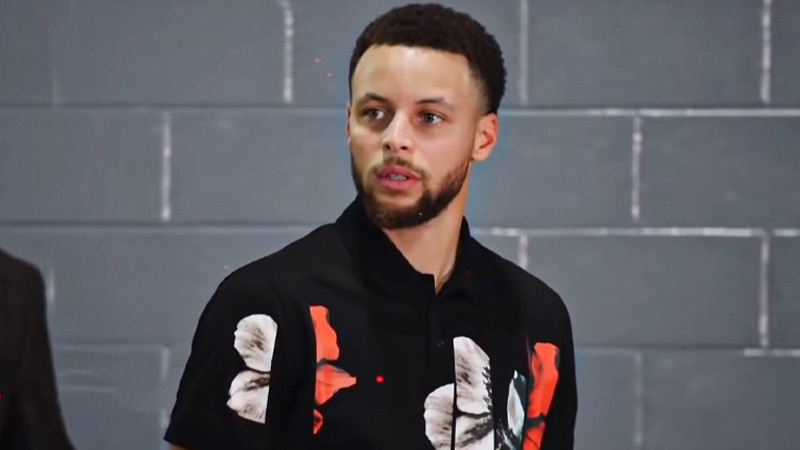
The narrative surrounding Stephen Curry has long been dominated by his transcendent offensive capabilities, often leaving his defensive contributions overlooked or unfairly criticized.
For years, a prevailing myth categorized him as a defensive liability—a player to be hidden or “hunted” by opposing offenses. However, a deeper look at the data, scouting reports, and his physical evolution tells a different story.
Curry has transitioned from a slender prospect into a disciplined, high-IQ team defender. By examining his spatial awareness, physical growth, and advanced metrics, we can finally answer whether he is truly a positive force on the defensive end.
The Evolution of Curry’s Defensive Profile
To understand Curry’s current defensive standing, one must look at his trajectory since entering the league. His reputation was forged in an era where he was physically overmatched, but his commitment to the Warriors’ defensive system has fundamentally changed that reality.
From Liability to System Pillar
Early in his career, Curry was frequently characterized as a “skinny guard” who could be easily pushed around by more physical opponents. This narrative took root during his first few seasons when his frame lacked the strength required to navigate the grueling screens of the NBA.
Over time, however, Curry underwent a significant physical transformation, adding functional muscle that allowed him to hold his ground during drives and resist being backed down by larger players in the post.
This physical maturation turned him from a target into a solid, above-average team defender who executes his role with high intelligence.
The Impact of Championship Pedigree
As the Golden State Warriors ascended to dynasty status, Curry’s defense was tested on the highest possible stage. Being part of a defensive unit that featured generational talents like Draymond Green, Andre Iguodala, and Klay Thompson often skewed public perception.
Because he was surrounded by “lockdown” defenders, he was frequently viewed as the “weakest link” by default, even as his individual and team defensive metrics remained consistently positive.
Intellectual Mastery: Elite Off-Ball IQ and Spatial Awareness
While Curry may not possess the “lockdown” individual traits of a perimeter specialist, his defensive value is rooted in his elite intellectual approach to the game.
- Passing Lane Anticipation: Curry possesses exceptional spatial awareness, allowing him to read the floor and anticipate where an opponent’s pass is headed before it is even released.
- Steals as a Playmaking Tool: His ability to disrupt offenses is reflected in his career average of 1.5 steals per game. Notably, he led the entire NBA in total steals during the 2015-16 season, averaging 2.14 per game.
- Rotational Discipline: Unlike many offensive superstars who conserve energy on defense, Curry is known for his consistent effort in “scram” switches and defensive rotations, ensuring the Warriors’ complex defensive schemes remain intact.
- Active Hands: Even when he is not securing a steal, Curry’s “active hands” frequently result in deflections that reset the shot clock or force opponents into uncomfortable offensive resets.
The Physical Transformation: Building Functional Strength
One of the most underappreciated aspects of Curry’s career is the work he put into his body to mitigate his natural physical limitations.
Navigation of Screens and Contact
The modern NBA is a pick-and-roll league, and smaller guards are often pulverized by heavy screens. Curry’s addition of significant functional muscle has been instrumental in his ability to fight through these screens rather than being taken out of the play.
By maintaining a lower center of gravity and utilizing his core strength, he can stay attached to his man, reducing the need for his teammates to help off their own assignments.
Positional Resistance
When switched onto larger wings or “power” guards, Curry no longer folds under the pressure of a post-up. His improved strength allows him to resist getting backed down into the paint, forcing opponents into difficult, contested fadeaways rather than easy layups.
This physical resilience is a primary reason why his defensive rating has remained respectable even as his offensive workload increased.
Rebounding: The Secret to Ending Possessions
A defensive possession is never truly over until the defense secures the ball. For a player of his size, Curry is an anomaly in his ability to contribute to the rebounding glass.
| Rebounding Metric | Performance Insight |
|---|---|
| Defensive Rebounds | Regularly averages 4 to 5 defensive boards per game. |
| Positional Ranking | Consistently ranks among the top rebounding point guards in the NBA. |
| Strategic Value | Securing the board allows him to immediately initiate the transition break. |
| Box-Out Frequency | High-effort player who understands the importance of contact to prevent second-chance points. |
Curry’s rebounding is not just about “stat-padding”; it is a vital defensive function. By crashing the glass, he helps the Warriors close out defensive possessions and limits the opposition’s opportunity for second-chance points. His 6’2″ frame belies a player who is willing to mix it up in the paint to ensure his team regains control of the ball.
Deconstructing the Myth: Why Being “Targeted” is Misleading
Critics often point to the fact that elite offensive players like LeBron James or James Harden have “hunted” Curry in playoff series as evidence of his defensive frailty. This interpretation, however, misses the strategic nuance of high-level basketball.
The “Weakest Link” Fallacy
During the Warriors’ peak years, the defensive lineup often consisted of four elite or near-elite defenders. If a team is facing
Draymond Green (a Defensive Player of the Year), Klay Thompson (All-Defensive), and Andre Iguodala (Finals MVP), the logical choice is to attack the fourth player—Stephen Curry.
This targeting is a testament to the strength of his teammates rather than a definitive indictment of his own skills. He is often the “weakest” relative link on an all-time great defense, which still makes him a very capable defender by league-wide standards.
Strategic Offensive Exhaustion
Another reason teams hunt Curry on defense is not necessarily because they expect an easy bucket, but to force him to expend maximum physical energy.
By making him navigate screens and defend isolation plays for 24 seconds, opponents hope to fatigue him so that his legendary shooting efficiency drops on the other end of the floor. This is a tactical decision to neutralize his offense, not a reflection of him being a “pushover” on defense.
Analytical Breakdown: The Numbers Behind the Defense
Advanced metrics provide a clearer, more objective view of Curry’s impact than highlights or anecdotal evidence.
Defensive Rating and Net Impact
Throughout his career, Curry has maintained a defensive rating of approximately 108.9. In the context of the NBA, this is a very respectable number, particularly for a high-volume offensive engine.
During the Warriors’ championship runs, advanced analytics like Defensive Real Plus-Minus (DRPM) consistently ranked Curry as a net-positive defender.
This means that, statistically, the Warriors’ defense performed better when he was on the floor than when he was off it, accounting for his role and the players he shared the court with.
Limitations of the Profile
It is important to remain objective: Curry is not a “lockdown” defender in the mold of a Gary Payton or a Jrue Holiday. He lacks the elite lateral quickness and the massive wingspan required to swallow up athletic isolation scorers.
Elite offensive players can still score over him simply due to his lack of length. However, defense is a five-man effort, and Curry’s ability to function within a system—rebounding, stealing, and rotating—makes him an asset rather than a liability.
Frequently Asked Questions
Is Steph Curry considered a good defender today?
Yes, most modern analysts and coaches view Curry as a solid, above-average team defender. While he isn’t a lockdown specialist, his IQ and effort make him a net positive.
How many steals does Steph Curry average?
Curry maintains a career average of 1.5 steals per game and once led the league with over 2 steals per game in 2016.
Why do teams still try to switch onto Curry?
Teams often target him to tire him out for his offensive possessions or because he is the smallest player on the floor, even if he is a competent defender.
What is Steph Curry’s career defensive rating?
His career defensive rating stands at 108.9, which is considered strong for a point guard with his offensive responsibilities.
Does Curry’s rebounding help the defense?
Absolutely. By averaging 4 to 5 defensive rebounds, he helps end the opponent’s possession and prevents second-chance scoring opportunities.
Conclusion: A Disciplined Component of Greatness
The evidence is clear: the “bad defender” label is an outdated relic of Stephen Curry’s early career. Through rigorous physical conditioning and a masterful understanding of the game’s mental aspects, he has developed into a reliable and intelligent defensive presence.
While his physical limitations prevent him from being a one-on-one stopper against the league’s most elite wings, his contributions in steals, rebounding, and system rotations are undeniable.
Curry is a solid, above-average team defender whose defensive IQ is as much a part of his greatness as his three-point shot. For those looking to evaluate the complete impact of the greatest shooter in history, it is time to give his defense the respect it has earned.