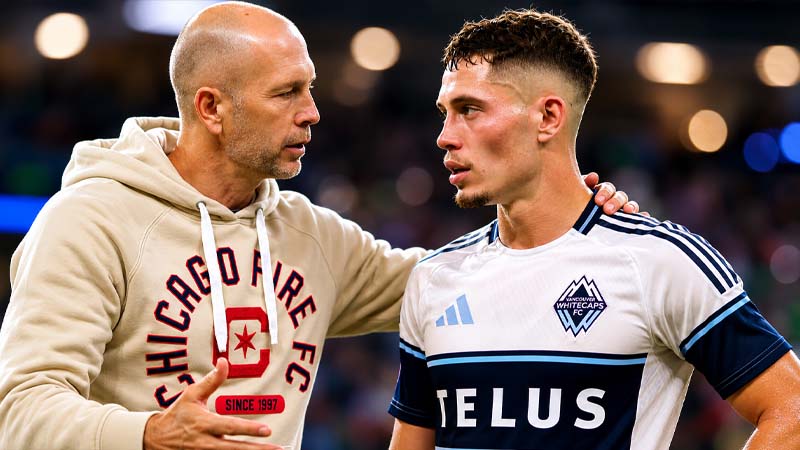
The narrative of American soccer has often been defined by generational shifts, but few stories are as compelling as a legacy that transitions directly from the sidelines to the center circle.
As the 2026 FIFA World Cup approached, one question dominated search trends and locker room discussions alike: is Sebastian Berhalter related to Gregg Berhalter?
The answer is a definitive yes, and their connection represents more than just a family tree; it symbolizes a historic milestone in the evolution of the United States Men’s National Team (USMNT). This relationship bridges two distinct eras of American soccer excellence.
The Family Connection: Is Sebastian Berhalter Related to Gregg Berhalter?
The direct lineage between Gregg and Sebastian Berhalter is one of the most significant familial ties in modern American sports.
Sebastian Berhalter is indeed the son of Gregg Berhalter, making them a rare father-son pair to have both left an indelible mark on the international stage.
While many children of professional athletes struggle under the weight of a famous surname, Sebastian has carved out a distinct identity within the sport while honoring the foundation laid by his father’s extensive career.
The Berhalter name has been synonymous with tactical discipline and high-level competition for decades. This connection was officially etched into the history books during the 2026 World Cup cycle.
When Sebastian took the pitch, it wasn’t merely a personal achievement; it was the culmination of a “Shared Soccer Legacy” that has seen the family involved in the highest levels of play, coaching, and executive management.
Their relationship is defined by a mutual commitment to the growth of the game in North America.
Gregg Berhalter: A Pillar of American Soccer History
To understand the weight of the Berhalter name, one must look at the extensive resume of the patriarch.
Gregg Berhalter’s influence on the U.S. soccer landscape spans several decades, moving from a dependable presence on the backline to one of the most discussed tactical minds in the country.
Playing Career and USMNT Legacy
Before he was a strategist on the sidelines, Gregg Berhalter was a formidable defender. As a former U.S. Men’s National Team player, he earned his stripes during an era when American players were fighting for respect on the global stage.
His experience as a player provided him with the fundamental understanding of the physical and mental rigors required to compete at the World Cup level, a perspective that would later define his coaching philosophy.
Coaching the National Team and the 2022 World Cup
Gregg’s transition to coaching was marked by a desire to implement a sophisticated, possession-based style of play. He served as the head coach of the USMNT during the 2022 FIFA World Cup in Qatar.
His tenure was characterized by a focus on young talent and a systematic approach to the game, laying the groundwork for the roster depth that the United States enjoys today.
His ability to navigate the pressures of a World Cup from the technical area set a high bar for future generations.
Current Leadership at Chicago Fire FC
Following his time with the national team, Gregg did not step away from the sport. He currently serves in a dual capacity as the director of football and head coach for Chicago Fire FC.
In this role, he continues to influence the development of the domestic game, overseeing both the tactical direction of the first team and the long-term sporting vision of the club.
Sebastian Berhalter: The Rise of a Midfield Talent
While his father’s shadow is long, Sebastian Berhalter has proven that he belongs in the elite tiers of the sport through his own merit.
Operating as a central midfielder, Sebastian brings a different tactical profile to the pitch than his father did, focusing on ball progression, defensive shielding, and engine-room consistency.
Professional Journey in Major League Soccer
Sebastian’s path to the world stage was paved through consistent performances in Major League Soccer (MLS). He currently plays for Vancouver Whitecaps FC, where he has become a vital component of their midfield unit.
His development in the MLS highlights the effectiveness of the North American youth systems and the pathway available for domestic players to reach international prominence.
Technical Profile and Playing Style
As a central midfielder, Sebastian is tasked with being the link between the defense and the attack.
Unlike the traditional “enforcer” role, his game is built on intelligence and spatial awareness—traits that some analysts suggest he may have inherited from his father’s tactical mind.
His standout club season with the Whitecaps was the catalyst for his jump to the international level, proving he could handle the intensity of high-stakes professional play.
The 2026 Milestone: Making World Cup History
The year 2026 served as the definitive moment for the Berhalter legacy. It was the year that the familial connection transitioned from a trivia fact to a historic statistic, as Sebastian stepped onto the field during the world’s most-watched sporting event.
| Event Detail | Information |
|---|---|
| Tournament | 2026 FIFA World Cup |
| Debut Match | vs. Paraguay (June 2026) |
| National Team Coach | Mauricio Pochettino |
| Historical Rank | 24th Father-Son Duo in World Cup History |
| US Record | 2nd American Duo in World Cup History |
The Call-Up by Mauricio Pochettino
Sebastian’s inclusion in the 2026 World Cup roster was a significant nod to his growth as a player. He was named to the squad by head coach Mauricio Pochettino, who took over the reins of the USMNT following Gregg’s departure.
Being selected by a coach of Pochettino’s caliber—a man known for his rigorous standards and preference for energetic midfielders—validated Sebastian’s status as a top-tier talent independent of his father’s influence.
A Global and National Milestone
When Sebastian made his World Cup debut in June 2026 against Paraguay, the Berhalters officially became the 24th father-son duo to feature in the history of the tournament. On a national level, the achievement was even more exclusive.
They joined Claudio and Gio Reyna as only the second American duo to ever reach this milestone. This statistic highlights the rarity of sustained athletic excellence across generations within the United States.
Analyzing the “Shared Soccer Legacy”
The term “Shared Soccer Legacy” captures the essence of what the Berhalters have contributed to the sport. It is a narrative of continuity, where the experiences of the father serve as a roadmap for the son, yet the son must still walk the path himself.
- Generational Knowledge: Growing up in a household headed by a professional player and coach likely provided Sebastian with a “soccer IQ” that is difficult to replicate. Understanding the nuances of film study, recovery, and tactical shifts from a young age is a competitive advantage.
- Merit-Based Success: It is crucial to note that Sebastian’s rise occurred after Gregg had moved on from the USMNT coaching role. This timeline reinforces the fact that his spot on the 2026 roster was earned through performance under a new coaching regime.
- Impact on US Soccer Culture: Seeing father-son duos like the Berhalters and the Reynas succeed helps build a sense of tradition in American soccer, similar to the multi-generational dynasties seen in European and South American football.
The Future of the Berhalter Name in Football
As Gregg continues to lead Chicago Fire FC and Sebastian enters the prime of his career with Vancouver Whitecaps FC and the USMNT, the Berhalter influence shows no signs of waning.
Their story is a testament to the professionalization of the sport in the U.S., where families are now dedicated to soccer with the same intensity previously reserved for baseball or American football.
The Berhalters have moved beyond being a mere “soccer family” to becoming a historical institution within the American game.
Whether it is through Gregg’s strategic decisions in the front office or Sebastian’s work rate in the midfield, their impact is felt at every level of the pyramid.
Frequently Asked Questions
Is Sebastian Berhalter still playing for Vancouver Whitecaps FC?
Yes, as of the 2026 World Cup cycle, Sebastian remains a key central midfielder for the MLS club Vancouver Whitecaps FC, where his performances earned him his national team call-up.
Did Gregg Berhalter coach his son on the USMNT?
No, Sebastian was named to the World Cup roster by Mauricio Pochettino, who succeeded Gregg as the head coach of the national team.
Who was the first American father-son duo to play in the World Cup?
The first American father-son duo to achieve this milestone was Claudio and Gio Reyna. The Berhalters became the second.
What is Gregg Berhalter’s current role?
Gregg Berhalter is currently the director of football and head coach for the MLS team Chicago Fire FC.
Conclusion: A Lasting Impact on the Pitch
The relationship between Sebastian and Gregg Berhalter is a powerful reminder of how far American soccer has come.
It is a story of a father who helped build the foundation of the national team and a son who stepped into the spotlight to carry that legacy forward into a new era.
Their entry into the history books as the 24th father-son duo in World Cup history is not just a personal win for their family, but a milestone for the sport in the United States.
As we look toward the future, the Berhalter name will remain a symbol of professional excellence and tactical intelligence.
For fans and analysts alike, their journey offers a blueprint for how legacy and individual talent can combine to reach the pinnacle of global sports.
The “Shared Soccer Legacy” of the Berhalters is now firmly part of the World Cup’s storied history, ensuring their names will be remembered for generations to come.