The intersection of tradition and modernization defines the current landscape of international athletics.
Among the various disciplines that have navigated the complex journey of inclusion, departure, and triumphant return, few stories are as compelling as that of rugby.
For stakeholders, athletes, and global spectators, the question of whether rugby is an Olympic sport is met with a definitive yes, though the answer requires an understanding of a significant shift in format that has redefined the sport for a digital-first, high-velocity era.
The Modern Paradigm: Rugby Sevens and the Olympic Program
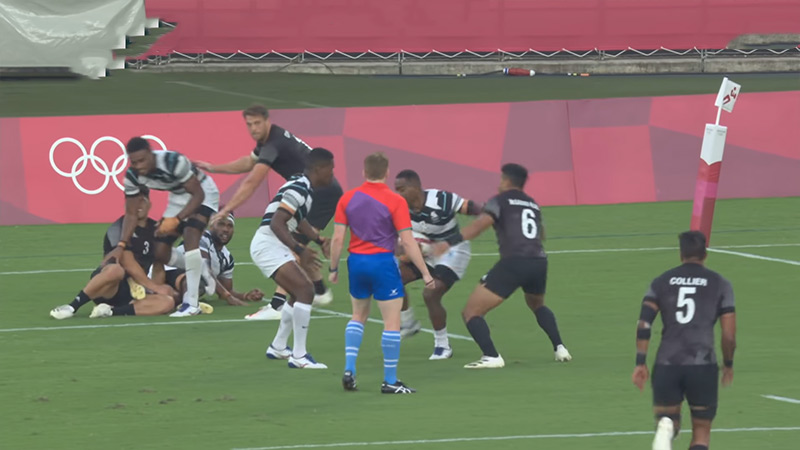
Rugby is firmly established as a cornerstone of the Summer Olympic Games, specifically through the high-intensity rugby sevens format.
This iteration of the sport made its formal modern debut at the Rio 2016 Olympic Games, marking a pivotal shift in how the International Olympic Committee (IOC) integrates heritage sports with modern audience demands.
The inclusion of sevens is not merely a compromise but a strategic optimization. In the current Olympic framework, including the recently concluded Paris 2024 Games, rugby sevens provides a spectacle of speed and skill that aligns with the global shift toward shorter, more engaging content formats.
A Century of Transformation: The Historical Context
To appreciate the current status of the sport, one must look back at the early 20th century. Traditional 15-a-side rugby union was once a staple of the Games, appearing in 1900, 1908, 1920, and 1924.
During this era, the sport was championed by individuals like Baron Pierre de Coubertin, the founder of the modern Olympics, who was a passionate advocate for the game’s character-building qualities.
However, after the 1924 Paris Games, rugby was removed from the program. The reasons for this 92-year absence were multifaceted, involving concerns over player recovery times, the length of the tournament, and a lack of global parity at the time.
The 1924 final, characterized by intense physical play and crowd volatility, served as a catalyst for a nearly century-long hiatus.
The return in 2016 was the result of a decades-long administrative effort by World Rugby to prove that the sport could meet the rigorous logistical and commercial requirements of the modern Olympic movement.
By pivoting to the sevens discipline, the sport addressed every previous concern regarding scheduling and resource allocation.
The Strategic Choice: Why Sevens Outperforms the Traditional Format
The decision to utilize rugby sevens instead of the traditional 15-a-side format is a masterclass in operational efficiency and resource management.
In the context of a multi-sport event like the Olympics, several factors make sevens the superior choice:
1. Tournament Duration and Scheduling
Traditional rugby matches require significant rest periods—often five to seven days—between games to ensure player safety and performance quality.
This would necessitate a tournament lasting several weeks, far exceeding the 16-day Olympic window.
In contrast, an entire rugby sevens tournament, involving multiple nations, can be completed in just three days. This allows the IOC to maximize venue usage and maintain high momentum throughout the event.
2. Infrastructure and Venue Optimization
Sevens allows for a “festival” atmosphere where dozens of matches occur in a single stadium over a weekend.
This efficiency reduces the need for multiple satellite stadiums and extensive travel for teams and officials. It turns a single venue into a high-traffic hub of activity, which is highly attractive for broadcasters and sponsors alike.
3. The Athlete Entourage and Village Capacity
The Olympic Village operates under strict quotas for total athletes. A traditional 15s squad requires approximately 30 to 33 players to cover the depth needed for a tournament. A sevens squad requires only 12 to 13 athletes.
This reduction allows more nations to participate within the same “athlete footprint,” fostering greater global representation without increasing the burden on the host city’s infrastructure.
The Technical Architecture: How the Game is Played
For those accustomed to the traditional 80-minute match, the Olympic format offers a different tactical experience.
The core principles of the game remain—passing, tackling, and scoring tries—but the execution is altered by the space available on the field.
- Field Dimensions: The game is played on a standard full-sized pitch, the same as 15-a-side rugby.
- Player Density: With only seven players per side instead of 15, the amount of open space increases exponentially. This rewards sprinting, agility, and precision over the concentrated power seen in traditional scrums and mauls.
- Match Timing: Matches consist of two halves, each lasting seven minutes. This creates a high-pressure environment where every error is magnified and momentum can shift in seconds.
- Scoring and Set Pieces: While scrums and lineouts still exist, they are contested by only three players per side, facilitating a rapid restart of play.
Global Growth and Gender Parity
One of the most significant impacts of rugby’s Olympic status has been the explosion of the women’s game. The IOC’s commitment to gender equality meant that the return of rugby in 2016 featured both men’s and women’s competitions.
This has provided a global platform for female athletes, leading to increased funding and professionalization in countries where rugby was previously a male-dominated pursuit.
Furthermore, the “Olympic Effect” has democratized the sport. Traditional rugby powerhouses like New Zealand, South Africa, and France remain dominant, but the sevens format has allowed nations like Fiji to achieve historic success.
Fiji’s gold medals in 2016 and 2020 (played in 2021) provided the nation with its first-ever Olympic honors, illustrating how the sport can create national icons in emerging markets.
Performance Analysis: The Physical Demands of Sevens
The physiological requirements for an Olympic rugby player are among the most strenuous in any team sport. Because the field is so large and the players so few, athletes must possess:
- Elite Aerobic Capacity: To maintain high-intensity movement across multiple matches per day.
- Explosive Power: For tackling and breaking through defensive lines.
- Anaerobic Recovery: The ability to recover from a full-field sprint in the seconds between plays.
This unique physical profile has made Olympic rugby a favorite for fans of high-performance athletics, as the speed of the game rarely plateaus.
Financial and Commercial Significance
From a corporate and branding perspective, rugby’s inclusion in the Games has opened new revenue streams. The sport attracts a younger, more diverse demographic than many other traditional Olympic events.
The short match duration is perfectly suited for mobile viewing and social media highlights, ensuring that the sport remains relevant in an era of fragmented attention spans.
For sponsors, the association with rugby brings values of teamwork, respect, and physical excellence.
The global nature of the Olympic circuit also provides a platform for brands to engage with markets in Asia, North America, and Africa, where the sport is experiencing rapid grassroots growth.