Yes, Reggie Jackson is a cornerstone of the National Baseball Hall of Fame, having been elected during his first year of eligibility on January 5, 1993.
Known universally as “Mr. October” for his unparalleled postseason heroics, Jackson’s career spanned 21 remarkable seasons, leaving an indelible mark on the sport of baseball.
This analysis explores his first-ballot induction, his massive statistical milestones, and the championship pedigree that solidified his place in Cooperstown.
Whether you are a historian or a fan, understanding Jackson’s impact requires looking at the elite consistency and power that defined his 14-time All-Star career.
The 1993 Induction: A Landmark First-Ballot Success
Reggie Jackson’s entry into the National Baseball Hall of Fame was not merely an induction; it was a resounding validation of his dominance.
On January 5, 1993, the Baseball Writers’ Association of America (BBWAA) made it clear that Jackson belonged among the elite of the elite. He was officially inducted later that year on August 1, 1993, marking a significant moment in baseball history.
Breaking Down the Voting Dominance
When evaluating Hall of Fame candidates, the percentage of the vote received serves as a primary indicator of a player’s perceived greatness by their peers and the media. Jackson’s numbers were staggering:
- Voting Percentage: He received 93.6% of the vote.
- Ballot Count: He appeared on 396 out of 423 ballots submitted.
- The Lone Inductee: In a testament to his singular impact, he was the only player selected to the Hall of Fame by the BBWAA in the class of 1993.
Achieving first-ballot status is a rare feat, reserved for those whose careers are beyond reproach. For Jackson, the 93.6% threshold demonstrated that his contributions to the game were viewed as essential to the narrative of Major League Baseball.
The Statistical Bedrock: 21 Seasons of Power
To understand why Reggie Jackson was a first-ballot Hall of Famer, one must look at the sheer volume of his offensive production. Over a career that lasted 21 seasons, Jackson proved to be one of the most durable and consistent power hitters the game has ever seen.
A Legacy Defined by the Home Run
At the time of his retirement in 1987, Jackson’s statistical profile was nothing short of legendary. His ability to change a game with a single swing was his calling card across multiple franchises.
| Statistic | Value | Historical Context |
|---|---|---|
| Career Home Runs | 563 | Ranked 6th all-time at the time of retirement |
| Seasons Played | 21 | Demonstrated elite longevity and health |
| All-Star Selections | 14 | Consistently recognized as a top-tier talent |
| AL MVP | 1973 | Awarded for his peak performance with Oakland |
While the modern era has seen shifts in home run rankings, Jackson’s 563 home runs placed him 6th in history when he hung up his cleats. This volume of scoring, combined with his high-stakes performance, made him a constant threat in the middle of any lineup.
Why He is “Mr. October”: Unmatched Postseason Dominance
While regular-season stats provide the foundation for a Hall of Fame case, Reggie Jackson’s legacy was truly forged in the high-pressure environment of the playoffs. His nickname, “Mr. October,” is not just a catchy moniker; it is a description of his ability to elevate his game when the lights were brightest.
Building a Dynasty in Oakland
Before becoming a legend in the Bronx, Jackson was the centerpiece of an Athletics dynasty that dominated the early 1970s. He was instrumental in helping the Oakland Athletics secure three consecutive World Series titles from 1972 to 1974.
His 1973 season was particularly noteworthy. Not only did he lead his team to a championship, but he was also named the American League MVP and the World Series MVP that same year.
This “triple crown” of accolades in a single season is a feat few players in history can claim, showcasing his ability to dominate both the marathon of the regular season and the sprint of the postseason.
Solidifying Greatness with the Yankees
Jackson’s transition to the New York Yankees in the late 1970s provided the stage for his most iconic moments. He helped lead the Yankees to back-to-back World Series titles in 1977 and 1978.
His performance in the 1977 World Series remains one of the most storied chapters in baseball history. By earning his second World Series MVP award that year, Jackson became one of the few players to win the honor with two different franchises (Oakland in 1973 and New York in 1977).
His 5-time World Series champion status remains a primary reason for his enduring popularity and his standing in Cooperstown.
Individual Accolades and League-Wide Impact
Beyond the championships, Jackson’s individual trophy case is a reflection of a player who was consistently better than his contemporaries. Being a 14-time All-Star means that for nearly three-quarters of his career, he was considered one of the best players in the league.
The 1973 MVP Campaign
The 1973 season stands as the pinnacle of Jackson’s individual regular-season success. Winning the American League MVP was a recognition of his complete offensive package. During this era, Jackson was more than just a home run hitter; he was a leader who dictated the pace of the game.
Two-Time World Series MVP
The rarity of winning the World Series MVP twice cannot be overstated. It requires not just being on a winning team, but being the primary driver of that team’s success in the most critical moments. This distinction is the core of the “Mr. October” persona and is a major reason why the BBWAA saw him as a first-ballot lock.
Distinguishing the Legend from the NBA Professional
In the modern digital landscape, search intent can sometimes lead to confusion between historical figures and active athletes. It is important to clarify that the Reggie Jackson in the National Baseball Hall of Fame is the legendary MLB outfielder who retired in 1987.
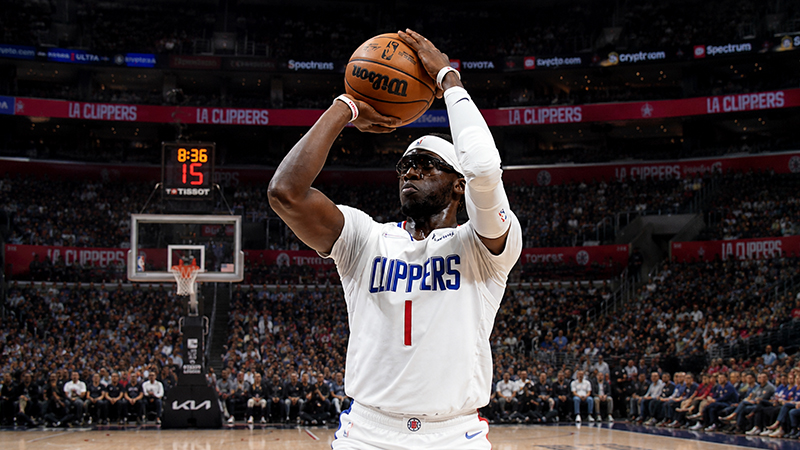
There is a modern professional basketball player also named Reggie Jackson who is currently active in the NBA. This individual is not affiliated with the Baseball Hall of Fame or the legacy of “Mr. October”.
When researching Hall of Fame credentials, it is essential to focus on the 21-season MLB veteran whose power and postseason heroics defined an era of baseball.
Frequently Asked Questions Regarding Reggie Jackson’s Hall of Fame Status
When was Reggie Jackson elected to the Hall of Fame?
Reggie Jackson was elected to the National Baseball Hall of Fame on January 5, 1993, during his first year of eligibility.
What was Reggie Jackson’s Hall of Fame voting percentage?
Jackson received a massive 93.6% of the vote, appearing on 396 of the 423 ballots cast by the BBWAA.
How many World Series did Reggie Jackson win?
He is a 5-time World Series champion, winning three titles with the Oakland Athletics (1972–1974) and two with the New York Yankees (1977–1978).
Why is Reggie Jackson called “Mr. October”?
The nickname was earned through his legendary clutch hitting in the postseason, evidenced by his two World Series MVP awards in 1973 and 1977.
How many home runs did Reggie Jackson hit in his career?
Jackson hit 563 career home runs, which ranked him 6th all-time in Major League Baseball history at the time of his retirement.
Is there another Reggie Jackson in professional sports?
Yes, there is an active professional basketball player in the NBA named Reggie Jackson, but he is not related to the MLB Hall of Famer.
Conclusion: An Unmatched Postseason Icon
Reggie Jackson’s induction into the Hall of Fame was an inevitable conclusion to one of the most storied careers in the history of professional sports.
His combination of raw power, evidenced by 563 home runs, and his unparalleled ability to perform under pressure, resulting in five championships, created a legacy that few can match.
His first-ballot election in 1993 with 93.6% of the vote remains a benchmark for excellence. For generations of fans, Reggie Jackson is not just a name in a record book; he is the embodiment of October baseball.
His place in Cooperstown is a testament to 21 seasons of elite play and a reminder that when the stakes are highest, legends are born.