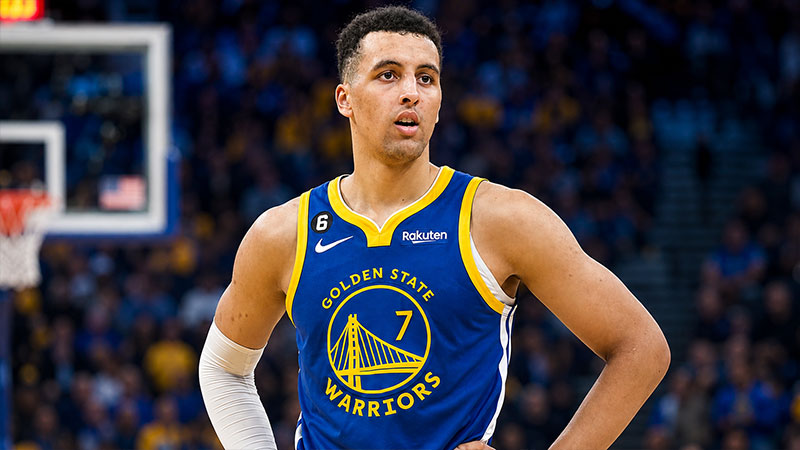
Patrick Baldwin Jr., often referred to by his initials “PBJ,” remains one of the most intriguing developmental studies in professional basketball today.
To answer the question of whether he is “good,” one must distinguish between raw talent and league-ready production. Currently, Baldwin Jr. is characterized as an elite, high-production talent at the G League level who remains a fringe rotation player in the NBA.
While he possesses a prototype frame and an elite shooting stroke, his transition to a permanent role on a standard roster has been hindered by specific athletic bottlenecks.
Understanding his value requires a deep dive into his statistical disparity and physical limitations.
The Statistical Paradox: NBA Production vs. G League Dominance
Evaluating the “goodness” of a player like Baldwin Jr. necessitates a look at how his performance fluctuates based on the level of competition he faces.
The data reveals a player who is a nightly double-double threat in developmental leagues but struggles to maintain that impact when minutes are limited and the margin for error is razor-thin at the highest level. This disparity is central to his current identity as a “high-ceiling, low-floor” prospect.
To visualize this gap, the following table compares his career NBA averages against his high-volume production during the 2025–2026 G League season:
| Metric | NBA Career Averages | G League (2025–2026) |
|---|---|---|
| Points Per Game | 3.7 | 21.3 |
| Rebounds Per Game | 2.1 | 8.4 |
| Assists Per Game | 0.5 | 2.9 |
| Field Goal % | 40.7% | 50.1% |
| 3-Point % | 34.2% | 32.6% |
Understanding the G League Mastery
In the G League, Baldwin Jr. functions as a primary offensive engine, frequently recording massive stat lines such as a 31-point, 12-rebound performance or a 28-point night featuring six three-pointers.
At this level, his 6’9″ height and high-release jumper allow him to dominate smaller or less disciplined defenders. He has proven that when he is the focal point of an offense, he can produce elite numbers that suggest a much higher ceiling than his current NBA role suggests.
The Challenges of an NBA Rotation Role
In contrast, his NBA role is typically that of an end-of-the-bench depth piece. In the major league, he averages just 3.7 points per game, as he often struggles to impact the game outside of occasional spot-up shooting.
The decreased minutes and higher speed of the game make it difficult for him to establish the rhythm he enjoys in the G League.
Consequently, coaches often view him as a project who can provide floor-spacing in bursts but cannot yet be relied upon for heavy rotational minutes.
The Physical Profile: Elite Size vs. Athletic Bottlenecks
The fascination surrounding Baldwin Jr. is largely rooted in his physical dimensions, which are nearly perfect for the modern “stretch-four” archetype.
However, professional scouting involves more than just measuring height and wingspan; it requires analyzing how an athlete moves in space.
For Baldwin Jr., his elite frame is constantly at odds with a lack of explosive athleticism that is rarely seen in successful NBA forwards.
The following section breaks down the two sides of his physical profile, illustrating why he remains a “fringe” player despite his impressive stature.
The Prototype “Stretch-Four” Build
Baldwin Jr. stands 6’9″ officially, though he is frequently listed up to 7’0″ when measured in shoes. Combined with a massive 7’2″ wingspan, he possesses the length required to shoot over almost any perimeter defender without needing to alter his mechanics.
This length is his primary “win condition” on the basketball court, allowing him to function as a floor-spacer who can trigger his release point above the reach of contesting guards.
The 26.5-Inch Vertical Bottleneck
Despite his height, Baldwin Jr. suffers from what scouts call an athletic bottleneck: his maximum vertical leap was measured at just 26.5 inches during pre-draft testing. This figure is considered historically low for a modern NBA forward.
This lack of verticality directly limits his “burst” when attacking the rim and prevents him from being a robust rim protector on the defensive end.
In a league where vertical spacing and explosive finishes are standard, this limitation forces him to rely entirely on his skill and positioning rather than raw physical power.
Scouting Report: Strengths, Weaknesses, and Skill Sets
To determine if Baldwin Jr. is “good,” one must analyze the specific skills he brings to the court and how they are countered by his defensive vulnerabilities.
His game is a study in contrasts, featuring a “picture-perfect” jumper alongside significant struggles with lateral movement.
This balance of traits determines his utility in different coaching systems across teams like the Washington Wizards, LA Clippers, and Sacramento Kings.
The following list summarizes the key takeaways from modern scouting reports:
- Elite Shooting Stroke: He possesses a fluid, high-release jumper that is his most projectable NBA skill.
- Positional Versatility: His height and length allow him to theoretically play the “stretch-four” role, providing floor-spacing for primary ball-handlers.
- Lack of Lateral Quickness: His foot speed is a glaring weakness; faster NBA guards often target him on switches, blowing past his perimeter defense with ease.
- Defensive Interior Struggles: Due to a lack of elite lower-body strength and explosive verticality, he struggles to hold his ground against physical big men in the paint.
- Inconsistent Impact: When his shot is not falling, he often struggles to find other ways to positively influence the game at the NBA level.
The Pedigree Factor: From Top-5 Recruit to Draft Slide
The ongoing debate about Baldwin Jr.’s potential is often fueled by his prestigious high school background. In 2021, he was not just a prospect; he was a top-5 national recruit ranked alongside future superstars like Chet Holmgren and Paolo Banchero.
This high-level pedigree created expectations that have proven difficult to meet in the professional ranks.
The trajectory of his career was significantly altered by his collegiate choices and subsequent health issues, which analysts believe delayed his professional development.
The UW-Milwaukee Decision and Ankle Injuries
Rather than attending a traditional “blue-blood” program like Kentucky or Duke, Baldwin Jr. chose to play for his father at UW-Milwaukee.
This decision placed him in a lower-tier collegiate environment where his lone season was eventually derailed by persistent ankle injuries.
These injuries, combined with a lack of elite competition, caused his draft stock to plummet, leading the Golden State Warriors to select him 28th overall in 2022.
The Two-Way Contract Ecosystem
Since entering the league, he has moved through multiple organizations, including the Wizards, Clippers, and Kings, primarily operating on two-way contracts.
This “two-way” status means he is constantly moving between the main roster and the G League, which can hinder a player’s ability to build chemistry with an NBA rotation.
For Baldwin Jr., this cycle has reinforced the “enigma” label, as he continues to showcase brilliance in minor-league stints while searching for a permanent home in a standard team rotation.
The Path Forward: What Defines His Future Success?
For Patrick Baldwin Jr. to be considered a “good” NBA player in the long term, he must transition from a “theoretical” talent to a “reliable” contributor.
The consensus among talent evaluators is that his path to success is narrow but achievable if he can address specific physical and tactical deficiencies. His future in the league depends on whether he can overcome the “hard floor” created by his athletic testing.
Success in the next phase of his career will likely be determined by two primary factors of development.
Improving Defensive Mobility and Functional Strength
Coaches are currently hesitant to give Baldwin Jr. significant minutes because of the defensive “liability” created by his slow lateral movement.
To stay on the floor, he does not necessarily need to become an elite defender, but he must improve his foot speed enough to survive on switches.
Additionally, adding functional lower-body strength would allow him to better contest shots and secure rebounds against physical NBA interior players.
The Best-Case Scenario: The Rotational “Stretch-Four”
His theoretical best-case scenario remains a valuable rotational weapon who can sub into a game, stand in the corner, and provide gravity through his shooting.
If he can knock down open triples at a high clip while playing “neutral” defense, he could have a long career as a specialist. Until that balance is struck, however, he will remain a developmental piece rather than a cornerstone of a rotation.
Enhanced FAQ: Addressing the “PBJ” Debate
Is Patrick Baldwin Jr. an NBA-level shooter?
Yes, his shooting mechanics are considered “picture-perfect” and his high release allows him to shoot over defenders effectively. His 34.2% career average from deep in the NBA suggests he is a capable floor-spacer.
Why do scouts mention his vertical leap so often?
His 26.5-inch vertical is historically low for his position. This metric is a proxy for overall explosiveness, explaining why he struggles to finish at the rim or protect the paint against elite athletes.
What are his career NBA statistics?
Across his professional stints, he averages 3.7 points, 2.1 rebounds, and 0.5 assists per game.
Does he still have superstar potential?
While he was once a top-5 recruit, most modern evaluators now view him as a “high-ceiling, low-floor” project whose most likely outcome is a rotational specialist rather than a superstar.
What teams has Patrick Baldwin Jr. played for?
He was drafted by the Golden State Warriors and has since spent time with or within the systems of the Washington Wizards, LA Clippers, and Sacramento Kings.
Final Verdict: The Balancing Act
In conclusion, Patrick Baldwin Jr. is “good” in the context of being an elite basketball talent who can dominate the G League, but he has yet to prove he is a “good” NBA rotation player. His career is a balancing act between a world-class shooting stroke and significant athletic limitations.
Until he can improve his lateral quickness and physical strength, his “goodness” will remain a matter of perspective—highly dependent on the level of competition he is asked to face.
He remains one of the most fascinating “what-if” prospects in the league, possessing the size of a giant and the touch of a guard, yet still searching for his permanent place in the professional landscape.