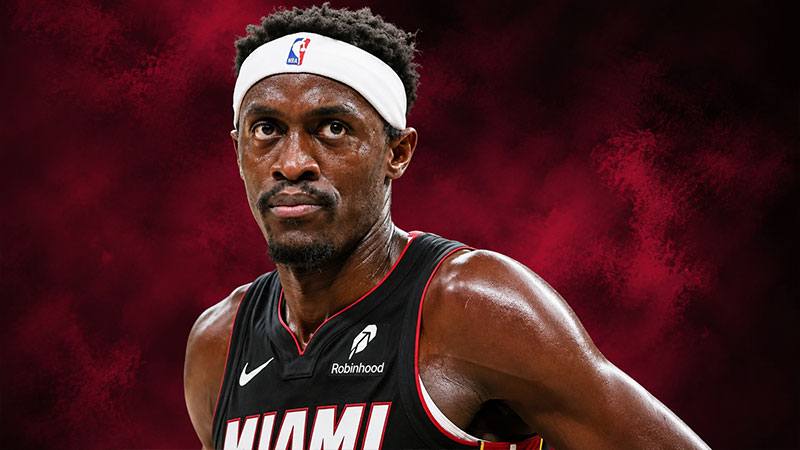
Pascal Siakam is widely considered a good, above-average defender whose impact is heavily influenced by his offensive workload. Standing 6’8” with a 7’3” wingspan, his elite physical tools allow him to switch across multiple positions and disrupt passing lanes.
While he was a primary defensive anchor during Toronto’s 2019 championship run, his defensive metrics have fluctuated as he transitioned into a high-usage offensive star.
Currently, he remains a versatile asset capable of lockdown stretches in clutch moments, though consistency varies based on his energy expenditure and team system requirements within the modern NBA.
Is Pascal Siakam Still an Elite Defender Today?
The consensus among analysts and fans suggests that while Siakam has the tools for elite performance, he is currently viewed as an above-average defender rather than a perennial All-Defensive team candidate.
His reputation was forged during the Toronto Raptors’ championship era, where his role was primarily focused on disruption and transition energy.
As his offensive responsibilities grew—reaching a level where he now averages 24.0 points per game—there has been a natural trade-off in defensive intensity to preserve stamina for scoring.
The Peak of Defensive Prowess (2018–2020)
During the Raptors’ 2018–19 title run, Siakam posted a strong 107.3 defensive rating. The following season, as he stepped into a larger role but still maintained high defensive engagement, his rating improved to an elite 104.8.
During this window, he was considered a high-level disruptor who could anchor complex schemes, such as those designed by Nick Nurse. His length and quick feet made him a nightmare for opponents in transition and on the perimeter.
The Modern Workload Trade-Off
In recent years, critics have noted that Siakam’s defensive impact has cooled to “just good” due to age, injuries, and the sheer volume of his offensive load.
Some observers point out that he is no longer the guy a team sticks on the opponent’s best player for 48 minutes, but rather a versatile secondary defender.
Statistics support this trend: his defensive rating climbed to 118.4 for the 2025–26 season, reflecting both his heavy scoring duties and the high-octane, defense-compromised system of the Indiana Pacers.
The Numbers Behind the Narrative: Career Defensive Stats
To understand if Siakam is “good” at defense, one must look past the eye test and into the data. Over a career spanning nearly 700 regular-season games, he has established a highly consistent defensive baseline with a career defensive rating of 112.0.
This baseline suggests a player who is consistently a positive contributor on that end of the floor, even if his “peak” years are now in the rearview mirror.
| Season | Team | Def. Rebounds (RPG) | Steals (SPG) | Blocks (BPG) |
|---|---|---|---|---|
| 2025–26 | Indiana Pacers | 5.19 | 1.11 | 0.40 |
| 2024–25 | Indiana Pacers | 5.22 | 0.90 | 0.54 |
| 2023–24 | Pacers / Raptors | 5.32 | 0.79 | 0.31 |
| 2022–23 | Toronto Raptors | 5.99 | 0.92 | 0.51 |
| 2021–22 | Toronto Raptors | 6.65 | 1.25 | 0.62 |
| 2020–21 | Toronto Raptors | 5.54 | 1.14 | 0.66 |
| 2019–20 | Toronto Raptors | 6.25 | 1.02 | 0.88 |
| 2018–19 | Toronto Raptors | 5.31 | 0.91 | 0.65 |
How Siakam Matches Up Against Elite Wings
One of the most frequent questions regarding Siakam’s defense is his ability to handle “bulky” superstar forwards. His physical profile—6’8″ with that massive 7’3″ wingspan—suggests he should be able to guard anyone from 1 through 5.
However, the reality of his on-court matchups is more nuanced, as he often relies on speed and finesse rather than raw strength.
Guarding the Likes of Giannis and Tatum
Siakam is often used as the primary matching fodder for elite wings like Jayson Tatum or Giannis Antetokounmpo. Against Tatum, his length allows him to contest shots effectively and stay in front of perimeter drives.
However, against “bulky brute force” players like Giannis, he can struggle due to a lack of elite core strength, which sometimes leads to him getting bullied in the post.
He is generally better equipped to guard 2nd or 3rd options who rely on movement rather than pure power.
Defensive Discipline and Foul Control
A major positive in Siakam’s defensive profile is his foul discipline. Despite guarding high-usage superstars, he has maintained a modest career average of only 2.6 personal fouls per game.
This indicates that he defends primarily using elite positioning and his wingspan rather than resorting to desperate reach-ins or “hacky” defense.
This discipline is a hallmark of an intelligent defender who understands how to stay on the floor while still providing resistance.
Common Criticisms: Defensive IQ and Awareness
While the physical tools are undeniable, Siakam’s defensive “IQ” is a point of contention among those who watch him closely.
Some fans and analysts argue that his awareness does not always match his athleticism, leading to occasional lapses in judgment on the court. These critiques often focus on his “off-ball” presence and his decision-making in complex defensive rotations.
The “Eye Test” and Defensive Awareness
Critics often point to possessions where Siakam appears to “work hard but not smart”. Observations include him making bad reads in “pick your poison” help situations or getting caught “ball-watching” while his man cuts backdoor.
Some suggest that in a video game context, his physical attributes would be high, but his defensive awareness might only sit in the 60s or 70s. These lapses are sometimes attributed to mental fatigue from his offensive responsibilities.
Rebounding and Effort Concerns
Another common critique involves his defensive rebounding and boxing out. While he averages a respectable 5.1 career defensive rebounds per game, some observers feel he can be a liability when he fails to box out or hunt for “easy” rebounds.
There is a counter-argument that his role often requires him to sprint up the court immediately to ignite transition opportunities, which naturally pulls him away from the glass.
Furthermore, his effort level on defense has been described as “inconsistent,” particularly during his final days in Toronto when trade rumors were swirling.
Future Outlook: The Indiana Pacers Defensive System
Siakam’s trade to the Indiana Pacers marked a significant shift in his career trajectory and defensive environment.
In Indiana, he is part of a high-octane offensive system that often prioritizes pace over half-court defensive grinding, which is reflected in his 118.4 defensive rating for the 2025–26 season.
However, the move also offers a potential path back to defensive excellence as his role within the team stabilizes.
Reducing the Offensive Burden
Many believe that as Siakam settles into a role where he is not necessarily the undisputed “number one” option every night, his defensive energy will return.
If he can share the offensive load with other stars, he may find the stamina to “lock in” more consistently on the defensive end.
Analysts predict that in a new situation where he takes more direction from teammates and focuses on being a high-level secondary defender, he can return to his “above average” or even “borderline elite” status.
Versatility in High-Stakes Moments
Despite the statistical dip, Siakam remains a player coaches trust in the clutch. He has demonstrated the ability to shut down elite scorers like Luka Doncic when the game is on the line, proving that his “ceiling” as a defender is still remarkably high.
His “speed and finesse” profile makes him a nightmare for opponents who get “cute or lazy” with the ball, as he can track and block shots from unexpected angles.
Frequently Asked Questions About Siakam’s Defense
Is Pascal Siakam a lockdown defender?
While not a traditional “lockdown” specialist like OG Anunoby, Siakam is a highly versatile defender who uses length and speed to disrupt opponents. He is most effective as a secondary disruptor rather than a primary stopper against bulky centers.
What is Pascal Siakam’s defensive rating?
Siakam holds a career defensive rating of 112.0. His rating has fluctuated from an elite 104.8 during his championship development years to 118.4 in more recent high-scoring seasons.
Can Siakam guard multiple positions?
Yes, his 7’3″ wingspan and lateral quickness allow him to switch across multiple positions, effectively guarding wings and guards. He struggles more with “brute force” interior bigs.
How does his offense affect his defense?
There is a clear “workload trade-off” in Siakam’s game. As his scoring average rose to 24.0 PPG, his defensive efficiency naturally dipped to preserve energy for the offensive end.
Final Verdict on Pascal Siakam’s Defensive Impact
Pascal Siakam remains a formidable defensive presence in the NBA, even if he is no longer the “relentless energy guy” of 2019.
His combination of length, speed, and positioning allows him to remain an above-average contributor who can elevate his play in high-stakes situations.
While questions about his off-ball awareness and the energy cost of his offensive output are valid, he remains a versatile asset that would improve almost any defensive rotation in the league.