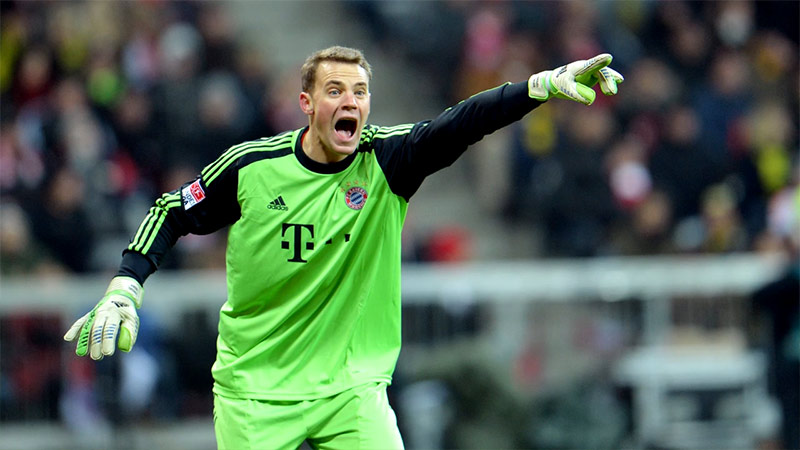
For over a decade, the answer to “Who is the best goalkeeper in the world?” has almost always started and ended with one name: Manuel Neuer.
However, as we move through 2026, the German icon has reached the milestone age of 40—a territory where most players have long since hung up their boots or moved to less competitive leagues.
This has sparked a fierce debate among fans, analysts, and scouts: Is Manuel Neuer still good, or is he simply playing on reputation?
When we look at the evidence from the 2025–26 season, the reality is a fascinating paradox of declining physical durability and unmatched technical mastery.
The “Big-Game” Aura: Still a Master of the Moment
If you want to know if Manuel Neuer is still “good,” you only need to look at the Champions League quarter-finals in April 2026. Facing the relentless attack of Real Madrid, Neuer delivered what many are calling a “legendary performance”.
During that high-stakes match, Neuer registered 9 critical saves, single-handedly keeping Bayern Munich in the tie and earning the Man of the Match award.
This performance served as a loud reminder that when the lights are brightest, Neuer is still “built different”. It isn’t just fans who believe this; his peers agree.
Rival goalkeeper Oliver Baumann recently stated that Neuer still “sets the standard” for the position and remains firmly among the top three goalkeepers in the world.
Decoding the 2025–26 Statistics: Efficiency Over Volume
To truly understand Neuer’s current level, we must look past the highlight reels and into the cold, hard data of the current season. His statistical profile reveals a highly efficient goalkeeper, even if he isn’t being called into action as frequently as keepers on lower-ranked teams.
The Champions League Specialist
Neuer’s most impressive data comes from European competition. In 9 Champions League appearances during the 2025–26 campaign, he maintained a staggering 81% save percentage.
In a tournament where the quality of opposition is highest, Neuer’s ability to stop four out of every five shots on target proves that his elite shot-stopping remains intact.
The Bundesliga Defensive Shield
In domestic play, the numbers tell a slightly different story of Bayern’s dominance. Over 21 Bundesliga matches, Neuer conceded only 19 goals and kept 6 clean sheets.
While his raw save volume in Germany is lower—largely due to Bayern’s defensive control—his overall save percentage for the season across all competitions sits at approximately 71%.
These are not the numbers of a player in decline; they are the numbers of a stable, elite-level veteran.
The Battle with Age: Mobility vs. Positioning
While his “class is permanent,” the physical reality of being a 40-year-old professional athlete is unavoidable. Analysts have noted a distinct shift in how Neuer operates between the posts.
- The Wane of Reflexes: There is a statistical trend suggesting that his physical speed and raw reflexes are beginning to diminish when compared to his world-beating prime.
- The Mastery of Positioning: To compensate for a slight loss in mobility, Neuer has leaned into his world-class positioning. By reading the game better than perhaps anyone else in history, he often avoids the need for desperate, acrobatic dives by simply being in the right place before the shot is even taken.
The Injury Factor: A Cycle of Resilience and Setbacks
The biggest argument against Neuer’s current “goodness” isn’t his skill, but his availability. His later career has become a cycle of world-class performances followed by frustrating stints on the sidelines.
In early 2026 alone, Neuer suffered two separate muscle fiber tears in his left calf. These injuries were poorly timed, forcing him to miss a vital Champions League Round of 16 tie in March.
For a goalkeeper whose game relies on explosive movements and a high starting position, these recurring calf issues represent the greatest threat to his continued status as a top-tier starter.
The International Chapter: A Firm Goodbye
One major change in Neuer’s profile is his absence from the global stage. After a storied career with the German National Team, Neuer officially retired from international football in August 2024.
Despite his resurgence in form at the club level, he has recently shut the door firmly on a comeback for the 2026 World Cup, declaring that his chapter with the national team is “closed”.
This focus on club football may be the secret to his longevity, allowing his body the necessary rest during international breaks to prepare for Bayern’s high-intensity schedule.
The Future: Captaining Bayern into 2027?
As of now, Manuel Neuer’s current contract with Bayern Munich is set to expire in June 2026. While a player of his age would naturally consider retirement, his “masterclass” performances have forced the club’s hand.
Bayern Munich is reportedly considering a one-year contract extension that would keep Neuer as the club’s captain until 2027.
If this deal goes through, it will be a testament to the fact that, despite the injuries and the inevitable march of time, Bayern still believes there is no better person to guard their goal.
Final Verdict: Is He Still Good?
Yes. Manuel Neuer is not just “good”; he remains elite. While he may no longer possess the lightning-quick recovery speed of his 2014 self, he has evolved into a cerebral master of the craft.
He continues to provide a “masterclass” in goalkeeping by combining incredible big-game temperament with high efficiency.
The only true opponent Neuer cannot beat is his own physical durability. If he can manage his recovery and avoid further muscle tears, there is every reason to believe he will continue setting the standard for global goalkeeping well into his 41st year.