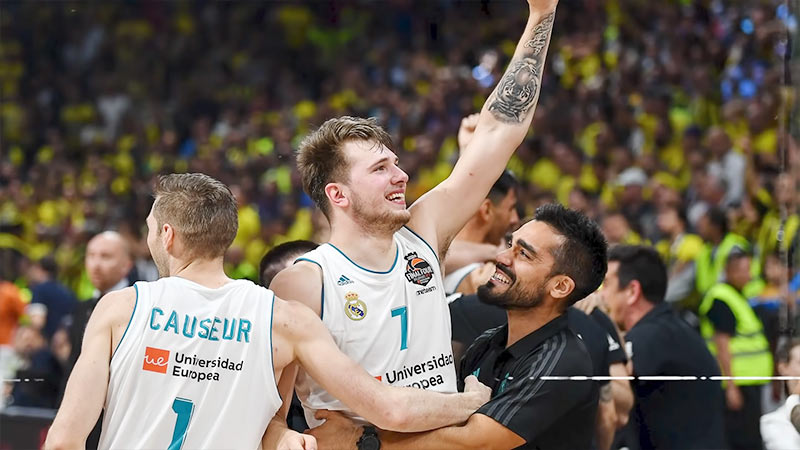
Luka Dončić is officially a Point Guard (PG) in the NBA, yet his physical presence mirrors a Small Forward (SF). Standing 6’7″ to 6’8″ and weighing 230 pounds, he occupies a unique Point Forward archetype.
While he serves as the primary ball-handler and lead facilitator on offense, his defensive assignments usually involve guarding larger wings or forwards. Statistically, he is tracked as a PG for all seasons following his rookie year.
Essentially, Dončić is a positional hybrid who combines the vision of a guard with the elite size of a forward.
Official Designation and Statistical Tracking
Understanding where an athlete sits on paper is the first step in decoding their impact. Official databases provide a clear starting point for how the league views this generational talent and his evolution.
The NBA Database View of Luka Dončić
Official NBA records and statistical databases like Basketball-Reference strictly classify Dončić as a Point Guard.
Since his second season, he has acted as the primary floor general, responsible for initiating the half-court offense and setting the tempo for the entire roster.
This designation ensures that in official box scores and league leaderboards, he competes against other guards for accolades and statistical rankings.
Historical Positional Shifts Since 2018
In his rookie year, Dončić was drafted as a multi-positional wing, splitting his time on court as a Shooting Guard and Small Forward.
However, his coaching staff moved him to the Point Guard role permanently in 2019 to better utilize his elite basketball IQ and passing precision.
This strategic shift allowed him to maximize his time with the ball, transforming him into one of the league’s most effective facilitators.
Offense vs. Defense: The Role Disconnect
The complexity of Dončić’s identity lies in the difference between his tasks on either end of the floor. This functional split is a hallmark of modern, high-level basketball strategies and player utilization.
Luka’s Dominance as a Lead Playmaker
On the offensive end, Dončić functions exclusively as a Point Guard. He consistently leads his team in assists and operates as the primary playmaker in high-frequency pick-and-roll sets.
His ability to manipulate opposing defenses through elite court vision and ball-handling defines his role as a guard, regardless of his physical stature or the height of his defenders.
Why Defensive Speed Dictates His Forward Role
Defensively, Dončić lacks the lateral speed required to effectively stay in front of smaller, “lightning-fast” traditional point guards.
Consequently, he typically defends Small Forwards or Power Forwards, using his 230-pound frame to rebound effectively while conserving his energy for a heavy offensive workload.
This defensive alignment is a tactical necessity that leverages his size over his foot speed.
The Executive Perspective: How GMs View Luka
Behind-the-scenes perspectives from league decision-makers offer a highly authentic view of positional value. Professional executives see a level of versatility where casual fans might only see a struggle to define a single role.
Ranking Among the Best Forwards and Guards
In an NBA General Manager Survey, league leaders voted Dončić as the best Small Forward in the game.
This demonstrates that while he handles guard duties on offense, his peer group and professional evaluators consider his physical and tactical impact to be that of an elite wing. This duality makes him a nightmare for opponents to game-plan against.
The Rarity of Multi-Positional Excellence
Remarkably, Dončić finished in the top five of three different categories in the same executive survey: Point Guard, Shooting Guard, and Small Forward.
He was the only player in the professional league to achieve such widespread recognition across disparate positional designations in the same period. This highlight reinforces the idea that his talent transcends traditional labels and fixed court roles.
Defining the Modern Point Forward Archetype
Labels often fail to capture the nuance of a player’s true essence in a fluid game. The Point Forward designation has emerged as the most fitting way to describe players who break the traditional mold.
Comparing Dončić to LeBron James and Grant Hill
Dončić follows the path of legendary players like LeBron James and Grant Hill. Like these icons, he possesses the size, strength, and rebounding traits of a forward but commands the ball-handling and playmaking responsibilities usually reserved for a traditional guard.
This combination of physical tools and guard-like skill sets defines the elite Point Forward archetype in the modern era.
The Evolution of Positionless Basketball
Modern basketball systems prioritize “positionless” play, where specific skill sets matter much more than a player’s height or weight.
Dončić exemplifies this trend perfectly, as he can facilitate an offense like a PG while battling for contested rebounds in the paint like a Power Forward. This fluidity is exactly what makes him one of the most versatile and impactful players in history.
Strategic Classification and Versatility Summary
The following points summarize how Dončić’s role is categorized across different professional contexts and why his hybrid nature is a tactical advantage:
- Physical Profile: Standing 6’7″ to 6’8″ and weighing 230 lbs, he has the frame of a traditional wing.
- Offensive Role: Functions as the primary ball-handler and lead facilitator in all offensive sets.
- Defensive Role: Usually assigned to guard Small Forwards (SF) or Power Forwards (PF) to utilize his size.
- Official Designation: Listed as a Point Guard (PG) in all major league databases and rosters.
- Executive Status: Voted the best Small Forward in the league while ranking in the top three for guards.
- Archetype: Best described as a “Point Forward” due to his blend of size and elite playmaking.
Frequently Asked Questions
Is Luka Dončić a PG or SF for fantasy basketball rosters?
For the purposes of fantasy leagues and official rosters, you should classify him as a Point Guard. While his physical traits allow him to play multiple roles, his primary statistical contributions in assists and ball-handling are those of a guard.
Why do GMs vote him as the best Small Forward?
NBA executives recognize that his physical impact on the game—such as rebounding and post-up play—is comparable to the best forwards in history.
Even though he plays the guard position offensively, his overall value is often categorized under the wing or forward umbrella.
Does Luka Dončić ever play Shooting Guard?
During his rookie season in 2018–19, he spent a significant portion of his minutes playing as a Shooting Guard and Small Forward. Since his second season, however, his role has been consolidated into that of a primary Point Guard to maximize his elite vision.
Can he guard traditional point guards?
Generally, he does not have the lateral quickness to defend the fastest guards in the league.
His teams strategically place him on larger wings or forwards, which allows him to use his strength for rebounding while avoiding high-speed defensive isolations that could lead to foul trouble.
Conclusion: Embracing the Hybrid Era
Dončić is the ultimate proof that the old ways of defining basketball positions are fading. Whether you call him a Point Guard because of his passing or a Small Forward because of his size, his impact remains undeniable.
By blending the responsibilities of multiple roles, he has become a blueprint for the future of the sport. His ability to dominate the game through vision, strength, and IQ ensures that he will remain a “positionless” superstar for years to come.
For fans and analysts alike, the most accurate takeaway is that he is a Point Forward whose unique identity is his greatest strength.