
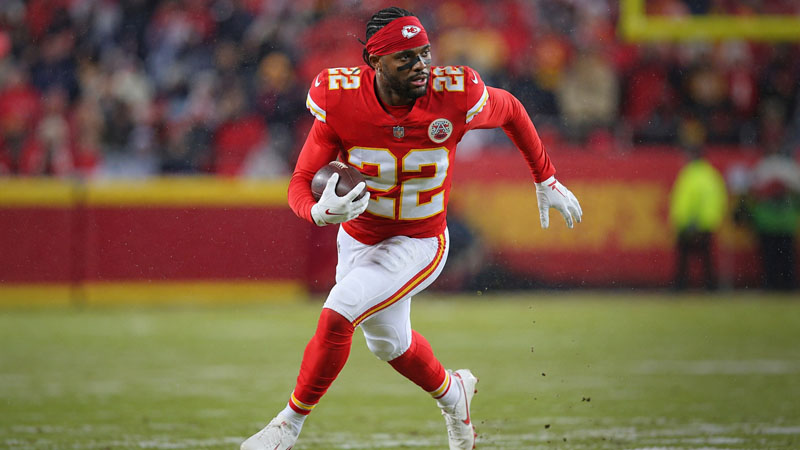
The rapid roster turnover in professional football often leaves fans wondering about the status of their favorite contributors.
A highly frequent question among football enthusiasts is whether defensive back Juan Thornhill is still a member of the Kansas City defensive backfield.
Juan Thornhill is no longer on the Kansas City Chiefs. Following a successful tenure in Kansas City, Thornhill departed the franchise after the conclusion of the 2022 season.
Since his departure, his professional journey has taken him through three different NFL franchises: the Cleveland Browns, the Pittsburgh Steelers, and the Jacksonville Jaguars.
To fully understand how a starting defensive back transitions from a championship-caliber team to a journeyman roster presence, we must examine the intricate business mechanics of the NFL.
This includes free-agent contracts, the physical toll of injuries, mid-season roster management, and the function of the practice squad.
1. The Business of Roster Turnover: Departing Kansas City
When a player departs a highly successful team, it is rarely due to a single factor. In professional football, roster construction is governed by a strict salary cap.
Teams that consistently reach the postseason often face the difficult challenge of paying their core stars, which frequently results in letting talented defensive contributors walk in free agency.
Thornhill’s departure after the 2022 season marked the end of an era. For the player, entering free agency represents an opportunity to secure market-value compensation based on years of proven performance.
For the franchise, it represents a calculated decision to rely on younger, cheaper draft picks to fill the void.
This transition highlights a fundamental reality of the modern NFL: long-term roster stability is exceptionally rare. Even key starters must navigate the financial constraints of franchises trying to balance their books while remaining competitive.
2. The Cleveland Browns Era (2023–2024): Free Agency and Contract Realities
Upon entering the free-agent market in the 2023 offseason, Thornhill secured a three-year contract with the Cleveland Browns.
This agreement was viewed as a major step forward, positioning him as a projected long-term starter in the AFC North.
However, the reality of NFL contracts is that they are rarely as secure as the initial headlines suggest. In professional football, multi-year agreements are highly dependent on health and immediate performance.
Thornhill’s stint in Cleveland lasted only two seasons (2023–2024) before the franchise chose to release him.
Why the Cleveland Stint Was Cut Short
The primary catalysts for Thornhill’s early release from the Browns were injuries and performance issues.
In the NFL, defensive back positions demand elite speed, rapid lateral movement, and intense physical contact. When injuries disrupt a player’s physical baseline:
- Reaction time and physical coverage capacity drop, making it difficult to match up against elite receivers.
- A player’s availability decreases, forcing the coaching staff to rely on backup players and alter defensive schemes.
- The salary cap cost of keeping an injured or underperforming player outweighs the value they provide on the field, leading to an early release.
Conceptualizing Multi-Year Contract Risks
The table below outlines how multi-year contracts can quickly shift from long-term investments to roster cuts due to physical and performance-related setbacks:
| Contract Element | Initial Expectation | Reality After Performance/Injury Setbacks |
|---|---|---|
| Duration | Three-year commitment to establish defensive stability. | Terminated after just two seasons due to diminished availability. |
| Financial Risk | Team allocates substantial salary cap space expecting elite starter production. | Team accepts “dead money” or cap penalties to clear the roster spot for healthier options. |
| Roster Role | Secured starting safety role anchoring the deep third of the field. | Backup players take over reps, making the veteran player expendable. |
3. The Pittsburgh Steelers Era (2025): The Short-Term Prove-It Deal
After being released by the Cleveland Browns, Thornhill remained within the highly competitive AFC North, signing a one-year contract with the Pittsburgh Steelers for the 2025 season.
In the NFL, a one-year contract is frequently referred to as a “prove-it” deal. For a veteran player coming off a release due to injuries, these short-term agreements serve a dual purpose:
- For the Player: It offers an opportunity to showcase that they have fully recovered from physical setbacks, re-establishing their market value for the next free-agency cycle.
- For the Team: It provides low-risk depth. The team secures an experienced veteran without committing long-term funding or risking future salary cap space.
The Dynamics of a Mid-Season November Release
Despite the potential of the signing, Thornhill’s time in Pittsburgh was short-lived. He was released by the Steelers in November 2025.
A mid-season release, particularly in November, is a highly challenging scenario for an NFL veteran.
In late autumn, teams are deep into their regular-season schedules, and their defensive schemes are highly solidified. Roster decisions in November are typically driven by very specific factors:
- Emergence of Younger Talent: If a younger, cheaper player on the roster showcases starting capability during practice or special teams play, the front office may choose to cut ties with a veteran to prioritize youth development.
- Salary Cap Adjustments: Releasing a player mid-season can sometimes free up minor financial flexibility or roster spots needed to address sudden injuries at other positions.
- Scheme Fit: As defensive coordinators adjust their schemes to combat late-season opponents, certain player profiles may no longer fit the weekly game plan.
4. The Jacksonville Jaguars Era (2025): Navigating the Practice Squad System
Following his November release from Pittsburgh, Thornhill shifted to the AFC South, where he finished the 2025 season as a member of the Jacksonville Jaguars’ practice squad.
To those unfamiliar with the business of football, seeing an experienced veteran with a multi-year starting pedigree on a practice squad can be surprising.
However, modern NFL roster rules have transformed the practice squad from a group of rookie prospects into a highly strategic unit containing both developmental players and seasoned veterans.
How the Modern NFL Practice Squad Operates
The practice squad plays a critical role in late-season survival for NFL teams. Under current league guidelines:
- Veteran Eligibility: Teams are permitted to carry a specific number of veterans with unlimited accrued seasons on their practice squads. This allows franchises to maintain a reservoir of experienced talent.
- Emergency Insurance: If a starting safety suffers an injury late in the year, having an experienced veteran on the practice squad allows the team to elevate a player who already understands the rigors of professional defense, rather than signing an outsider who does not know the playbook.
- Scout Team Value: Veterans on the practice squad provide immense value during weekly preparations. They mimic opposing defensive schemes, helping the starting offense prepare for upcoming matchups.
5. Mapping the Career Progression: From Kansas City to Jacksonville
The trajectory of a professional football player can change rapidly. The following structured timeline details Thornhill’s team transitions, contract types, and the specific factors that influenced each roster move:
Up to 2022: Kansas City Chiefs
- Roster Status: Active contributor and starter.
- Departure Catalyst: Ended his tenure following the completion of the 2022 season, entering the open free-agent market.
2023–2024: Cleveland Browns
- Roster Status: Signed a lucrative three-year contract.
- Departure Catalyst: Released early after two seasons due to a combination of physical injuries and inconsistent performance.
2025 (Early to Mid-Season): Pittsburgh Steelers
- Roster Status: Signed a short-term, one-year contract to provide defensive depth.
- Departure Catalyst: Released mid-season in November 2025 as the team adjusted its roster for the late-season push.
2025 (Late Season): Jacksonville Jaguars
- Roster Status: Signed to the practice squad.
- Current Standing: Finished out the remainder of the 2025 league year providing defensive depth in Jacksonville.
6. Factual Summary of Post-Chiefs Team Stints
To compare how each post-Chiefs stop differed in duration and contract structure, the table below provides a concise breakdown of his movements across the league:
| Calendar Years | NFL Franchise | Contract Type | Outcome / Exit Reason |
|---|---|---|---|
| Up to 2022 | Kansas City Chiefs | Rookie/Standard Contract | Departed after the 2022 season. |
| 2023–2024 | Cleveland Browns | Three-Year Free Agent Deal | Released after two seasons due to injuries and performance. |
| 2025 | Pittsburgh Steelers | One-Year Contract | Released in November mid-season. |
| 2025 | Jacksonville Jaguars | Practice Squad Contract | Completed the 2025 season on the practice squad. |
7. Key Takeaways for Football Analysts
Thornhill’s post-Kansas City path serves as a highly educational case study on the realities of the modern National Football League. Analysts and fans can draw several crucial conclusions from his career movement:
- The Inherent Volatility of NFL Contracts: Even when a player signs a multi-year deal in free agency, NFL teams hold the leverage to terminate agreements early if injuries or performance drop below baseline expectations.
- The Impact of Injuries on Longevity: Physical setbacks do not just affect a player’s health; they directly alter their career trajectory by forcing transitions from long-term starter to short-term depth options.
- The Evolution of the Practice Squad: Once reserved strictly for rookies, the practice squad is now a landing spot for proven veterans looking to stay in the league, stay in football shape, and wait for their next opportunity.
- Life After a Dynastic System: Departing a highly stable, winning culture like Kansas City often means navigating a highly turbulent landscape of varying coaching staffs, defensive schemes, and roster philosophies.
Conclusion
The transition from a starting role on a prominent roster to navigating multiple franchises is a common story in professional sports.
Juan Thornhill’s journey since leaving Kansas City after the 2022 season highlights the thin line between starting security and journeyman status.
While his time with the Browns and Steelers was cut short by injuries, performance, and mid-season cuts, finishing the 2025 season on the Jaguars’ practice squad demonstrates his continued persistence in the professional ranks.
As the league moves into future seasons, Thornhill’s path remains a primary example of how quickly the business of football can move, and how resilient players must be to sustain their careers in the NFL.






