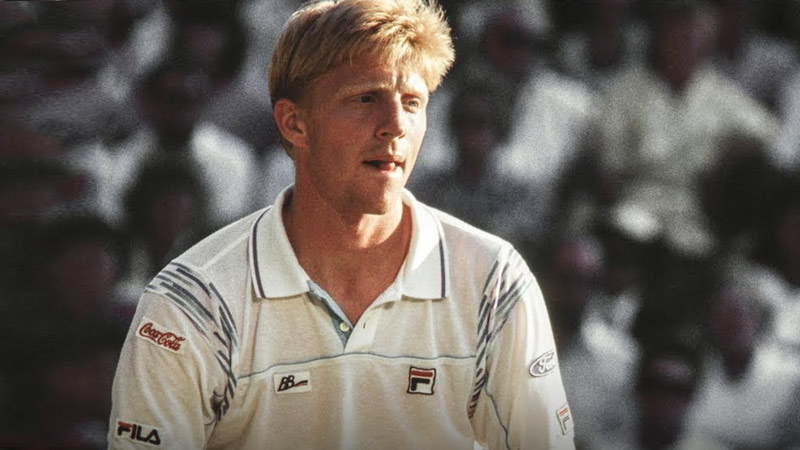
Boris Becker has officially retired from professional tennis coaching as of February 2024. Following his brief but impactful tenure with Danish star Holger Rune, the six-time Grand Slam champion confirmed he will no longer pursue full-time roles on the ATP circuit.
Becker now prioritizes his international media obligations and personal family responsibilities, citing the grueling travel demands of the professional circuit and his own legal travel restrictions as primary deterrents for continuing in a managerial capacity.
While he remains open to occasional background consultations for elite players, his era as a “super coach” has concluded.
Is Boris Becker Still Coaching? Understanding His Final Retirement
The professional landscape for Boris Becker shifted significantly in early 2024 when he formally ruled out a return to the coaching circuit. His decision marks the end of a career where he influenced some of the most prominent figures in modern tennis history.
| Professional Status | Details |
|---|---|
| Current Coaching Status | Retired (as of February 2024) |
| Last Player Coached | Holger Rune |
| Primary Focus | Media, Broadcasting, and Consulting |
| Notable Outlets | Sky Italia, Eurosport |
| Available for | Background consultations only |
The Official Announcement and Strategic Pivot
Becker’s departure from the coaching box was not a sudden impulse but a reflection of his current professional constraints. He stated clearly that his time in the active coaching role is over, preferring to focus strictly on his media work and family life.
This transition allows him to remain an influential figure in tennis without the physical and logistical burdens of the 11-month ATP tour schedule.
Current Media and Consulting Engagements
Following his coaching retirement, Becker has successfully pivoted into high-level media roles, serving as a tennis pundit and commentator for major global networks. By working with Sky Italia and Eurosport, he utilizes his analytical depth to provide insights to a global audience.
Additionally, he maintains a presence in the sport through “behind-the-scenes guidance,” offering tactical advice to active players without the commitment of a formal partnership.
The Legendary Partnership: Analyzing the Novak Djokovic Era (2013–2016)
Boris Becker’s legacy as a “super coach” was solidified during his three-year tenure with Novak Djokovic. This partnership is widely regarded as one of the most successful in the history of professional tennis, fundamentally altering the trajectory of Djokovic’s career.
The Strategic Mission for Grand Slam Dominance
When Djokovic hired Becker in December 2013, the goal was to overcome a specific hurdle: losing high-stakes Grand Slam finals. Despite being an established champion, Djokovic was struggling with the mental pressure of finishing major tournaments.
ecker, having won six Grand Slams as a player, provided the psychological blueprint necessary to convert deep runs into trophies.
Quantitative Success and Statistical Milestones
The statistical output of the Becker-Djokovic era remains a benchmark for coaching excellence in the modern era.
- Grand Slam Titles: 6 (including two Australian Opens, two Wimbledons, one US Open, and one French Open).
- Career Grand Slam: Completed at the 2016 French Open, a feat that had eluded Djokovic previously.
- ATP Masters 1000 Titles: 14 victories across the elite tier of professional tennis.
- World Ranking: Djokovic maintained the No. 1 spot for 122 consecutive weeks under Becker’s guidance.
Psychological and Tactical Innovation
Becker’s impact extended beyond simple court drills; he introduced cognitive training methods rarely seen in tennis at the time.
He famously used chess as a training tool to sharpen Djokovic’s mental clarity, court strategy, and ability to think several moves ahead of his opponents. This focus on a “champion’s mindset” helped Djokovic manage public scrutiny and remain calm under extreme pressure.
The Holger Rune Project: A Different Kind of Coaching Challenge
In October 2023, Becker returned to the tour to assist Danish talent Holger Rune. This role was distinct from the Djokovic partnership, as it focused on crisis management and the development of a raw, young talent rather than the fine-tuning of an established legend.
Stabilizing a Career in Crisis
When Becker joined Rune’s team, the 20-year-old was in the midst of a severe confidence collapse, having lost 10 of his previous 11 matches. Becker immediately focused on stabilizing Rune’s baseline game and mental approach.
The results were immediate, as Rune snapped his losing streak and reached the Basel ATP 500 Semifinals under Becker’s mentorship.
Achieving Season-End Objectives
The primary goal of the short-term partnership was to ensure Rune qualified for the prestigious year-end Nitto ATP Finals. Becker successfully guided Rune to this milestone, proving his ability to deliver high-impact results in a limited timeframe.
However, the partnership ended in February 2024, less than five months after it began, due to Becker’s inability to commit to full-time travel.
The “Super Coach” Methodology: Core Philosophies of Boris Becker
Becker’s coaching model is built on elite-level, first-hand experience rather than data-heavy analytics. His approach is categorized by several key pillars that differentiate him from traditional technical coaches.
The Principle of Simplicity in Technical Fixes
Rather than overloading a player with complex data or biomechanical changes, Becker identifies one or two critical positional flaws. He offers a simple, executable fix and trusts the player’s natural talent to implement it under pressure.
This prevents “analysis paralysis” during high-intensity matches.
Prioritizing the Champion’s Mindset
A central tenant of Becker’s philosophy is that technical skill is secondary to mental resilience. His coaching focuses on:
- Managing Expectations: Helping players deal with the weight of being a favorite.
- Public Scrutiny: Teaching athletes how to navigate media pressure and external distractions.
- Pressure Management: Utilizing his experience on Center Court to guide players through the “big points” in a match.
Why Did Boris Becker Stop Coaching? Logistics and Limitations
The decision to retire from full-time coaching was influenced by a combination of professional, personal, and legal factors that made the tour lifestyle unsustainable for Becker.
International Travel Restrictions
A significant barrier to Becker’s coaching career was his ongoing international travel limitations. Following his legal issues and eight-month prison sentence in the UK for financial bankruptcy violations, his ability to attend key tournaments in person was severely restricted.
In professional tennis, a head coach who cannot attend Grand Slams or Masters 1000 events consistently cannot fulfill the role effectively.
Private and Professional Responsibilities
Becker explicitly cited “private and professional responsibilities” as a reason for his split from Holger Rune and his subsequent retirement.
The 11-month ATP tour requires a level of dedication that clashed with his desire to focus on his family and his established media career.
Frequently Asked Questions (FAQ)
What is Boris Becker doing now?
Boris Becker is currently working as a tennis pundit and commentator for major media outlets such as Sky Italia and Eurosport. He also provides occasional background consulting for professional players.
Why did Boris Becker and Holger Rune stop working together?
The partnership ended because Becker could not commit to the extensive travel and time requirements needed for Rune’s success. His international travel restrictions also prevented him from attending several key tournaments.
How many Grand Slams did Djokovic win with Becker?
Novak Djokovic won six Grand Slam titles during his three-year partnership with Boris Becker. This included his first French Open title, which completed his Career Grand Slam.
Will Boris Becker ever return to full-time coaching?
No, Becker has formally ruled out a return to the coaching circuit, stating that his time in that specific role is officially over.