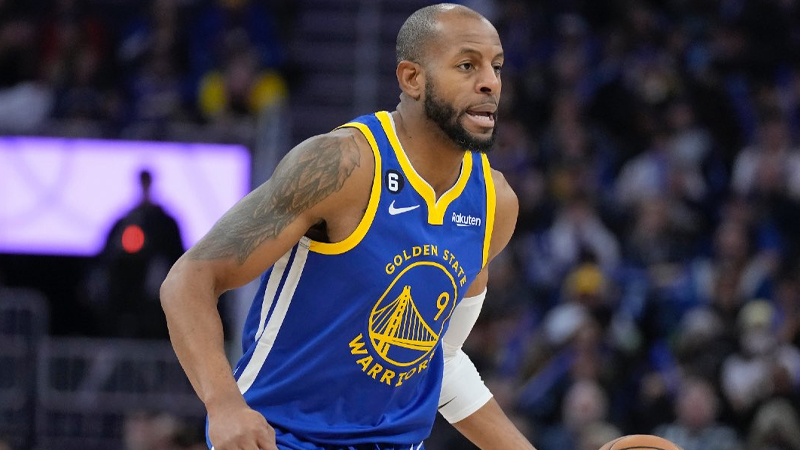
Andre Iguodala is officially eligible for the Naismith Memorial Basketball Hall of Fame in 2027, sparking one of the most intense debates in modern sports media.
His candidacy is a unique puzzle that challenges how we define greatness—balancing traditional statistical dominance against the intangible impact of a defensive anchor for a historic dynasty.
While his career scoring averages are modest, his trophy case is overflowing with four NBA championships and a Finals MVP trophy.
This analysis evaluates the intricate details of his resume to determine if his “winning” pedigree is enough to overcome a lack of traditional superstar volume.
The “Golden Ticket” of Championship Pedigree
The primary foundation for Andre Iguodala’s Hall of Fame case rests on his association with the Golden State Warriors’ dynasty and his specific individual achievements during that run.
In the world of professional basketball, winning is the ultimate currency, and few players in the 21st century have a more decorated collection of team success than the man frequently referred to as the “Hamptons Five” anchor.
The Finals MVP Precedent
Winning an NBA Finals MVP is historically considered a “golden ticket” to Springfield. Almost every retired player who has earned this honor is currently in the Hall of Fame, with very few exceptions like Chauncey Billups (who was eventually inducted) and Cedric Maxwell.
Iguodala earned this distinction in 2015 for his pivotal role in swinging the series against the Cleveland Cavaliers.
His defensive performance against LeBron James was the primary catalyst for the award, as he became the first player to win Finals MVP without starting a single game during the regular season.
This award places him in an elite group that includes legends like Magic Johnson, Larry Bird, and Kobe Bryant. For many voters, this single accolade acts as a definitive stamp of Hall of Fame quality.
A Legacy Defined by Winning
Iguodala is a four-time NBA Champion, securing titles in 2015, 2017, 2018, and 2022. Beyond the NBA, his resume is bolstered by his contributions to Team USA on the international stage.
He is a two-time Gold Medalist, having won at the 2010 FIBA World Championship and the 2012 London Olympics.
When combining these international honors with his four rings, an All-Star appearance, and a Finals MVP, he joins an incredibly small circle of players who have achieved that specific “grand slam” of basketball accomplishments.
Historically, the Hall of Fame has been very inclusive of players who were essential components of multiple championship teams, even if they weren’t the leading scorers.
Analyzing the Statistical Disconnect
The controversy surrounding Iguodala’s candidacy stems almost entirely from his traditional box-score statistics, which are significantly lower than the average Hall of Famer.
To understand the case against him, one must look at the “volume vs. impact” divide that defines his nineteen-year career.
Regular Season Averages vs. All-Star Norms
Iguodala’s career averages of 11.3 points, 4.9 rebounds, and 4.2 assists per game do not immediately scream “Hall of Famer” to the casual observer.
Throughout his long career, he was selected as an All-Star only once, in 2012, while playing for the Philadelphia 76ers. He also never received an All-NBA selection, an honor usually reserved for the top 15 players in the league in a given year.
According to Basketball Reference’s Hall of Fame Probability model, which heavily weights volume statistics and individual accolades, Iguodala has only a 12.7% chance of induction.
This disconnect highlights the challenge for voters: should they rely on mathematical models that favor high-scoring “alphas,” or should they reward the versatility and defensive genius that Iguodala provided?
The Sacrifice of Stardom for a Dynasty
A major factor in Iguodala’s lower career statistics was his intentional transition from a primary scoring option to a specialist role. During his first eight seasons in Philadelphia, he was an All-Star caliber player, averaging 15.3 points, 5.8 rebounds, 4.9 assists, and 1.7 steals per game.
He was the face of the franchise and could have continued to “pad” his stats as a leading man for other teams.
Instead, upon joining the Golden State Warriors in 2013, he committed to becoming a full-time sixth man and a defensive stopper. This sacrifice was the engine that powered the Warriors’ “Death Lineup”.
By choosing team success over personal numbers, he likely lowered his statistical probability for the Hall of Fame while simultaneously increasing his championship count—a trade-off that many basketball purists believe should be rewarded, not punished.
The Case for Defensive Mastery
While offensive stats are often the headline, the Naismith Hall of Fame has a history of recognizing defensive specialists who impacted the game on the other end of the floor. Iguodala was widely considered one of the premier perimeter defenders of his generation.
Historical Precedents for Defensive Specialists
The recent induction of players like Michael Cooper and the presence of defensive legends like K.C. Jones in the Hall of Fame provides a clear path for Iguodala.
K.C. Jones, for instance, was a career role player for the Boston Celtics who won eight championships but never made an All-Star team and averaged only 7.4 points per game.
Iguodala arguably has a much stronger case than Jones, as he was an All-Star, a Finals MVP, and possessed a much higher peak as a primary player.
If the Hall of Fame is meant to tell the story of the game, it is impossible to discuss the 2010s era of basketball without mentioning Iguodala’s defensive impact on LeBron James and other elite stars.
Key Defensive Accolades and Impact
| Category | Andre Iguodala Achievement |
|---|---|
| All-Defensive Teams | 2-time selection (First Team 2014, Second Team 2011) |
| Defensive Anchor | Primary stopper for the 4-time champion Warriors dynasty |
| 2015 Finals Performance | Credited with “shutting down” LeBron James to win Finals MVP |
| Career Steals | Over 1,500 regular season steals |
| Career Blocks | Over 500 regular season blocks |
Secret Statistical Greatness: The “Elite Five” Club
While his per-game averages are low, his career longevity and versatility have placed him in a statistical category occupied only by the greatest players to ever step on the court. When you look at cumulative totals rather than averages, the narrative around Iguodala shifts dramatically.
Joining the Legends of Versatility
Iguodala is part of an incredibly exclusive group of players who have reached specific milestones in points, rebounds, assists, steals, blocks, and three-pointers. He is one of only five players in NBA history to accumulate:
- 12,000 Points
- 5,000 Rebounds
- 4,500 Assists
- 1,500 Steals
- 500 Blocks
- 1,000 Three-pointers.
The other four players in this club are Vince Carter, Kobe Bryant, Paul Pierce, and LeBron James. All of these players are either already in the Hall of Fame or are unanimous first-ballot locks.
This “Elite Five” club proves that while Iguodala wasn’t a specialist in just one area, he was a master of every facet of the game over a long period.
A Playoff Performer Extraordinaire
Iguodala’s value increased as the stakes got higher. He is recognized as one of the best and most clutch playoff performers in league history. In the postseason, he is one of only seven players to ever record at least 1,500 points, 600 rebounds, 500 assists, 190 steals, 60 blocks, and 160 three-pointers.
He reached these milestones in fewer than 150 playoff games, a feat only matched by Clyde Drexler. The list of players with similar playoff production includes Scottie Pippen, James, Bryant, and Pierce.
Being mentioned in the same breath as these icons during the most critical moments of the season is a powerful argument for his induction.
The Human Element: Perspectives and Projections
Beyond the numbers and the trophies, the conversation around Iguodala includes personal perspectives and the unique nature of the Basketball Hall of Fame itself, which differs from other sports in its inclusivity.
Iguodala’s Own Surprising Stance
Interestingly, the biggest critic of Andre Iguodala’s Hall of Fame case might be Andre Iguodala himself. He has publicly stated that he does not believe he belongs in Springfield, arguing that the honor should be reserved strictly for “top-tier superstars” who were flawless throughout their careers.
This humble perspective is consistent with the selflessness he showed throughout his playing days, but it rarely deters voters. Many players who were modest about their own accomplishments have been inducted based on the respect of their peers and the objective impact they had on the sport’s history.
Why Eventual Induction is Likely
The Naismith Memorial Basketball Hall of Fame is notoriously more inclusive than the Pro Football Hall of Fame or the National Baseball Hall of Fame. It considers a player’s “entire body of work,” including college (he was a star at Arizona) and international play.
While he might not be a “first-ballot” inductee in 2027, the combination of his four rings, his Finals MVP, his Olympic success, and his advanced statistical “Elite Five” status makes him a near-lock for eventual induction.
Voters tend to reward the “story” of the game, and Andre Iguodala is a central character in the story of one of the greatest eras in NBA history.
Frequently Asked Questions
When will Andre Iguodala be eligible for the Hall of Fame?
He will officially become eligible for induction in 2027, following the standard waiting period after retirement.
How many NBA championships did Andre Iguodala win?
Iguodala won four NBA championships, all with the Golden State Warriors (2015, 2017, 2018, and 2022).
Did Andre Iguodala win a Finals MVP?
Yes, he won the Finals MVP in 2015 for his defensive and offensive contributions during the Warriors’ victory over the Cleveland Cavaliers.
What are Iguodala’s career stats?
He averaged 11.3 points, 4.9 rebounds, and 4.2 assists per game over 19 seasons.
Who are some Hall of Famers with similar stats to Iguodala?
K.C. Jones is often cited as a precedent, as he was a defensive-minded role player for a dynasty who averaged only 7.4 points per game but won eight titles.
Conclusion: The Ultimate Glue Man’s Legacy
The debate over Andre Iguodala’s Hall of Fame status is ultimately a debate about what we value in basketball. If the Hall is strictly for the highest scorers and most dominant individual forces, his case is weak.
However, if the Hall is meant to honor those who mastered the art of winning and provided the essential “glue” for a historic dynasty, he is an easy choice.
Iguodala’s career is a masterclass in versatility and sacrifice. From his days as an All-Star in Philadelphia to his role as the veteran leader of the Warriors, he consistently did whatever was necessary to help his team succeed.
With a Finals MVP, four rings, and two Olympic Gold Medals, his resume is simply too distinguished to ignore. Expect to see Andre Iguodala eventually take his place among the legends in Springfield, proving once and for all that impact is measured in more than just points per game.