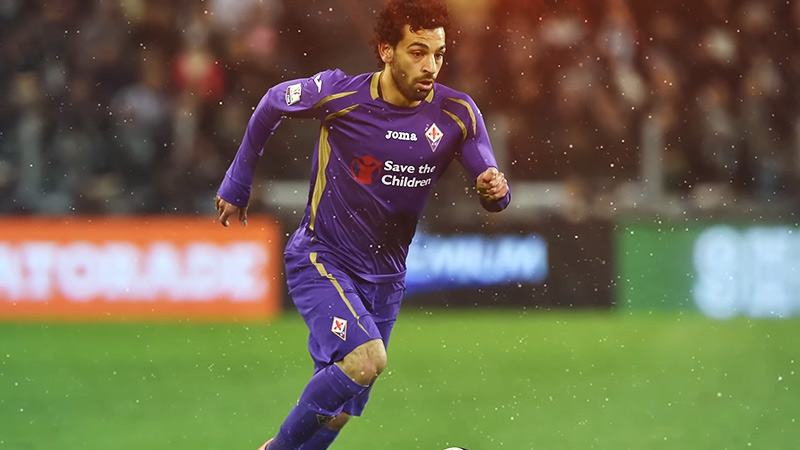
Mohamed Salah is now a household name, but his path to the pinnacle of world football was anything but guaranteed.
Before the Champions League trophies and Golden Boots, there was a young boy in Nagrig with a dream that seemed geographically and logistically impossible.
His discovery was not the result of a high-tech data algorithm, but rather a series of “lucky accidents” and an unwavering work ethic that defined his character.
Understanding how Salah was discovered provides a masterclass in resilience, showing how a combination of raw talent and a transformative position change reshaped the history of football forever.
The Scouting “Accident” at Al Mokawloon
The story of Mohamed Salah’s professional discovery is often described by scouts as a “lucky accident”. At the age of 14, the trajectory of his life changed during a routine scouting mission by Al Mokawloon Al Arab (Arab Contractors).
Interestingly, the scout in attendance had not traveled to see Salah; he was there to evaluate another young player. This moment serves as a reminder of how thin the margins are in professional sports scouting.
The Impact of Raw Athleticism
During the match, the scout became increasingly distracted from his original target by Salah’s overwhelming physical and technical attributes. Even at a young age, his explosive speed and “sharp left foot” were impossible to ignore.
Instead of signing the player he originally intended to watch, the scout invited Salah to join the club’s prestigious youth academy in Cairo.
A Diamond in the Rough
At this stage, Salah was far from a finished product, but the Al Mokawloon scout recognized the “intangibles”—the pace that could unbalance any defense and a natural comfort with the ball on his left side.
This serendipitous encounter was the spark that moved Salah from the rural schoolyards of Nagrig into the structured environment of one of Egypt’s most respected football institutions.
The Pepsi League: A Foundation for Grassroots Talent
Before Salah ever stepped foot into a professional academy, his talent was nurtured through the Pepsi League.
This school-based competition is a cornerstone of the Egyptian football ecosystem, designed specifically to identify young talent across the country’s diverse provinces.
For many children in remote areas, this league represents the only viable pathway to being seen by professional representatives.
The Importance of Competitive School Sports
| Feature | Impact on Salah’s Career |
|---|---|
| National Reach | Allowed a boy from the small village of Nagrig to compete on a larger stage. |
| Talent Density | Provided high-level competition that sharpened his early technical skills. |
| Scouting Visibility | Served as the primary filter for professional clubs to find rural prospects. |
The Pepsi League provided the necessary visibility for Salah to be in a position where he could eventually be spotted by Al Mokawloon. Without this grassroots infrastructure, the “lucky accident” that defined his discovery might never have occurred.
The Brutal Commute: Resilience Beyond the Pitch
One of the most defining aspects of Salah’s discovery and early development was the sheer physical and mental toll of his daily routine.
After joining the Al Mokawloon academy, Salah faced a logistical nightmare that would have broken most aspiring athletes. Nagrig, his home village, was far removed from the training grounds in Cairo.
The Five-Bus Daily Grind
Salah spent years making a grueling four-to-five-hour daily round trip to attend training sessions. This journey involved navigating a complex network of five different buses each way.
This meant that for several years, Salah was spending nearly ten hours a day just in transit, all for the chance to train for a few hours in the evening.
Mental Fortitude as a Competitive Advantage
This period of his life is often cited as the foundation of his elite work ethic. While his peers were resting or focusing solely on their skills, Salah was learning the discipline of sacrifice.
The determination required to maintain such a schedule while still performing at a high level on the pitch was a clear indicator to his coaches that he possessed the psychological strength necessary for the professional game.
The Tactical Discovery: From Defender to Forward
Perhaps the most shocking revelation in Salah’s origin story is that he was not “discovered” as a striker or a winger. In his early years at the academy, he originally played as a left-back.
His transition to the forward line, which eventually led to his global stardom, was triggered by a specific emotional event that caught his coach’s attention.
The 4-0 Win and the Tears of a Competitor
During a youth match, Al Mokawloon secured a convincing 4-0 victory. Despite the team’s success, Salah was found crying after the game.
When his youth coach questioned why he was upset after a win, Salah revealed his frustration: he hadn’t managed to score any of the goals himself. This moment of intense competitive desire changed the coach’s perspective on Salah’s utility.
The Immediate Success of the Position Switch
Recognizing his player’s hunger for goals and his natural pace, the coach moved Salah from his defensive role to the forward line. The results were instantaneous and undeniable.
In his first season playing as a forward, Salah scored a staggering 30 goals. This tactical shift was effectively a second “discovery” within his career, revealing the prolific goalscorer that the world knows today.
Professional Breakthrough and the Senior Debut
Salah’s ascent through the ranks of Al Mokawloon was rapid. His performance in the youth leagues, combined with his legendary work rate, made it impossible for the senior management to ignore him for long.
By the age of 15, he had already caught the eye of the first-team manager, Mohamed Radwan.
Promotion at Age 15
Radwan noticed Salah’s unique combination of speed and finishing ability and made the bold decision to promote him to the senior squad immediately.
Making a debut in the Egyptian Premier League at such a young age is a rare feat, and it solidified Salah’s reputation as the “next big thing” in Egyptian football.
Navigating Professional Pressures
Entering the senior squad as a teenager required Salah to adapt his game to face grown men who were often much stronger and more experienced.
However, the years of grueling commutes and the discipline he developed in the Pepsi League had prepared him for this transition. His time in the senior Egyptian league served as the final testing ground before Europe came calling.
The FC Basel Friendly: The Gateway to Europe
The final stage of Salah’s discovery involved his transition from a domestic Egyptian star to an international prospect. This move was accelerated by unforeseen circumstances in his home country.
In 2012, the Egyptian Premier League was suspended, leaving the nation’s top talents without a platform to play.
A Strategic Audition
During this period of league suspension, the Swiss club FC Basel saw an opportunity to evaluate Salah in a controlled environment. They organized a friendly match against the Egypt U-23 team specifically to see him in action.
This was a high-stakes audition where Salah had to prove he could compete against European-level defenders.
The Sub Who Changed Everything
Salah did not even start the match; he came on as a second-half substitute. Within his limited time on the pitch, he scored two goals, effectively dismantling the Basel defense with his signature pace and clinical finishing.
The Swiss club was so impressed by this performance that they signed him shortly after the match concluded. This friendly was the definitive bridge that allowed Salah to take his “discovered” talent to the global stage.
Frequently Asked Questions About Salah’s Discovery
Who was the first person to scout Mohamed Salah?
Salah was first spotted by a scout from the Egyptian club Al Mokawloon Al Arab. The scout had actually come to watch a different child play but was captivated by Salah’s speed and his ability with his left foot.
What was Mohamed Salah’s original position?
In a surprising twist for one of the world’s greatest attackers, Salah began his journey as a left-back.
He was only moved to the forward position after his youth coach noticed his extreme desire to score goals, which even led to Salah crying when he failed to find the net in a 4-0 win.
How long was Salah’s commute to training?
Salah’s commitment to his discovery was unparalleled. He traveled for four to five hours every single day to get from his village, Nagrig, to Cairo. This journey involved switching between five different buses to reach the training ground.
How did Salah get his move to Europe?
His move to Europe was facilitated by a friendly match between FC Basel and the Egypt U-23 team. After coming on as a substitute and scoring two goals, FC Basel was convinced of his talent and offered him a contract.
Conclusion: A Legacy of Persistence
The discovery of Mohamed Salah is a narrative defined by the intersection of luck and labor.
From the “lucky accident” of a scout looking the wrong way to the tactical genius of a coach who saw a striker hidden in a left-back, Salah’s journey is a testament to the fact that talent must be met with opportunity.
However, it was Salah’s own resilience—exemplified by the five-bus commute and his emotional drive to succeed—that ensured he would not just be discovered, but that he would go on to conquer the world of football.
His story remains a powerful reminder to scouts and players alike that the next global icon might be just one bus ride, or one position change, away from greatness.