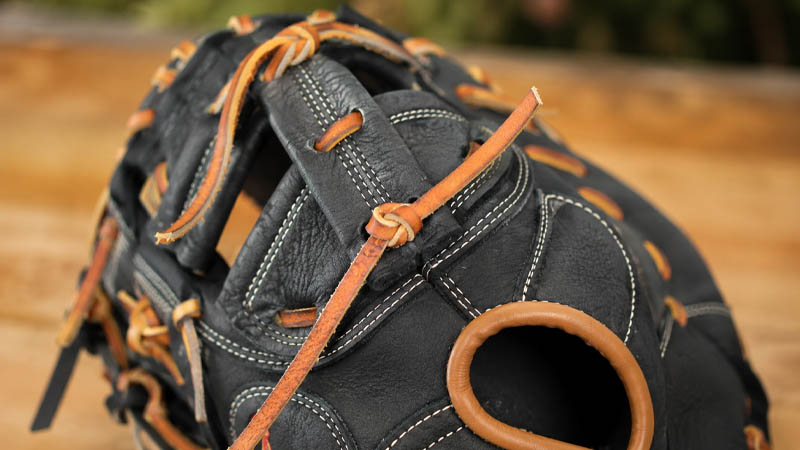
A loose lace during a high-stakes play isn’t just an inconvenience—it can compromise the structure of your glove, cause missed catches, or lead to injuries.
Whether you are re-lacing a newly conditioned glove or replacing a snapped strand on a trusty favorite, mastering the precise technique to tie a baseball glove knot is an essential skill for every player, coach, and equipment coordinator.
While shoelaces rely on friction and bows, leather lace on a baseball glove requires a structured, flat-lying knot that resists extreme dynamic forces.
This comprehensive guide breaks down the mechanics, step-by-step techniques, and professional maintenance practices to keep your glove tight, balanced, and game-ready.
Why the Square Knot is the Gold Standard
When securing finger stalls, thumb straps, or pinky loops, there is only one knot approved by professional glove craftsmen: the Square Knot (frequently called a box knot).
          [Right Strand]         [Left Strand]
                 \                     /
                  \                   /
                   ---> Right over Left ---> (First Twist)
                               |
                   <--- Left over Right <--- (Second Twist)
                 /                     \
                /                       \
        [Flat Side Out]         [Flat Side Out]
The Physics of Leather Tension
Baseball leather lace is thick, relatively rigid, and smooth on one side (the grain) while textured on the other (the suede). Standard shoe knots fail on leather because their geometry causes them to bulge outward.
A properly executed Square Knot offers distinct physical advantages:
- Zero Interior Bulge: It lays completely flat against the leather shell, eliminating internal pressure points that cause blisters or discomfort along your fingers.
- Balanced Tension Distribution: Pulling on either side tightens the knot against itself rather than slipping loose.
- Impact Resistance: Repeated shocks from high-velocity baseballs naturally lock the leather grain together instead of working the knot open.
Understanding Your Materials: Grain vs. Suede
Before tying a single loop, inspect the leather lace. Standard raw-hide glove lace has two distinct sides:
- Grain Side: The smooth, polished exterior. It resists moisture, handles dirt exposure, and provides the necessary surface finish for sliding tightly into place.
- Suede Side: The rough, fibrous underside. This side creates natural friction when compressed against another suede layer.
Rule of Thumb: Always keep the smooth grain side facing outward as you form loops. Exposing the rough suede side on the finished knot looks unrefined and accelerates wear from dirt and surface abrasion.
Step-by-Step: Tying the Perfect Glove Square Knot
Follow these four steps precisely when finishing off finger, thumb, or pinky lace lines.
Step 1: The First Cross
Hold one strand of leather lace in each hand. Take the strand in your right hand and cross it directly over the strand in your left hand.
Step 2: The Under Loop
Take that same top strand (originally from the right), tuck it under the left strand, and pull it through. You have now completed a single basic twist. Draw this single twist down firmly until it rests flush against the glove body.
Step 3: The Switch (The Crucial Step)
Take the strand now in your left hand (which was originally the right strand) and cross it over the strand in your right hand.
Step 4: The Final Tuck and Set
Tuck that left strand under the right strand and thread it through. Grasp both free ends and pull simultaneously with steady, firm pressure outward to the sides.
Visual Verification
A correctly tied square knot features two interlocking loops that lay flat against each other. Both loose ends will point sideways (parallel to the glove surface), rather than sticking straight up or down.
Common Pitfalls: Square Knot vs. Granny Knot
The single most common mistake during glove maintenance is accidentally tying a Granny Knot.
+------------------+----------------------------------+----------------------------------+
| Feature          | Square Knot                      | Granny Knot                      |
+------------------+----------------------------------+----------------------------------+
| Sequence         | Right over Left, Left over Right | Right over Left, Right over Left |
| Profile          | Low-profile, completely flat     | Bulky, raised, circular ball     |
| Durability       | Self-tightening under impact     | Loosens easily during play       |
| End Orientation  | Points sideways (parallel)       | Points up and down (perpendicular)|
+------------------+----------------------------------+----------------------------------+
Why the Granny Knot Fails
When you repeat “Right over Left” twice in a row, the geometry of the knot changes. Instead of interlocking neatly, the leather twists across itself, creating a raised lump. On the inside of a thumb or pinky stall, this lump presses into your hand every time you squeeze the glove. Under the stress of catching a ball, a Granny Knot slowly unravels as the leather stretches.
Advanced Field Techniques: Re-Lacing Specific Zones
Different areas of a glove require slight variations in how you tension and anchor your knots.
1. Thumb and Pinky Stalls
- Objective: Keep the glove anchored tightly to your outer fingers without internal friction.
- Tension level: Extremely tight.
- Technique: Pull the strands taut using needle-nose pliers before committing to the second cross of your knot. Ensure the knot rests squarely on the exterior eyelet, never partially pulled into the hole.
2. The Webbing Top Line
- Objective: Allow optimal web expansion without snapping leather.
- Tension level: Moderate with structured flexibility.
- Technique: Do not pull the initial twist down to maximum tension. Leave approximately 1/16th of an inch of leeway. The leather will naturally settle and lock under impact.
3. Finger Hoods and Wrist Closures
- Objective: Maximum comfort against skin or batting gloves.
- Tension level: Tailored to player preference.
- Technique: Trim remaining lace tails down to approximately 1 to 1.5 inches after setting the knot. Tails left too long will snag on clothing; tails cut too short risk pulling through if the leather stretches when wet.
Pro Tips for Leather Handling and Longevity
Working with raw-hide leather requires specific handling methods to preserve the integrity of the material.
- Hydrate Before Tying: Dry leather lace is prone to cracking when pulled into tight radius bends. Apply a light layer of specialized glove conditioner or warm water to the knot zone 5 minutes before tying. This makes the fibers pliable and allows them to lock tightly.
- The “Twist and Scoot”: As you perform the second cross in Step 3, leather lace often tries to flip over. Before applying final tension, manually roll the lace between your thumb and forefinger to ensure the smooth grain side remains visible on both loops.
- Pliers Placement: When pulling knots tight, avoid clamping serrated plier teeth directly onto the central knot area, as this can score and weaken the leather fibers. Instead, clamp the free ends beyond where you plan to trim.
Frequently Asked Questions
How long should I leave the lace ends after tying the knot?
Leave between 1 inch and 1.5 inches of tail on free ends. Leather naturally stretches over time, especially when exposed to moisture and sweat. Leaving a small tail ensures you can re-tighten and re-knot the strand later without needing a full lace replacement.
Can I use liquid threadlocker or glue to secure a glove knot?
No. Chemical adhesives can degrade raw-hide leather fibers over time, making them brittle and prone to sudden snapping. A properly tied Square Knot relies on mechanical friction and will not come undone naturally.
Why does my knot keep turning out crooked?
A crooked knot indicates that the tension was applied unevenly during the final pull, or that the leather twisted during Step 3. Undo the second half, untwist the lace so the smooth grain side faces outward, and pull both strands simultaneously with equal force sideways.
How often should I inspect the knots on my baseball glove?
Inspect all primary knots—especially on the web and finger tops—once a month during the active season, and immediately after playing in wet conditions. Leather expands when wet and contracts as it dries, which can alter knot tension.
Maintenance Checklist
Keep your glove’s structural integrity intact throughout the season with this quick reference routine:
Pre-Season Inspection: Check every knot for dry rot, fiber cracking, or loosening.
Conditioning: Lightly condition lace lines to maintain fiber elasticity.
Knot Reset: Undo any accidental Granny Knots and re-tie using the “Right over Left, Left over Right” method.
Tail Trimming: Ensure free ends are trimmed between 1 and 1.5 inches evenly.
Post-Game Check: Inspect web anchor points after high-impact usage.