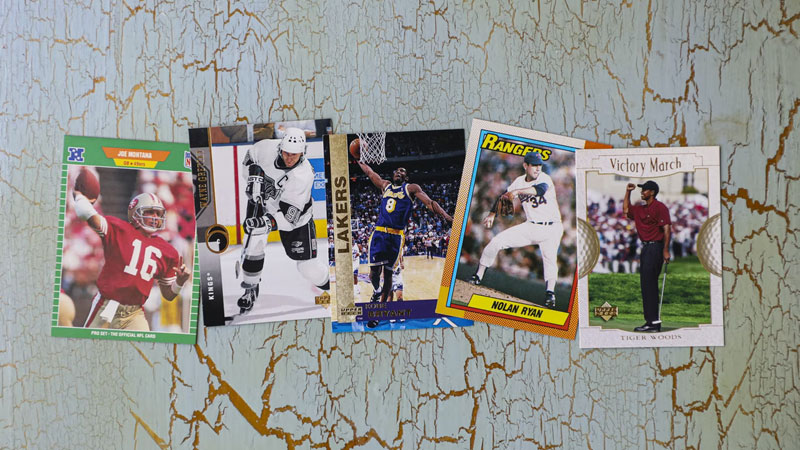
Opening a pack of modern chromium-finish sports cards—or pulling a treasured vintage cardboard classic out of storage—only to find it bowing like a banana is a frustrating moment for any collector.
A curved card disrupts the presentation of your binder, sits awkwardly in top loaders, and can raise immediate concerns about condition, structural integrity, and eye appeal.
The good news is that curvature in trading cards is almost always reversible. Whether you are dealing with modern “chrome warp” caused by atmospheric changes or age-related bowing on vintage cardstock, applying controlled, uniform pressure—and in specific cases, exact humidity management—can restore your cards to a flat, pristine profile.
This guide breaks down the science behind card warping, the exact restoration methods used by experienced hobbyists, and the key precautions needed to protect your collection’s value.
Why Do Baseball Cards Bend and Warp?
Before attempting to fix a curved card, it helps to understand why the bending occurs in the first place. Trading cards warp due to structural composition and environmental conditions.
                    ┌─────────────────────────┐
                    │      Card Structure     │
                    └────────────┬────────────┘
                                 │
           ┌─────────────────────┴─────────────────────┐
           ▼                                           ▼
┌─────────────────────┐                     ┌─────────────────────┐
│ Modern Foil/Chrome  │                     │  Vintage Cardstock  │
└──────────┬──────────┘                     └──────────┬──────────┘
           │                                           │
 ┌─────────┴─────────┐                       ┌─────────┴─────────┐
 │ Front Layer:      │                       │ Single Layer:     │
 │ Plastic / Foil    │                       │ Organic Paper/    │
 │ (Inflexible)      │                       │ Cardboard Fiber   │
 └─────────┬─────────┘                       └─────────┬─────────┘
           │                                           │
 ┌─────────┴─────────┐                       ┌─────────┴─────────┐
 │ Back Layer:       │                       │ Expands/Contracts │
 │ Paper Fiber       │                       │ with ambient      │
 │ (Expands/Shrinks) │                       │ humidity          │
 └─────────┬─────────┘                       └─────────┬─────────┘
           │                                           │
           ▼                                           ▼
 ┌───────────────────┐                       ┌───────────────────┐
 │ Unequal Tension   │                       │ Uniform Bowing    │
 │   = Convex/Concave│                       │   = Overall Curve │
 └───────────────────┘                       └───────────────────┘
1. Modern Chrome & Refractor Warp
Modern sets use a hybrid construction: a paperboard core laminated with a thin synthetic foil layer on the front.
The paper back absorbs and releases ambient moisture as humidity fluctuates, while the synthetic front layer remains rigid.
When the paper layer expands or contracts relative to the front foil, tension builds across the surface, causing the card to bow inward or outward.
2. Vintage Cardboard Humidity Shifts
Older cards consist entirely of organic paper fibers. In low-humidity environments, cardboard loses moisture and contracts; in high-humidity settings, it absorbs moisture and expands. Storage without adequate support often leads to a gradual, persistent curve over time.
3. Thermal Changes & Improper Storage
Storing cards in unconditioned spaces like attics, basements, or garages accelerates warping. Temperature swings weaken paper fibers, making cards far more susceptible to bending under their own weight.
Pre-Restoration Checklist: What You Need
Before applying any flattening process, assemble the proper materials. Using improvised tools can lead to accidental surface scratches, edge wear, or moisture damage.
Method 1: The Heavy Book Method (Best for Beginners)
The safest, most accessible technique for flattening standard cardstock and mildly curved chrome cards is the mechanical pressure method using a heavy book.
Method 2: The Card Mat & Mist Method (Advanced Restoration)
For severe bows, stubborn refractors, or thicker stock cards (such as jersey patches and auto cards), passive pressure alone may not completely relax the paper fibers. The controlled moisture technique gently hydrates the back layer so the card flattens uniformly under pressure.
Step-by-Step Restoration Protocol
Prepare the Work Area: Clean a hard, level surface. Lay down a clean, dry card mat or high-density neoprene pad.
Position the Card: Place the card face-down on the mat so the uncoated paper back faces upward.
Apply Micro-Mist: Lightly mist the back of the card or the surrounding mat surface using a specialized archival card spray.
Critical Warning: The surface should be slightly cool or barely damp to the touch—never wet or beaded with water droplets. Excessive fluid will cause paper layer separation, ink bleeding, or warping.
Sandwich the Structure: Place a second matching card mat directly over the card to cushion the surface evenly.
Clamp and Hold: Place a flat acrylic block or plexiglass clamp over the top mat, applying firm, balanced pressure.
Dry Completely: Allow the assembly to sit undisturbed for a minimum of 24 hours while the moisture evaporates and the paper fibers set flat.
What NOT to Do: Common Mistakes to Avoid
Attempts to accelerate the flattening process frequently lead to irreversible damage. Avoid these widespread missteps:
- Never Use Direct Heat or Hairdryers: Applying direct heat to plasticized chrome surfaces or vintage inks causes surface blistering, color shift, and coat melting.
- Never Flex Against the Curve By Hand: Manually bending a card backward creates surface creases, stress lines, and spider webbing across the gloss coat.
- Avoid Unbuffered Clamps: Placing metal clamps or bare wooden blocks directly onto a card without protective sleeves and foam padding creates permanent pressure indentations along the borders.
- Do Not Use Tap Water: Tap water contains minerals, chlorine, and impurities that leave water marks and discoloration on cardboard fibers.
Storing Flattened Cards to Prevent Re-Curving
Once your card has successfully returned to a flat state, proper archival storage prevents it from reverting to a bowed shape.
- Immediate Top-Loading: Slide the flattened, sleeved card into a semi-rigid holder (Card Saver I) or a standard rigid top loader immediately after removal from the press.
- Humidity Control: Store your card collection in an environment with a stable relative humidity between 45% and 55%. Use silica gel packets inside storage boxes to absorb excess atmospheric moisture.
- Avoid Over-Tight Storage: Do not jam top loaders too tightly into storage boxes, as uneven horizontal pressure can introduce new corner bends over time.
Frequently Asked Questions
Does flattening a curved baseball card lower its grading score?
No. Professional grading companies (such as PSA, BGS, and SGC) evaluate centering, corners, edges, and surface quality.
Curvature itself is considered a temporary condition resulting from environmental exposure, not permanent manufacturing damage.
Safely flattening a card restores eye appeal without altering grade mechanics, provided no creases were introduced during the process.
How long does a flattened card stay flat?
A card will remain flat indefinitely if stored in a climate-controlled environment within a rigid protective case (such as a top loader, one-touch magnetic holder, or graded slab). Exposing an unprotected card back to high humidity will re-introduce curvature over time.
Can you safely flatten valuable vintage cards?
Yes, but vintage cardstock requires minimal moisture and gentler mechanical pressure due to fragile paper fibers.
Stick exclusively to the Heavy Book Method inside archival-safe sleeves for high-value or vintage items, extending the pressing time to two weeks rather than introducing liquid sprays.
Long-Term Collection Protection
Correcting curved baseball cards is a standard maintenance practice for collectors aiming to preserve market value and presentation quality.
By matching the right method to your card’s specific era and material composition, you can eliminate unwanted bowing safely without risking surface degradation or structural integrity.
Always prioritize patience over quick fixes—steady, uniform pressure remains the safest tool in card restoration.